Simulation results on benchmark dissolved-gas-analysis datasets demonstrate high diagnostic accuracy, strong generalization capability, and robustness to realistic noise levels with minimal quantum resources, highlighting the effectiveness of simulation-informed modeling for practical transformer diagnostic application...
H. Le, Ba Tu Phung, Dai Huynh et al.· Alexandria Engineering Journ...· 1 citation
This work implements two representative architectures --- the Simplified Graph Convolution (SGC) and Linear Graph Convolution (LGC) models and evaluates them on open benchmark graph datasets and semi-supervised learning tasks using quantum simulation and presents a cost gradient analysis that identifies the tasks for w...
Paul San Sebastian Sein, Theodor Iosif, T. G. Limbäck-Stokin et al.· 1 citation
This work investigates a physics-informed strategy in which functional forms and spectral structures associated with Green's functions motivate kernel selection without requiring an exact identification between a machine-learning kernel and a physical propagator.
Landmark mathematical formalizations have taken specialist teams years to complete. We present FormalFlow, a system that coordinates AI proving agents under human supervision to address statement drift and proof composition in long-horizon formalization. Drawing on software engineering principles and practices, it uses...
Si-Rui Lu, Ruixuan Deng, Yan-Qiao Zhu et al.· 0 citations
Reach audiences
Advertise in front of researchers, engineers, and readers.
A learning-to-rank framework for selecting efficient contraction plans before executing them and supporting Learning to Rank as a practical way to reduce contraction-plan search, while showing that performance remains partly backend dependent.
Alfred M. Pastor, Maribel Castillo, José M. Badía· 0 citations
The parity gap is derived, a group-theoretic metric quantifying the piezoelectric tensor freedom permitted by a crystal's proper rotation subgroup but eliminated by inversion symmetry in O(3)$, providing a unified framework to distinguish empirical error reduction from exact structural compliance with physical law.
Can Polat, Mustafa Kurban, E. Serpedin et al.· 0 citations
Conic programs arising in physics, quantum information, machine learning, and engineering are often defined over sparse graphs. Although such problems can be solved in polynomial time using classical interior-point solvers, the computational complexity scales unfavorably with graph size. We propose a variational quantu...
Thinh Viet Le, Mark M. Wilde, Vassilis Kekatos· 0 citations
We propose a compact NISQ-compatible quantum transformer architecture for synthetic QNLP sequence modelling. The model preserves the autoregressive next-token interface of a classical transformer, but replaces attention and feed-forward sublayers with variational quantum encoder blocks, connector circuits, decoder bloc...
Julian Hager, Michael Kölle, Gerhard Stenzel et al.· 0 citations
Interactive Quantum Classifiers (IQCs) constitute a family of quantum machine learning models inspired by open quantum systems, in which the interaction between a target qubit and an environment is described by a Hamiltonian. Previous works introduced alternative Hamiltonian parameterizations and showed empirically tha...
F. Novaes, Fernando M. de Paula, J. V. Cardoso· 0 citations
How much does the noisy measurement add to learned quantum error mitigation? An accuracy table cannot say, because a model handed circuit structure can score well without reading the measurement at all. QEMScore adds the comparison that can. Each simulated circuit carries an exact ideal answer. The learned mitigator is...
Yue Zhao, Huayue Gu, Yu-Shun Dong et al.· 0 citations
This work proposes QFWP-ANO, a novel architecture which employs a classical hypernetwork to dynamically program VQC parameters and/or non-local observables conditioned on each input, and establishes input-conditioned ANO as an effective approach for enhancing QNNs.
Yu-Ting Lee, Samuel Yen-Chi Chen, Huan-Hsin Tseng· 0 citations
The results identify information required for recovery selection, establish conditional guarantees against harmful updates, and quantify the recovery improvements forgone through conservative acceptance.
Jennifer Neville did not want to go into computer science—but that’s exactly where she landed. Neville discusses the starts and stops that led to her professional sweet spot and her work identifying “surprising failures” making it hard for AI to handle complexity. The post What AI gets wrong and what failure teaches us appeared first on Microsoft Research.
MIT News · Artificial Intelligence· news.mit.eduOct 2, 2026
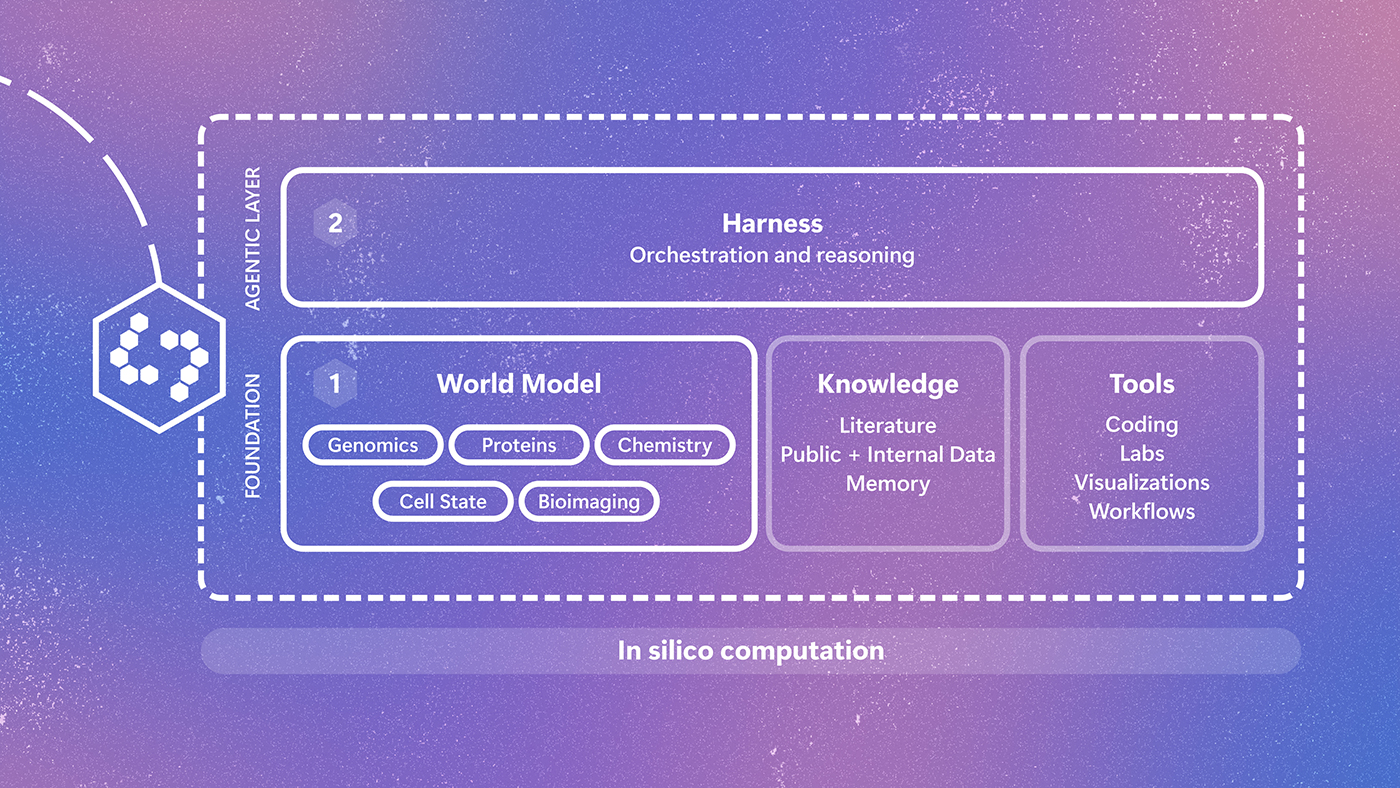
Biology doesn't operate in silos, and neither should the AI representation of it. Quine is an early-stage research effort to create a multimodal world model of biology. By connecting insights across biological scales and modalities, Quine helps scientists computationally search a space far larger than intuition allows and prioritize hypotheses before they reach the lab. Experimental results provide important feedback, helping researchers sharpen future research directions. The post Introducing Q…