Deep learning models are powerful but opaque. As quantum machine learning matures, the field faces a defining choice: build quantum models that are equally opaque, or exploit the mathematical structure of quantum mechanics to make them inherently interpretable. We show that the latter is possible. By tracking quantum m...
The Schrodinger equation in one spatial dimension admits a small set of exactly solvable potentials that serve as natural proving grounds for any new eigenvalue solver. We formulate Physics-Informed Neural Networks (PINNs) and Physics-Informed Quantum Neural Networks (PIQNNs) for the time-independent Schrodinger equati...
Tariq Mahmood, W. Arshad, Bilal Naseer et al.· 0 citations
We prove the first quantum--classical separation for a sampling problem over a continuous domain. For a class of Gibbs states $p\propto e^{-\beta E}$ on the torus $\mathbb{T}^d$ with smooth ($s$-Gevrey) potential and barrier amplitude $\alpha=e^{\beta\Delta}$, where $\Delta = \max E-\min E$, every classical algorithm--...
Enrico Olivucci, Mariia Sobchuk, Sehmimul Hoque et al.· 1 citation
In recent years, quantum game theory has gained significant attention as a framework for studying decision-making in multi-agent systems using quantum principles. However, computing equilibrium strategies is challenging because the dimension of the joint Hilbert space grows as the product of the players' local dimensio...
Alireza Habibi, Luis F. Abanto Leon, Setareh Maghsudi· 0 citations
Reach audiences
Advertise in front of researchers, engineers, and readers.
Weighted Quantum Signal Processing is introduced, an extension of QSP in which a weight function is assigned to the central rotation operator, which provides a deeper understanding of QSP and yields expressive and parameter-efficient neural architectures, highlighting the potential of WQSP as a scalable primitive for q...
Rohit Sarma Sarkar, Rupayan Bhattacharjee, E. F. Combarro et al.· 0 citations
Barren plateau diagnostics characterize whether gradient signal remains available for training, but surviving signal need not translate into successful optimization. We study this trainability--optimization gap at the level of optimizer steps. Treating coefficient-weighted Hamiltonian-term gradients as task-like compon...
In this work, we study the neural scaling laws of RydbergGPT, an autoregressive transformer model trained on qubit projective measurement data gathered from interacting Rydberg atom arrays. The quantum system is known to exhibit a finite-size remnant of a critical point as the laser detuning parameter is varied. We fin...
David S. Berman, Ying-Jer Kao, R. Melko et al.· 0 citations
There are distributions that can be efficiently generated by a quantum learner with access to quantum samples, but not by a quantum learner with access to only classical samples, making progress to answering this question in the affirmative.
It is proved that a resource-constrained learner cannot gain any advantage through classical interaction with an untrusted prover, and it is shown that for the vast majority of testing and learning problems, a memory-constrained quantum algorithm cannot overcome its limitations via classical communication with a memory...
Matthias C. Caro, J. Eisert, M. Hinsche et al.· arXiv.org· 4 citations
TetrisCNN is introduced, a convolutional architecture with parallel branches of differently shaped filters, reminiscent of Tetris blocks, that learns sparse, interpretable latent representations directly in terms of spin correlators, and opens the way to integrating interpretable neural networks with quantum simulators...
Kacper Cybiński, B. V. Van Zwol, James Enouen et al.· 0 citations
A Transformer-based Quantum State Characterizer model is proposed for noisy RSP experiments that enables accurate tomographic characterization under dynamic noise and provides physically grounded post-hoc insights, holding promise for intelligent quantum information processing applications.
QEncodeBench tasks large language models with encoding classical constraint problems as phase oracles and scores the generated circuits with an adversarially self-validated verifier that decides full solution-set equivalence up to a global phase, with ancillas restored and resource budgets enforced.
Xu-Jun Che, Han-Han Wu, Yu-Chen Yuan et al.· 1 citation
Jennifer Neville did not want to go into computer science—but that’s exactly where she landed. Neville discusses the starts and stops that led to her professional sweet spot and her work identifying “surprising failures” making it hard for AI to handle complexity. The post What AI gets wrong and what failure teaches us appeared first on Microsoft Research.
MIT News · Artificial Intelligence· news.mit.eduOct 2, 2026
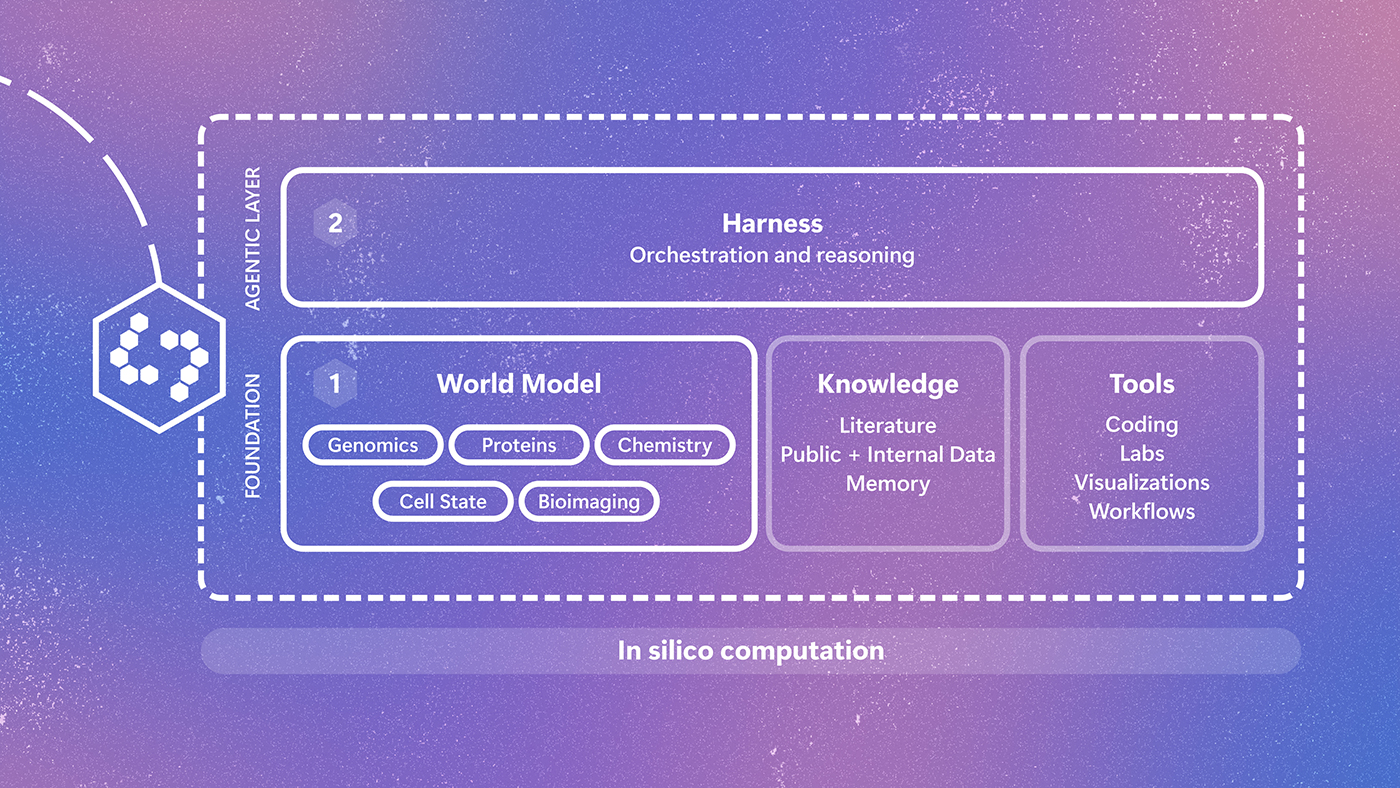
Biology doesn't operate in silos, and neither should the AI representation of it. Quine is an early-stage research effort to create a multimodal world model of biology. By connecting insights across biological scales and modalities, Quine helps scientists computationally search a space far larger than intuition allows and prioritize hypotheses before they reach the lab. Experimental results provide important feedback, helping researchers sharpen future research directions. The post Introducing Q…