May 2026· Alexandria Engineering Journal· 1 citation· 64 references
PhysicsComputer Science
TL;DR
Simulation results on benchmark dissolved-gas-analysis datasets demonstrate high diagnostic accuracy, strong generalization capability, and robustness to realistic noise levels with minimal quantum resources, highlighting the effectiveness of simulation-informed modeling for practical transformer diagnostic applications.
Abstract
Early transformer fault diagnosis is challenged by nonlinear dissolved-gas interactions, overlapping fault signatures, and limited labeled data, while practical deployment further requires reliable performance under realistic computational constraints. This paper presents a simulation-driven modeling framework for dissolved gas analysis-based transformer fault diagnosis, in which a carefully engineered variational quantum classifier (VQC) is employed as the computational core and systematically analyzed through simulation. The framework integrates domain-aware feature modeling derived from Duval geometry with a lightweight two-qubit quantum representation, enabling nonlinear gas-interaction effects to be captured within a shallow parameterized circuit. A hybrid ZX-YY quantum feature map is designed to model non-commuting feature interactions, while a full-entanglement EfficientSU2 ansatz provides adequate expressive capacity under strict resource limits. Model behavior is evaluated using a comprehensive simulation pipeline including noise-aware circuit emulation, cross-dataset validation, and limited hardware-in-the-loop execution, allowing key effects of circuit depth, noise, and optimization strategy to be examined. Simulation results on benchmark dissolved-gas-analysis datasets demonstrate high diagnostic accuracy, strong generalization capability, and robustness to realistic noise levels with minimal quantum resources. The results highlight the effectiveness of simulation-informed modeling for practical transformer diagnostic applications, offering a reproducible and resource-efficient pathway for evaluating quantum-enhanced fault diagnosis methods.

A novel physics-guided linear mapper for quantum error mitigation that uses seven distinct interpretable features derived from circuit complexity and device calibration data, which reveals that circuit depth and CNOT count dominate error prediction, consistent with decoherence mechanisms.
Tulsi Chaudhari, Krish Bhatia, Shalini Devendrababu et al.· Lecture Notes in Networks an...· 0 citations
This paper proposes a hybrid quantum-classical framework utilizing isometric Tree Tensor Networks (TTNs) and a novel Quantum Self-Attention (QSA) subroutine, capable of compressing the latent space of a classical 10-parameter Large Language Model into a 10-parameter quantum neural network via amplitude encoding.
R. Delhibabu· Frontiers of Computer Scienc...· 0 citations
The capabilities of AutoQuREO are demonstrated through representative co-design case studies, including early-fault-tolerant quantum algorithms, small error correction codes, gate decomposition and variational training of parametric quantum circuits.
Harshkumar Oza, Aritra Sarkar, S. Abbas et al.· 0 citations
Automated construction of variational quantum circuits remains a major bottleneck in quantum chemistry, largely because adaptive VQE methods repeatedly screen large operator pools using quantum-gradient criteria. For a canonical Hartree--Fock reference and normalized double-excitation generators, the initial ADAPT gr...
Li Hao, Chao-Qun Ji, Meng-Bo Fu· Quantum Science and Technolo...· 0 citations
Related blog posts
MIT News · Artificial Intelligence· news.mit.eduOct 2, 2026
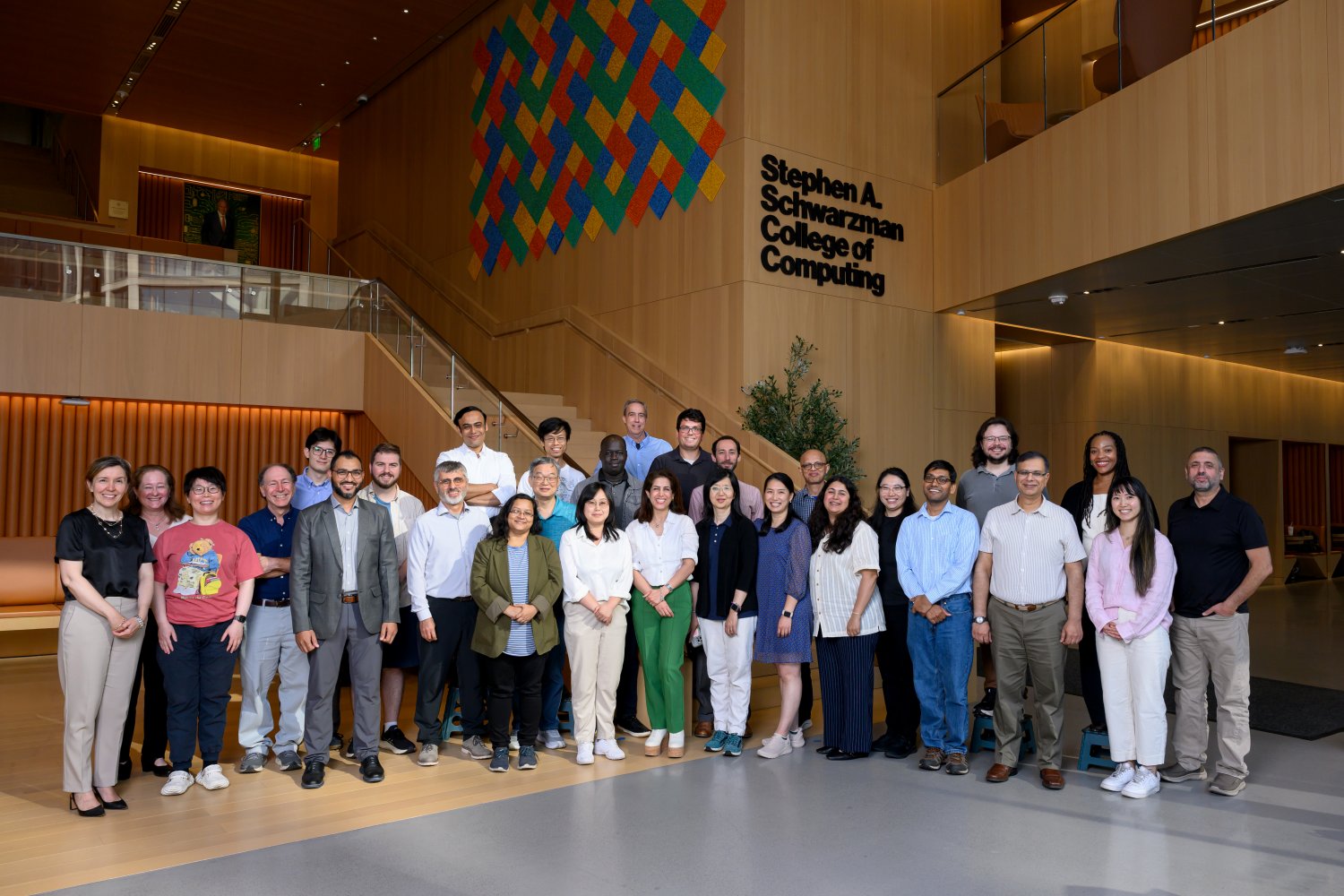
A weeklong summer workshop brought higher education faculty to campus to explore how AI and machine learning materials can be adapted for their classrooms.
MIT News · Artificial Intelligence· news.mit.eduAug 27, 2026
A new machine-learning framework aims to improve the success rate of computational protein design while moving away from results that reproduce sequences found in nature.
Microsoft Research Blog· microsoft.comAug 20, 2026
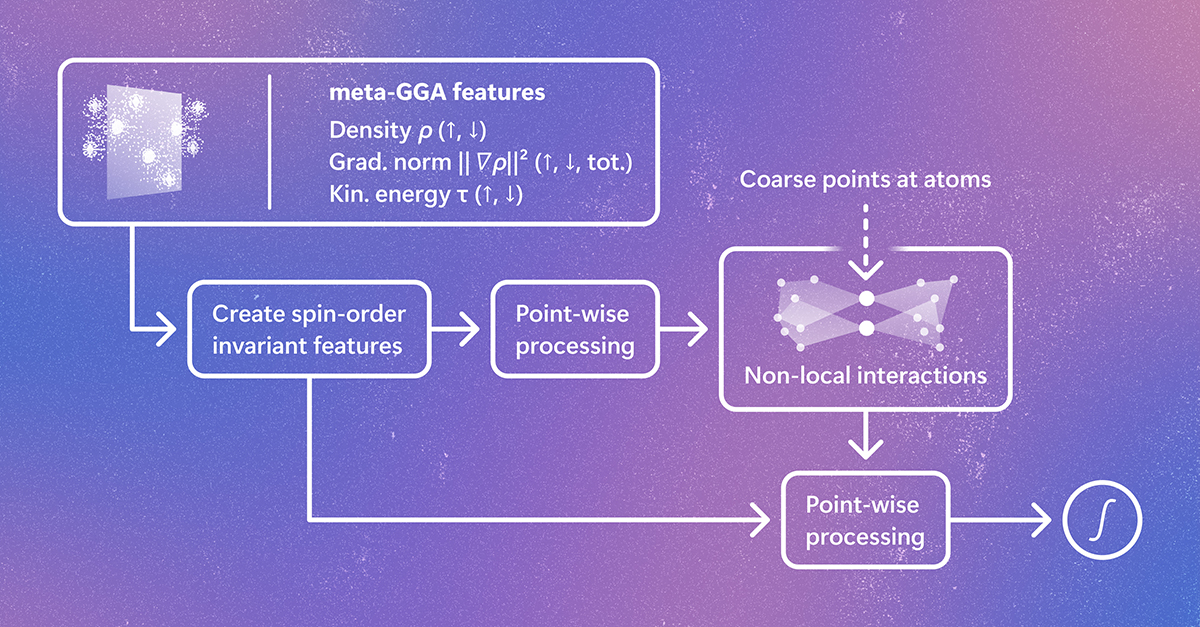
Skala 1.1, the updated deep-learning exchange-correlation functional from Microsoft Research, provides greater accuracy, expanded accessibility across the computational chemistry ecosystem, and a living benchmark to track computational performance. The post Broadening access to Skala creates a faster path to predictive DFT appeared first on Microsoft Research.
We use cookies to run the site and, with your consent, for analytics and to show ads.
See our Cookie Policy.