Skip to content

Quantum Graph Convolutional Networks: Implementation and Trainability Analysis

Sep 2026 · 1 citation
Physics Computer Science

TL;DR

This work implements two representative architectures --- the Simplified Graph Convolution (SGC) and Linear Graph Convolution (LGC) models and evaluates them on open benchmark graph datasets and semi-supervised learning tasks using quantum simulation and presents a cost gradient analysis that identifies the tasks for which the models are trainable.

Abstract

Graph Neural Networks (GNNs) achieve state-of-the-art performance on graph-structured data, but training and inference on large graphs are often bottlenecked by memory constraints and sparse linear-algebra workloads. Quantum computing offers an alternative set of primitives that may improve scalability for graph learning. Building on the quantum graph neural network (QGNN) framework of Liao \textit{et al.}, this work implements two representative architectures --- the Simplified Graph Convolution (SGC) and Linear Graph Convolution (LGC) models --- and evaluates them on open benchmark graph datasets and semi-supervised learning tasks using quantum simulation. We compare predictive performance and optimization behavior against classical baselines, showing that the quantum models achieve competitive performance with fewer parameters. Finally, we present a cost gradient analysis that identifies the tasks for which the models showcased are trainable. This is followed by a classical simulability study to find regimes in which the proposed circuits remain robust during training.

View source

Similar papers

Preprint Aug 2026

Continuous-Time Quantum Walks based Graph Neural Network

A GNN based on Continuous-Time Quantum Walks (CTQW) and exploiting two properties of the CTQW propagator, preserving mid- and high-frequency signals for heterophilic graphs while preventing Dirichlet-energy collapse.

Yu-Liang Zhan, Ze-Feng Gao, Jian Li et al. · 0 citations
Preprint Oct 2026

A Code-Agnostic Graph Neural Network Decoder from the Detection Error Model

We present POLYMECHANON, a graph neural network (GNN) decoder for quantum error correction whose only input is the detection error model (DEM) of a quantum code under a given noise model. We represent the DEM as a tripartite graph of detectors, error mechanisms and logical observables, where every input feature is comp...

F. Astolfi, G. Pupillo · 0 citations
#machine learning Preprint Aug 2026

Learning to Rank Tensor Network Contraction Plans for GPU-Accelerated Quantum Circuit Simulation

A learning-to-rank framework for selecting efficient contraction plans before executing them and supporting Learning to Rank as a practical way to reduce contraction-plan search, while showing that performance remains partly backend dependent.

Alfred M. Pastor, Maribel Castillo, José M. Badía · 0 citations
Jun 2026

ThunderGNN: Unlocking Tensor Cores for Graph Neural Networks

ThunderGNN is a hardware-aware acceleration system designed to reconcile graph irregularity with Tensor Core rigidity and significantly outperforms state-of-the-art systems, achieving geometric mean speedups of 1.89× over DGL and 2.59× over PyG.

Yuang Chen, Si-Yi Teng, Wen-Qi Zeng et al. · 0 citations
Open access Sep 2026

C2fDeploy: Function-Preserving Graph Rewriting to Eliminate Runtime Split Overhead on FPGA Deep Learning Processing Units

Efficient deployment of neural-network detectors on field-programmable gate array (FPGA) accelerators depends not only on model complexity but also on compiler-visible graph structure. On deep learning processing unit (DPU) platforms, unsupported operators can fragment execution between accelerator and host execution d...

Xiang Ji, Shuai Hu, Hao-Fei Wang et al. · 0 citations

Framework Built

Tzamn Melendez Carmona, F. Marchesin, M. P. Abrate et al. · 0 citations

Related blog posts

MIT News · Artificial Intelligence Aug 27, 2026

Looking beyond natural sequences

A new machine-learning framework aims to improve the success rate of computational protein design while moving away from results that reproduce sequences found in nature.

Microsoft Research Blog Aug 20, 2026

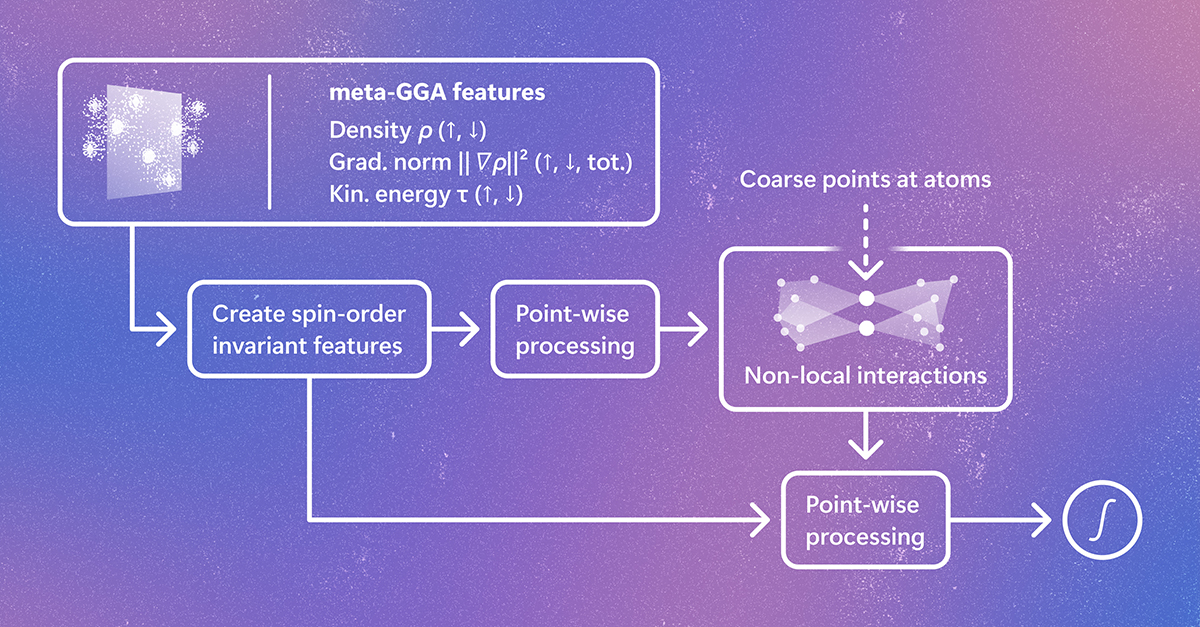
Broadening access to Skala creates a faster path to predictive DFT 

Skala 1.1, the updated deep-learning exchange-correlation functional from Microsoft Research, provides greater accuracy, expanded accessibility across the computational chemistry ecosystem, and a living benchmark to track computational performance. The post Broadening access to Skala creates a faster path to predictive DFT  appeared first on Microsoft Research.

We use cookies to run the site and, with your consent, for analytics and to show ads. See our Cookie Policy.