How much does the noisy measurement add to learned quantum error mitigation? An accuracy table cannot say, because a model handed circuit structure can score well without reading the measurement at all. QEMScore adds the comparison that can. Each simulated circuit carries an exact ideal answer. The learned mitigator is scored beside a capacity-matched control, a model just as flexible that reads the same circuit description but never the measurement. Each method's measurement spend is accounted and not equalized. We run a controlled campaign on simulated circuits and reanalyze two published learned mitigators, Q-LEAR and QRAFT, from their released hardware data. Three findings stand out. First, under familiar within-family conditions (S0) evaluated across two spin-chain families and three seeds, continuous couplings identify the target, and the control that never reads the measurement matches 87.7 to 100.5 percent of the mitigator's gain over an affine fit to the circuit description. A plain polynomial in the coupling parameters, fitted after the campaign, beats the mitigator on all six evaluations, reflecting the selected learners'capacity. Second, for these selected learners, matching most of the gain is not matching the accuracy: on five of six evaluations the mitigator removes 19.5 to 74.5 percent of the error the capacity-matched control leaves, a learner-specific gap rather than a measurement requirement. Third, on released hardware data where descriptors only partially identify queries, the findings differ: flexible models of the descriptors show negligible mean gain over affine fits in Q-LEAR, and measurement inputs carry predictive gains in both Q-LEAR and QRAFT. These comparisons reflect representation- and protocol-specific behavior rather than an isolated cross-regime difference. A learned mitigator's accuracy should therefore be reported beside such controls.
This publication proposes a definition and a classification of agile software development approaches and analyses ten software development methods that can be characterized as being "agile" against the defined criterion.
P. Abrahamsson, O. Salo, Jussi Ronkainen et al.· arXiv.org· 727 citations· ⚡54
The study shows that agile practices improve both informal and formal communication, but indicates that, in larger development situations involving multiple external stakeholders, a mismatch of adequate communication mechanisms can sometimes even hinder the communication.
M. Pikkarainen, Jukka Haikara, O. Salo et al.· Empirical Software Engineeri...· 401 citations· ⚡48
The results indicate that software engineering work practices are chosen opportunistically, adapted and configured to provide value under the constrains imposed by the startup context.
Nicolò Paternoster, Carmine Giardino, M. Unterkalmsteiner et al.· Information and Software Tec...· 394 citations· ⚡54
The possibility of inferring high-dimensional data inference in a model that consists of a prior and an auxiliary differentiable constraint given some additional information is considered, thereby allowing a range of potential applications in adapting models to new domains and tasks.
Alexandros Graikos, Esmeralda S. Whitammer, N. Jojic et al.· Neural Information Processin...· 316 citations· ⚡15
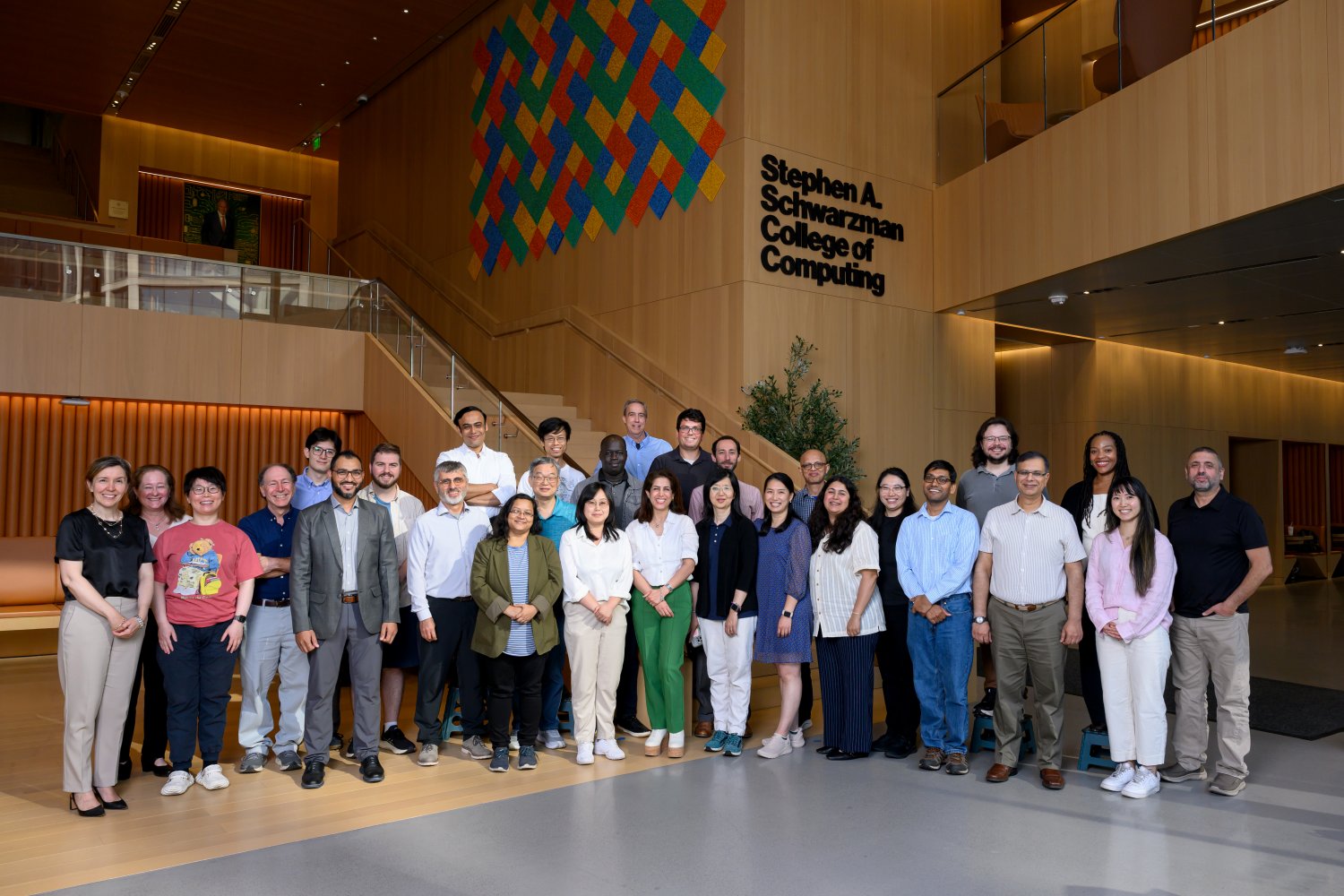
A weeklong summer workshop brought higher education faculty to campus to explore how AI and machine learning materials can be adapted for their classrooms.
MIT News · Artificial Intelligence· news.mit.eduAug 27, 2026
A new machine-learning framework aims to improve the success rate of computational protein design while moving away from results that reproduce sequences found in nature.
Microsoft Research Blog· microsoft.comAug 20, 2026
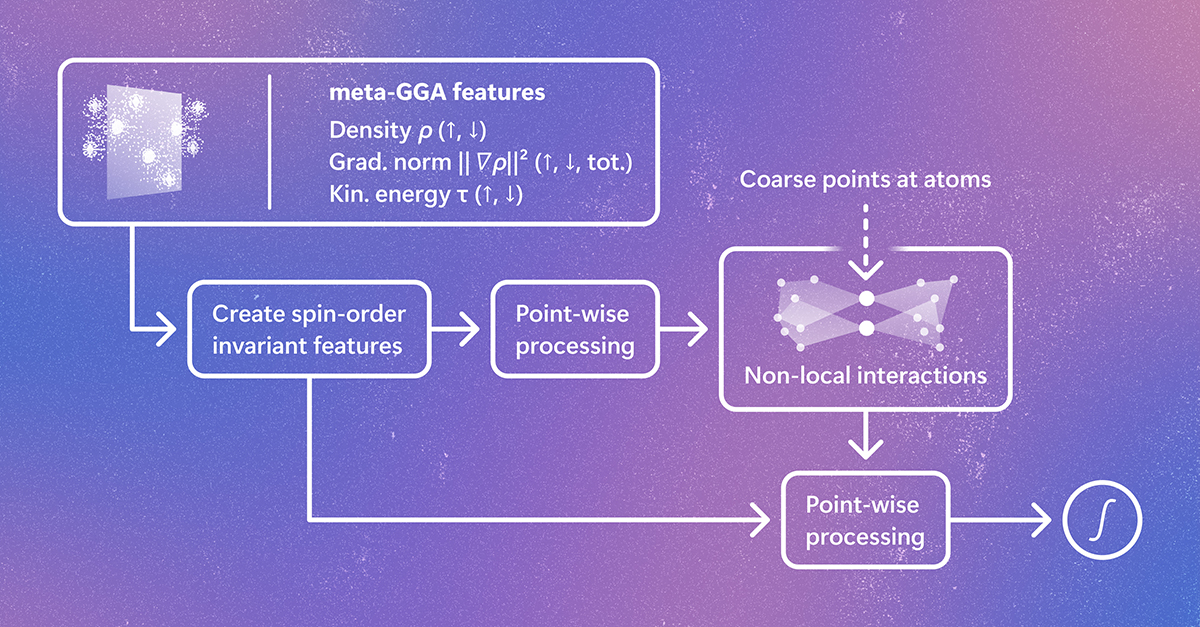
Skala 1.1, the updated deep-learning exchange-correlation functional from Microsoft Research, provides greater accuracy, expanded accessibility across the computational chemistry ecosystem, and a living benchmark to track computational performance. The post Broadening access to Skala creates a faster path to predictive DFT appeared first on Microsoft Research.
We use cookies to run the site and, with your consent, for analytics and to show ads.
See our Cookie Policy.