QT is introduced, a Quantum-inspired Transformer for vision tasks with three components: angle-inspired encoding that maps image tokens to learned trigonometric Hilbert-space features analogous to quantum rotation-based state encoding; self-attention over these periodic features, inducing a classical cosine kernel appr...
QIQCBench is introduced, a benchmark of $49$ expert-authored tasks spanning multiple layers including calibration and control, error correction and compilation, sensing and networking, that reveals wide variation in verified performance across frontier agentic systems.
N. Guo, Chang-Hao Li, Si-Yu Cheng et al.· 0 citations
A family of shallow circuits using Hadamards and controlled-Phase gates, HP-$L$ circuits, are constructed that prove preserve shift invariance and the $\mathcal{O}(n)$ HP-$1$ QFT in the numerical implementation of Shor's algorithm.
Ka Bian, Zujin Wen, Oscar C. O. Dahlsten· 0 citations
In trapped-ion quantum computers, qubits must be shuttled between segments to interact. The routing logic that schedules these movements is written by hand for every new trap architecture. We present shuttling compilers based on five large language models (LLMs). Each LLM is fine-tuned on shuttling schedules produced b...
Fabian Kreppel, Reza Salkhordeh, Ferdinand Schmidt-Kaler et al.· 0 citations
Reach audiences
Advertise in front of researchers, engineers, and readers.
Efficient sampling from Boltzmann distributions over discrete variables is a fundamental operation in a wide range of applications. While fast non-MCMC samplers have recently emerged as promising alternatives to conventional MCMC methods, their practical use for probabilistic learning remains hindered by the difficulty...
In recent years, the utility of parameterized quantum circuits as function approximators has been widely studied. In the context of reinforcement learning, this approach has led to variational quantum algorithms such as quantum Q-learning. While these methods show promising empirical results, and can provide provable a...
Pablo Rodriguez-Grasa, Sofiène Jerbi, Mikel Sanz et al.· 0 citations
Rigorous empirical validation of quantum machine learning on natural language tasks remains scarce. We evaluate a 10-qubit hybrid quantum-classical variational circuit (2,148 parameters) for paraphrase detection across three benchmarks: MRPC, Quora Question Pairs (QQP), and adversarial PAWS. On QQP (n = 10 seeds), the...
Farha Nausheen, K. Ahmed, Farina Riaz· 0 citations
Automatic Hindi pregroup assignment is feasible and can reduce reliance on manual annotation in future multilingual QNLP pipelines, and suffix/morphology features improve karaka-token accuracy but not overall performance.
Gautami Sanjay Naik, Krish Bhatia, Mithun Paul Saint-Germain et al.· 0 citations
Continuous-variable systems enable key quantum technologies in computation, communication, and sensing. Bosonic Gaussian states emerge naturally in various such applications, including gravitational-wave and dark-matter detection. A fundamental question is how to characterize an unknown bosonic Gaussian state from as f...
Senrui Chen, Francesco Anna Mele, Marco Fanizza et al.· 0 citations
These results establish exact spin elimination as a controlled trade between active-spin capacity and interaction complexity and show that removing spins while allowing more complex interactions can fit larger problems within the same spin budget and improve optimization.
Reporting the Fisher geometry of a trained variational quantum model is routine; quoting the shot budget that would establish it is not. Certifying an empirical Fisher matrix to relative Frobenius error $\varepsilon$ under coordinate-wise parameter shift costs $\Theta(B p^{2} V/(\varepsilon^{2} G))$ circuit executions,...
Generative augmentation is a standard remedy for label scarcity in physiological signal classification, but existing quantum generative models start from uninformative noise, ignoring class structure that is already available. We propose Conditional Quantum Flow Matching (CQFM): a single 306-parameter circuit, conditio...
Jennifer Neville did not want to go into computer science—but that’s exactly where she landed. Neville discusses the starts and stops that led to her professional sweet spot and her work identifying “surprising failures” making it hard for AI to handle complexity. The post What AI gets wrong and what failure teaches us appeared first on Microsoft Research.
MIT News · Artificial Intelligence· news.mit.eduOct 2, 2026
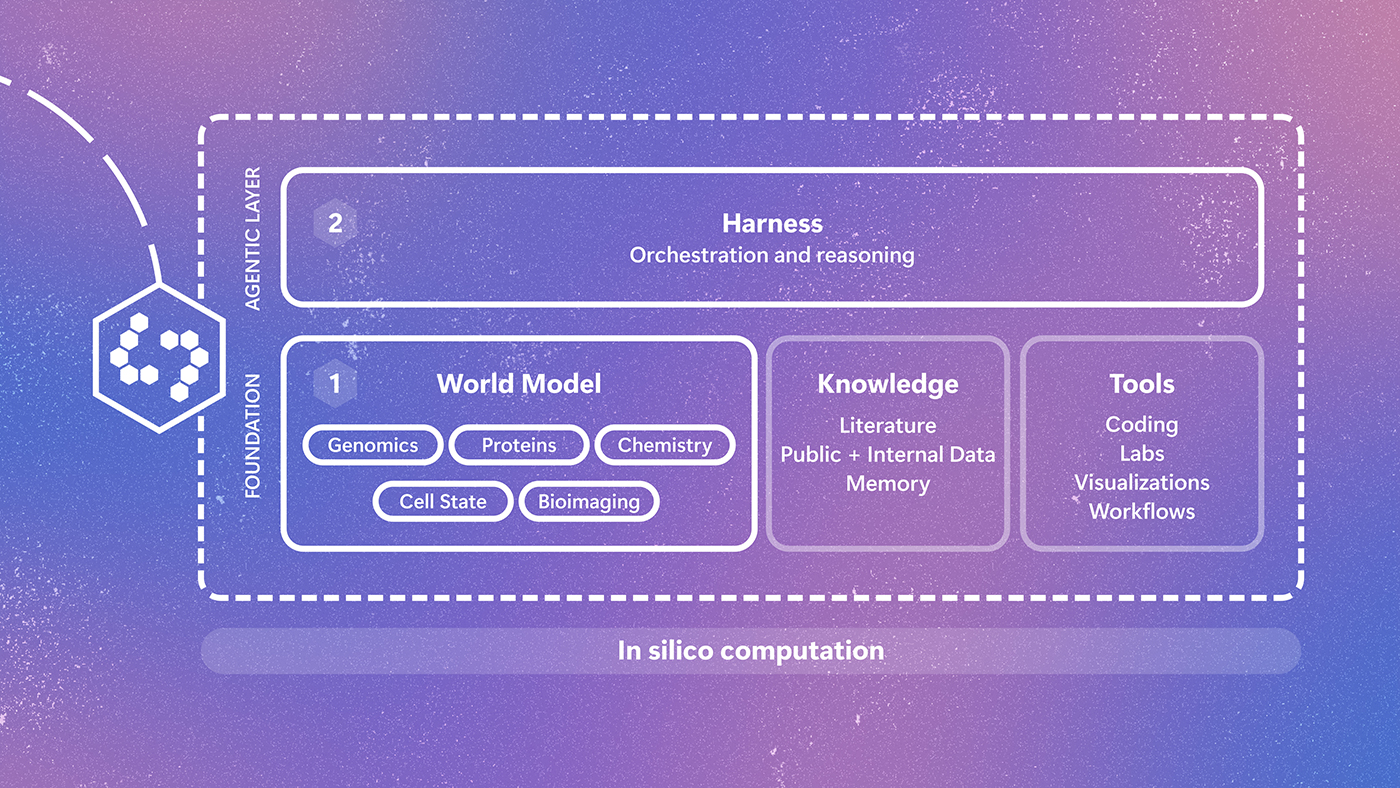
Biology doesn't operate in silos, and neither should the AI representation of it. Quine is an early-stage research effort to create a multimodal world model of biology. By connecting insights across biological scales and modalities, Quine helps scientists computationally search a space far larger than intuition allows and prioritize hypotheses before they reach the lab. Experimental results provide important feedback, helping researchers sharpen future research directions. The post Introducing Q…