Accurate and efficient time-series forecasting remains a challenging problem for both classical and quantum neural architectures, particularly in multivariate environmental settings. This work adapts the Quantum Leaky Integrate-and-Fire (QLIF) spiking neural network for time-series regression tasks, specifically short-...
Alberto Marchisio, Aayan Ebrahim, Nouhaila Innan et al.· 0 citations
The manifold hypothesis suggests that data lies on manifolds with smaller intrinsic dimension (ID) than their ambient dimension. However there is no empirical agreement on the estimates for ID from different estimators for realistic datasets. Thus it is important to test ID estimators (IDEs) with targeted stressors. In...
Aritra Das, Joseph T. Iosue, Victor V. Albert· 0 citations
Differentiable quantum architecture search (DQAS) is a promising framework for the automated design of quantum circuits, particularly for variational quantum optimization algorithms. However, its practical deployment on quantum hardware is limited by the large number of circuit measurements required during optimization...
Lukas Thei{\ss}inger, Thore Gerlach, Christian Bauckhage· 0 citations
Quantum kernel methods are leading candidates for a practical quantum advantage in machine learning, but assessing that potential requires two quantities usually reported separately: how well a kernel performs on the task, and how far its geometry departs from the classical kernels available for the same problem. We in...
Boaz Micah, Nadia Milazzo, Maissa Beji et al.· 0 citations
Reach audiences
Advertise in front of researchers, engineers, and readers.
Photonic quantum computing has recently emerged as a promising platform for hybrid quantum machine learning due to its native realization of linear-optical circuits and the computational complexity of boson sampling. However, despite growing interest in quantum methods for finance, the influence of photonic circuit des...
Alberto Marchisio, Hanzalah Mohamed Siraj, Muhammad Kashif et al.· 0 citations
Anomaly detection on small and unbalanced datasets remains very challenging in machine learning, although this scenario is common in several domains, including healthcare, cybersecurity, finance, and energy. Data augmentation and generative AI may mitigate training-data scarcity, but they often fall short because anoma...
Emanuele Casciaro, Fabio Mascherpa, Alfonso Amendola et al.· 0 citations
Machine-learned interatomic potentials (MLIPs) excel at in-distribution tasks, accelerating drug and material development, yet they struggle to generalize out-of-distribution. We propose to push the cost-accuracy Pareto frontier by designing observable-agnostic electronic ground-state descriptor models (GSMs) with comp...
Eike S. Eberhard, Xaver Kainz, Viktor Kotsev et al.· 0 citations
Scientific dynamics forecasting is often framed as an architecture choice, although deployment is also determined by observed history, rollout feedback, compute budget, physical objective, and test distribution. We formulate protocol-dependent model selection and introduce ProtocolMatch, a compute-matched, validation-s...
Several published comparisons of variational quantum optimizers time only runs that reach a target loss, or read the verdict at a single target. Either convention could decide whether an optimizer's costlier steps pay off. We measure how much each convention changes verdicts among Adam, simultaneous perturbation stocha...
We present a hybrid quantum-classical framework that detects affinity and romance-investment fraud by modelling the cognitive biases in a manipulative conversation. In our proposed framework, cognitive biases central to this fraud class are carried by dedicated qubits in a structured parameterized quantum circuit, toge...
Quantum libraries are now critical infrastructure for quantum algorithm development, yet their correctness remains difficult to test. Existing testing techniques mainly rely on failure-based or comparison-based oracles, exposing bugs only when executions fail, violate runtime checks, or disagree with another implementa...
Yujin Song, Kaining Zhang, Qixin Zhang et al.· 0 citations
Multimodal vision-language systems typically fuse image and text embeddings through classical operators such as concatenation, attention, bilinear pooling, or tensor interactions. We propose Quantum Entangled Multimodal Fusion Networks (QEMFN), a hybrid quantum-classical framework that introduces parameterized entangle...
Srikar Alla, Ali Shiri Sichani, Chi-Ren Shyu· 0 citations
Jennifer Neville did not want to go into computer science—but that’s exactly where she landed. Neville discusses the starts and stops that led to her professional sweet spot and her work identifying “surprising failures” making it hard for AI to handle complexity. The post What AI gets wrong and what failure teaches us appeared first on Microsoft Research.
MIT News · Artificial Intelligence· news.mit.eduOct 2, 2026
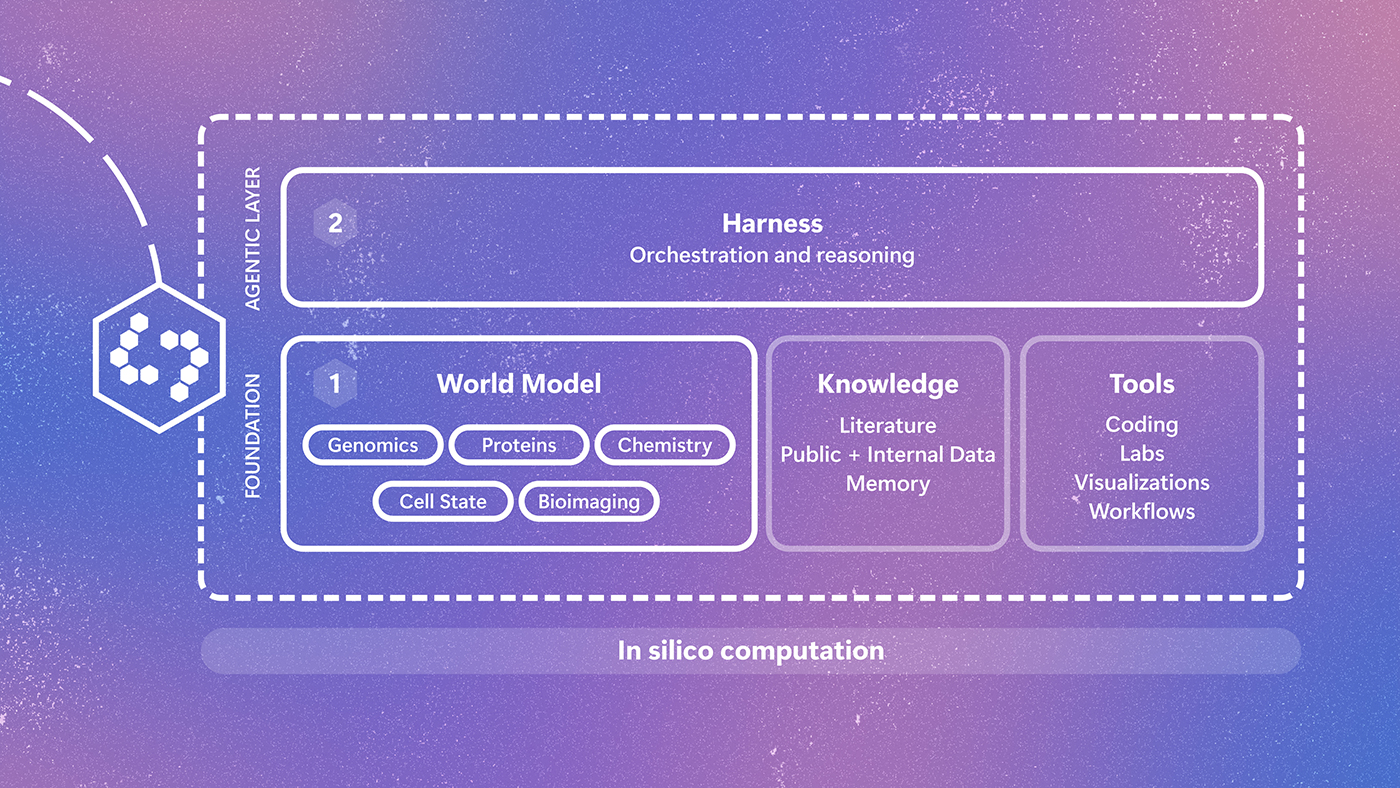
Biology doesn't operate in silos, and neither should the AI representation of it. Quine is an early-stage research effort to create a multimodal world model of biology. By connecting insights across biological scales and modalities, Quine helps scientists computationally search a space far larger than intuition allows and prioritize hypotheses before they reach the lab. Experimental results provide important feedback, helping researchers sharpen future research directions. The post Introducing Q…