STOT is a self-supervised framework that resolves spatiotemporal ambiguity via structured masking guided by optimal transport and a similarity-aware metric for dynamic inter-node relationships and an optimal transport-based masking strategy to emphasize ambiguous positions during pre-training.
Directional communication has emerged as a key enabling technology for next-generation uncrewed aerial vehicle (UAV) networks to achieve extended transmission ranges and high spectral efficiency. However, the consequent reliance on extremely narrow beamwidths imposes stringent spatial constraints that result in highly...
Sheng-Suo Cai, Yuhong Chen, Lei Lei et al.· IEEE Internet of Things Jour...· 0 citations
OptPipe is presented, a unified framework that jointly optimises partitioning and scheduling for pipeline parallelism and introduces a memory-aware directed acyclic graph (DAG) that captures both task dependencies and the lifetime of intermediate tensors, enabling explicit reasoning about the trade-off between executio...
Ning Wang, A. Raith, Oliver Sinnen· Proceedings of the Internati...· 0 citations
Accurate traffic flow prediction is crucial for intelligent transportation systems (ITS), especially in traffic management and route planning. Although spatiotemporal graph convolutional networks are widely used for traffic flow prediction, the simple network graph structure is not sufficient to extract periodic tempor...
Ling-Long Zhu, Xing-Yu Feng, Yong-Hong Zhang et al.· IEEE Transactions on Knowled...· 0 citations
Reach audiences
Advertise in front of researchers, engineers, and readers.
Graph-structured data in real-world applications often grapple with class imbalance, where underrepresented minority nodes result in biased predictions and diminished learning performance. Although pseudo-labeling methods offer a promising solution for addressing class imbalance, they remain susceptible to pseudo-label...
Zhen-Li He, Chun-Lin Zhu, Cheng Xie et al.· IEEE Transactions on Emergin...· 0 citations
The large-scale integration of renewable energy sources has led to a significant increase in the number of harmonic sources within distribution networks. Concurrently, the altered supply modes introduced by renewable integration have caused dynamic changes in the network topology. Therefore, this paper proposes a three...
Li-Peng Zhou, Zhen-Guo Shao, Fei-Xiong Chen et al.· IEEE Transactions on Power D...· 1 citation
Space–air–ground integrated network (SAGIN) provides a promising computing infrastructure for 6G applications, but scheduling large-scale directed acyclic graph (DAG) tasks in such networks remains challenging due to dynamic topology, heterogeneous resources, and complex intertask dependencies. This article investigate...
Meihui Chen, Jun Liu, Qingxiao Xiu et al.· IEEE Internet of Things Jour...· 0 citations
During high-level synthesis (HLS), scheduling is a critical step that determines the execution order of operations and directly affects circuit performance. However, existing scheduling methods suffer from either poor solution quality or limited scalability for complex designs containing hundreds of operations. This ar...
Jun Zeng, Mingyang Kou, Hai-Long Yao et al.· IEEE Transactions on Compute...· 0 citations
Modern CPU and application-specific integrated circuit (ASIC) development requires engineers to search large design spaces while satisfying power, performance, area, timing, and correctness constraints. Artificial intelligence (AI) is increasingly being integrated into electronic design automation (EDA) to accelerate p...
Jerome Bernard Auman· Zenodo (CERN European Organi...· 0 citations
Abstract: Infectious disease transmission involves interactions occurring at multiple organizational levels, including individuals,households, communities, and regions. Conventional graph and hypergraph neural networks represent pairwise and higher order interactions, but they do not directly provide a recursive repres...
Victor Wanjala, John Matuya, Amenya Collins· Zenodo (CERN European Organi...· 0 citations
Assistant Professor Pat Pataranutaporn describes a new interface that lets everyday users glimpse inside an AI's neural network before their chatbot ever says a word.
Microsoft Research Blog· microsoft.comJul 13, 2026
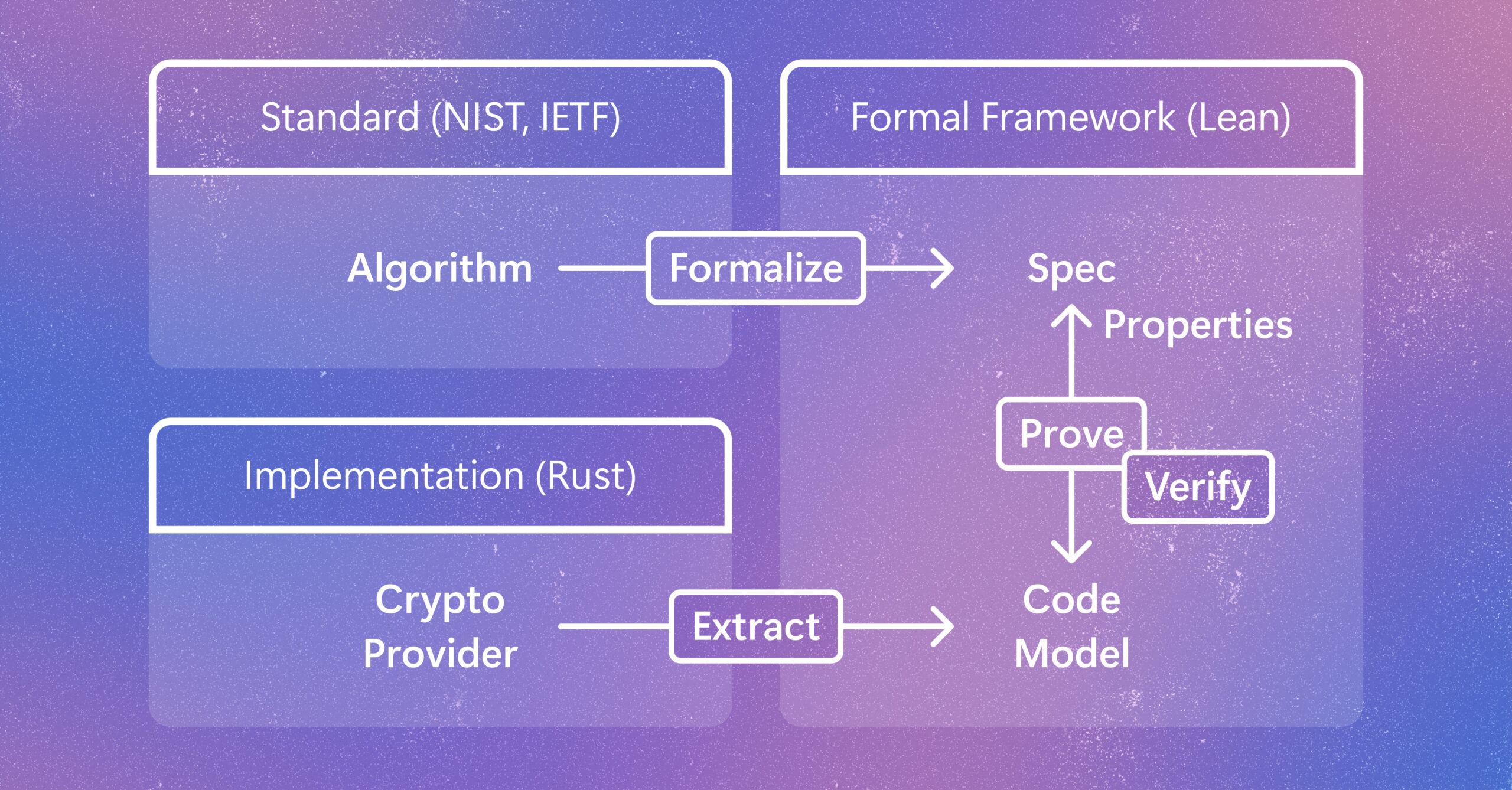
Cryptographic code supports vital protections in modern computing systems. Learn how a new method helps verify code as developers write it while preserving speed and adaptability as it gets implemented and evolves. The post Verifying Rust cryptography in SymCrypt, from standards to code appeared first on Microsoft Research.
MIT News · Artificial Intelligence· news.mit.eduJul 6, 2026
PhD student Rachel Sava, winner of the Envisioning the Future of Computing Prize, explores transformative improvements and dystopian risks of neural technology.