A Physics-Informed Topology-Adaptive Graph Convolutional Network for Harmonic Source Location in Three-Phase Distribution Networks With Renewable Energy Integration
Oct 2026· IEEE Transactions on Power Delivery· Vol 41, pp. 2060-2078· 1 citation· 40 references
Abstract
The large-scale integration of renewable energy sources has led to a significant increase in the number of harmonic sources within distribution networks. Concurrently, the altered supply modes introduced by renewable integration have caused dynamic changes in the network topology. Therefore, this paper proposes a three-phase distribution network harmonic source location method based on a physics-informed topology adaptive graph convolutional network. Firstly, a harmonic pseudo-measurement method based on emission characteristics modelling is developed to address the shortage of harmonic measurements. Secondly, considering the dynamic changes in the distribution network topology, a multi-layer perception topology adaptive graph convolutional neural network is proposed, which is used to establish the mapping relationship between harmonic measurements and state variables. Meanwhile, the harmonic transfer equation and system parameters are embedded into the neural network training as physical constraints to ensure the results conform to physical properties. Then, a harmonic source identification criterion is established, and the long-term statistical index derived from the estimated harmonic injection current is used to locate harmonic sources in the distribution network. Finally, the effectiveness of the proposed method was verified in the IEEE 37-bus system and the actual system.
Transient Stability Assessment is the first line of defense for the safe and stable operation of power grids, which is decisive for ensuring the continuity of power supply and reducing system operational risks. Addressing the challenges that traditional time-domain simulation methods have low computational efficiency a...
Xiao-Xiao Lu, Bao-Hua Sun, Bin Zhang et al.· European Conference on Elect...· 0 citations
INTRODUCTION: Fault localization in active distribution networks (ADNs) is challenging because feeder topology and electrical coupling may become inconsistent under operating conditions with high penetration of distributed energy resources. Moreover, purely data-driven models often provide limited physical interpretabi...
Yi Zheng, Rui-Qiang Zhang, Peng-Fei Qu et al.· EAI Endorsed Transactions on...· 0 citations
Probabilistic power flow quantifies voltage and phase angle uncertainty under variable photovoltaic generation, but repeated AC Monte Carlo simulation is costly. A local topology change also modifies the electrical operator and state dimension when only a small target data set is available. We propose a Basis Constrain...
Jin-Bao Wang, Jun Liu, Hao-Bo Zhang et al.· Italian National Conference...· 0 citations
The integration of high-density distributed energy, complex loads, and multi-energy flows in urban energy internets complicates the dynamic uncertainty of harmonic evolution, driven by high-frequency fluctuations from distributed energy sources and sudden load switching in industrial processes. To address the resulting...
J.-Q. Peng, Bao-Min Fang, Hai-Ping Ye et al.· Advanced Electromagnetics· 0 citations
With the increasing penetration of renewable energy resources and the continuous diversification of power system operating conditions, data-driven methods are becoming an important means for real-time optimal power flow (OPF) decision-making in power system planning and operation because of their capability to process...
Zhen-Cheng Liang, Shan-Yu Liang, Li Xiong et al.· Energies· 0 citations
Assistant Professor Pat Pataranutaporn describes a new interface that lets everyday users glimpse inside an AI's neural network before their chatbot ever says a word.
Microsoft Research Blog· microsoft.comJul 13, 2026
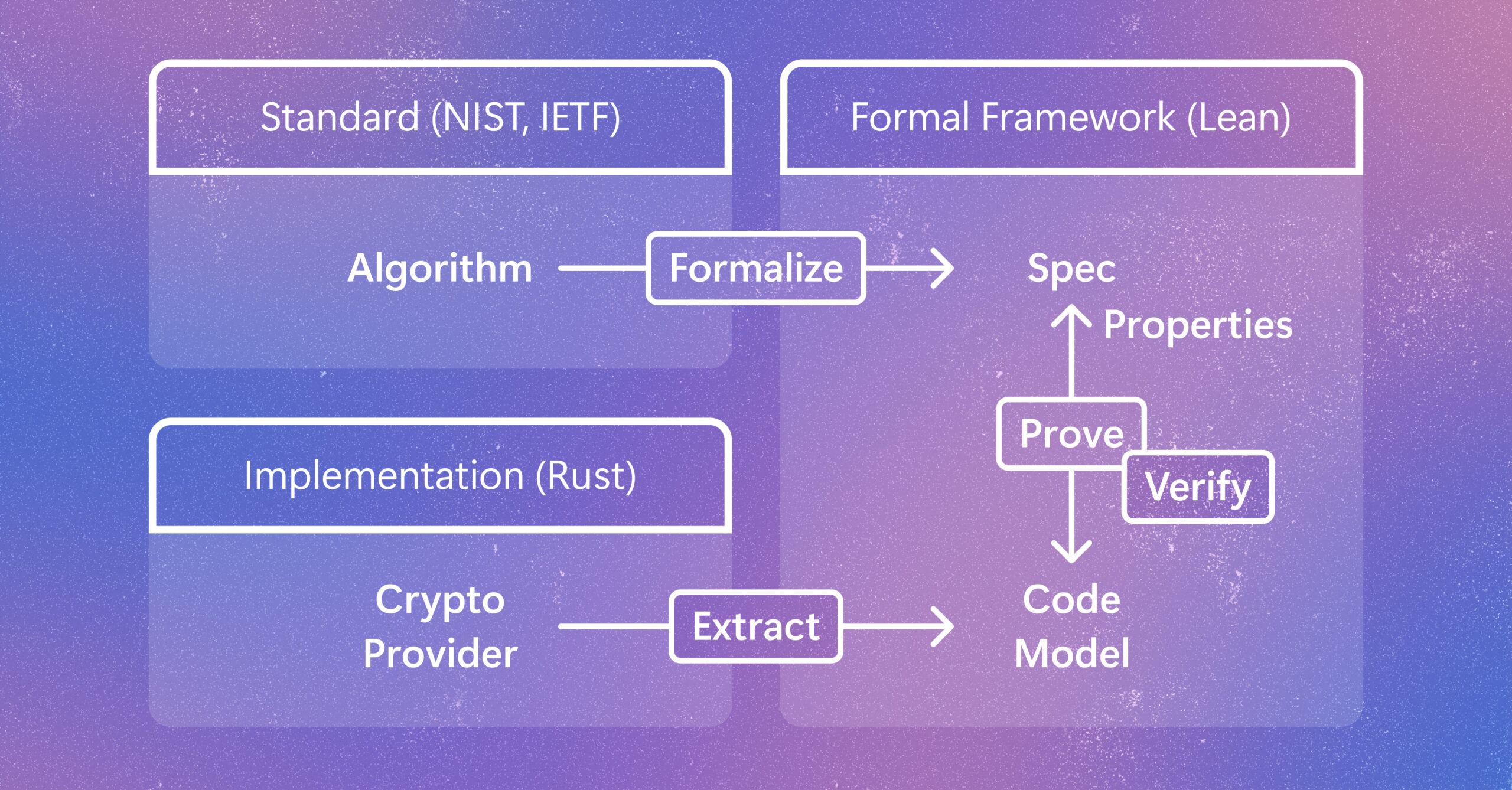
Cryptographic code supports vital protections in modern computing systems. Learn how a new method helps verify code as developers write it while preserving speed and adaptability as it gets implemented and evolves. The post Verifying Rust cryptography in SymCrypt, from standards to code appeared first on Microsoft Research.
MIT News · Artificial Intelligence· news.mit.eduJul 6, 2026
PhD student Rachel Sava, winner of the Envisioning the Future of Computing Prize, explores transformative improvements and dystopian risks of neural technology.