
Verifying Rust cryptography in SymCrypt, from standards to code
Cryptographic code supports vital protections in modern computing systems. Learn how a new method helps verify code as developers write it while preserving speed and adaptability as it gets implemented and evolves. The post Verifying Rust cryptography in SymCrypt, from standards to code appeared first on Microsoft Research.
More from the blog
 GPT-Lab
· gpt-lab.eu
Sep 3, 2026
GPT-Lab
· gpt-lab.eu
Sep 3, 2026
Adaptive AI Agents in Construction Workflows
Adaptive AI agents can help make BIM data more machine-readable by navigating IFC models, interpreting inconsistent information, and mapping it to defined standards. In this blog, Alok Rawat shares findings from a real-world pilot in construction workflows. The post Adaptive AI Agents in Construction Workflows appeared first on GPT-Lab.
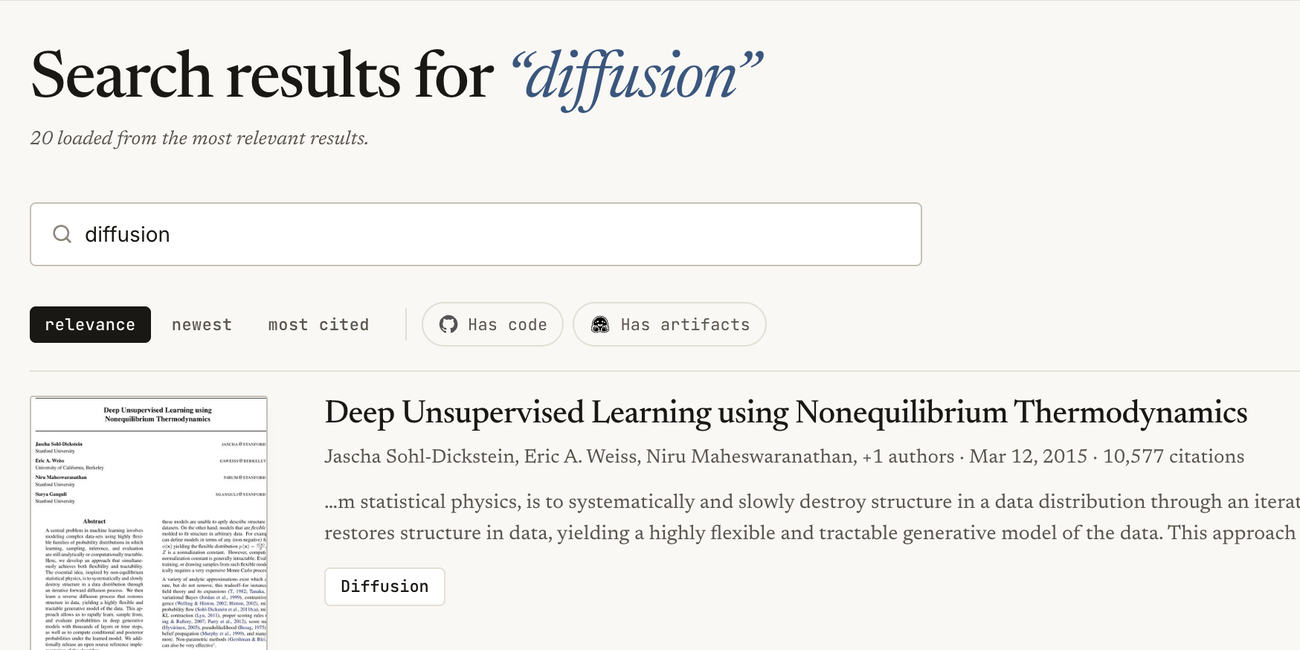
How Hugging Face Inference Endpoints, Jobs, and Buckets Power Search on Papers with Code
We’re on a journey to advance and democratize artificial intelligence through open source and open science.
GPT-Lab
· gpt-lab.eu
Aug 5, 2026
How NGINX Vulnerabilities Have Evolved
What 17 years of advisories reveal about recurring weaknesses, risky modules,patching speed, and static-analysis limits The short version: NGINX usually releases small fixes at or before public disclosure. Its biggest recurring problem is memory safety, while newer protocol code such as HTTP/2 and HTTP/3 has become a major area of risk. Why look at NGINX? NGINX runs as a web server, reverse proxy, and gateway across a large part of the Internet. A flaw in request parsing, protocol handling, or m…

How a medical database developed at MIT evolved into a global standard of data-sharing
The visionary PhysioNet platform launched 25 years ago, based on a system developed at MIT in the 1970s. It has become one of the most comprehensive biomedical and clinical data repositories in existence.
Related papers
Integration of molecular coarse-grained model into geometric representation learning framework for protein-protein complex property prediction
MCGLPPI, a novel geometric representation learning framework that combines graph neural networks (GNNs) with the MARTINI molecular coarse-grained (CG) model to predict overall PPI properties accurately and efficiently, offers an effective and efficient solution for PPI overall property predictions.
PepPCBench is a Comprehensive Benchmarking Framework for Protein-Peptide Complex Structure Prediction
PepPCBench enables a robust evaluation of PFNN-based methods and supports their continued development for peptide-protein structure prediction, and highlights the influence of peptide length, conformational flexibility, and training set similarity on prediction accuracy.
DRHIN: An Integrated and Interactive Web Server for Drug Repositioning
The DRHIN platform provides a code-free portal supporting three key predictive tasks: discovering drug-disease associations, repurposing existing drugs for new indications, and identifying potential therapies for specific diseases, making analyses accessible and reproducible.
Q‐GEM: Quantum Chemistry Knowledge Fusion Geometry‐Enhanced Molecular Representation for Property Prediction
The Q‐GEM comprises a GNN embedded with the molecular electronic and complete 3D geometrical structural information as well as several well‐designed multiscale SSL tasks, achieving superior absolute molecular conformation prediction and conformational discrimination.