Skip to content

GraphGS: Mitigating Pseudo-Label Shift in Imbalanced Node Classification via Balanced Feature Propagation and Minority Node Selection

Oct 2026 · IEEE Transactions on Emerging Topics in Computational Intelligence · Vol 10, pp. 3806-3821 · 0 citations · 41 references

Abstract

Graph-structured data in real-world applications often grapple with class imbalance, where underrepresented minority nodes result in biased predictions and diminished learning performance. Although pseudo-labeling methods offer a promising solution for addressing class imbalance, they remain susceptible to pseudo-label shift. This phenomenon occurs when class biases in pseudo-labels propagate during data augmentation, further compromising model effectiveness. To overcome these challenges, we present GraphGS, an innovative framework designed to alleviate pseudo-label shift in class-imbalanced graph datasets. GraphGS integrates two pivotal components: a feature balancer that curtails excessive information transfer from majority to minority nodes, safeguarding the unique characteristics of minority classes, and a node selector that identifies high-confidence minority nodes through similarity metrics. Together, these components enhance minority class representations without introducing noise, enabling more equitable and reliable training of Graph Neural Networks (GNNs). Comprehensive experiments on diverse real-world datasets underscore the robustness and adaptability of GraphGS. Notably, on the CiteSeer dataset, GraphGS achieves an outstanding 2.60% improvement in accuracy over state-of-the-art methods, marking a significant advance in minority class classification.
View source

Similar papers

Preprint Aug 2026

MDTE: Minority-Aware Diffusion over Temporal Edge Events for Imbalanced Node Classification

Class-imbalanced node classification on temporal graphs is challenging because majority-dominated temporal propagation progressively assimilates minority representations, while conventional node and neighborhood information provides insufficient discriminative evidence for minority classes. To address these issues, we...

Zelong Zhou, Tianming Zhang, Zheng-Yi Yang et al. · 0 citations
Conference Open access 2026

Graph–Temporal Fraud Detection with Triplet Loss under Class Imbalance

Financial fraud detection in transaction networks is challenging due to evolving attack strategies, complex relational structures, and extreme class imbalance. We propose a hybrid deep learning model that fuses Graph Convolutional Neural Networks (GCNNs) with bidirectional LSTMs enhanced by temporal attention, enabling...

Ofonime Dominic Okon, Imo Enang, B. Stephen et al. · 0 citations
#natural language process... Preprint Aug 2026

AIA$^{2}$: Attribute-Agnostic Imbalance Augmentation for Subgroup Robustness

Attribute-Agnostic Imbalance Augmentation (AIA) is proposed, a framework for improving model robustness under varying subgroup imbalances without explicit subgroup annotations and shows improved performance on the lowest-performing subgroups and consistent gains over competitive baselines.

Hanshu Rao, Guang-Zeng Han, Xiao-Lei Huang · 0 citations
#machine learning Preprint Aug 2026

RoBell-RVFL: A Robust Generalized Bell Random Vector Functional Link Network

RoBell-RVFL is proposed, a robust and lightweight generalized bell random vector functional link network that redefines how randomized models handle class imbalance and noisy data and achieves adaptive control over sample contributions without sacrificing the closed-form learning efficiency of RVFL networks.

A. Rahaman, A. Quadir, M. Tanveer · 0 citations
Open access Aug 2026

Hybrid-HGT: A unified deep learning framework for community detection in heterogeneous attributed graphs

A combined HGT-based framework incorporating contrastive representation learning and deep clustering with multi-round training via pseudo-labels is presented, enabling the model to better deal with label scarcity, heterogeneous dependencies, and overlapping semantics in practical, complex, attributed networks.

Hamza Haddad, Hicham Attariuas, A. Younes · 0 citations
Open access Aug 2026

Learning with Blacklists on Graphs via Prototype-Guided Dual-Frequency Filtering

Graph-based fraud detection plays a critical role in identifying anomalous accounts and preventing financial losses in real-world systems, where graphs often contain millions of nodes but only a limited number of blacklist labels are available. Existing graph neural network approaches typically rely on full-graph messa...

Hang Yu, Zheng-Yang Liu · 0 citations

Related blog posts

Microsoft Research Blog Jul 13, 2026

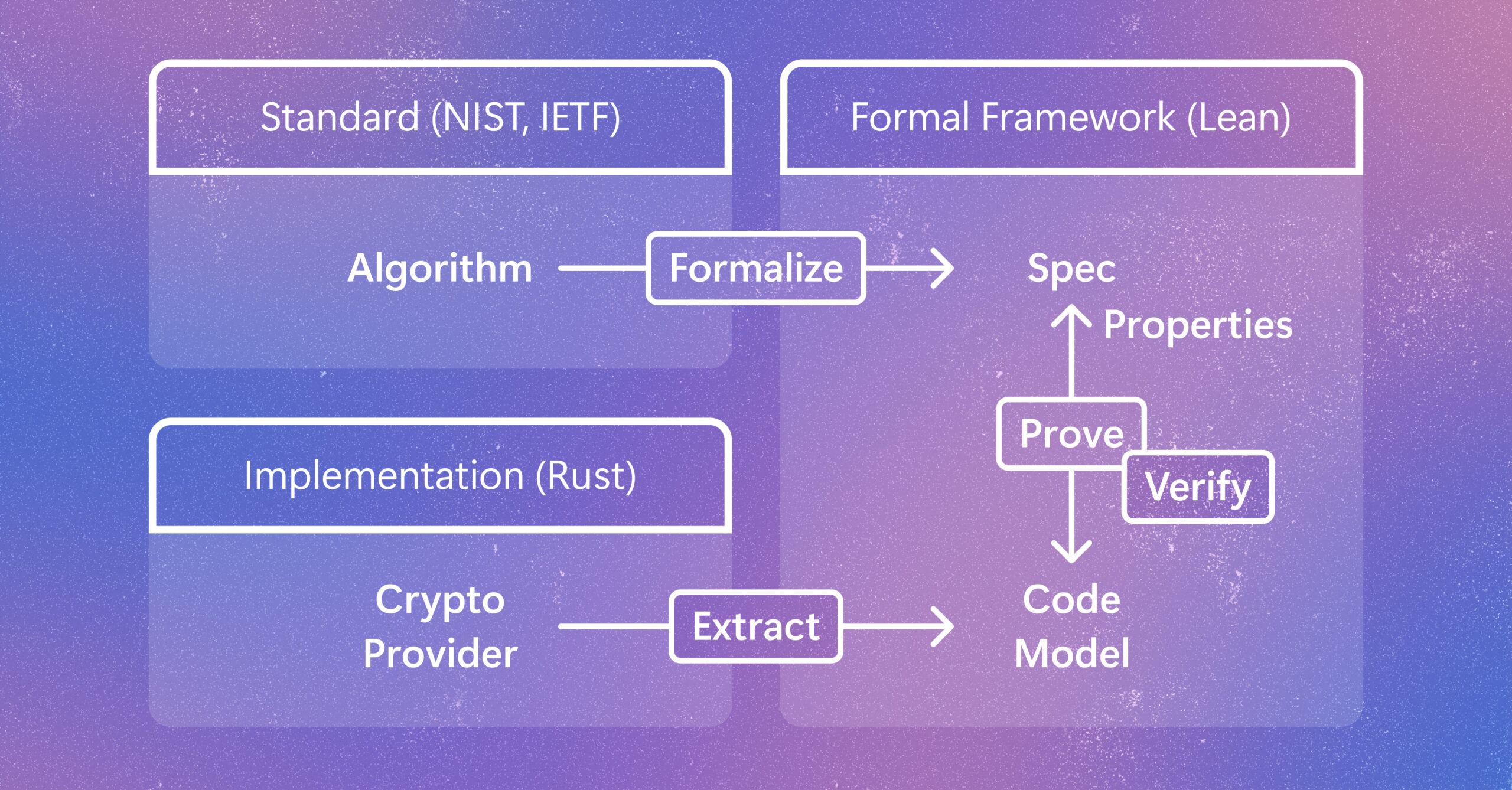
Verifying Rust cryptography in SymCrypt, from standards to code

Cryptographic code supports vital protections in modern computing systems. Learn how a new method helps verify code as developers write it while preserving speed and adaptability as it gets implemented and evolves. The post Verifying Rust cryptography in SymCrypt, from standards to code appeared first on Microsoft Research.

We use cookies to run the site and, with your consent, for analytics and to show ads. See our Cookie Policy.