Oct 2026· IEEE Internet of Things Journal· Vol 13, pp. 45587-45604· 0 citations· 50 references
Abstract
Space–air–ground integrated network (SAGIN) provides a promising computing infrastructure for 6G applications, but scheduling large-scale directed acyclic graph (DAG) tasks in such networks remains challenging due to dynamic topology, heterogeneous resources, and complex intertask dependencies. This article investigates DAG task scheduling in SAGIN with the objective of minimizing the weighted cost of completion delay and energy consumption. To address the exponential action-space growth caused by large DAGs, we propose a dynamic task execution window (DTEW)-enabled hybrid graph-transformer (HGT)-proximal policy optimization (PPO) framework. DTEW dynamically constructs the executable task window at each decision epoch according to DAG dependency constraints and real-time resource feasibility, while incorporating bounded deferral and automatic retry strategies to improve scheduling flexibility and fault tolerance. Unlike prior graph neural network (GNN)-based schedulers that capture only explicit serial dependencies along DAG edges, the HGT-PPO architecture further models the latent contention structure among parallelizable subtasks within each execution window and the cross-domain alignment between task requirements and heterogeneous server capabilities, enabling a more comprehensive state representation for policy learning. Extensive experiments under varying DAG scales, server configurations, and network volatility conditions demonstrate that HGT-PPO consistently outperforms existing methods in total cost, task completion rate, and robustness.
With the rapid development of the Internet of Things, computation intensive directed acyclic graph (DAG) tasks have become increasingly common in cloud-edge-end collaborative environments. However, cloud, edge, and end nodes are highly heterogeneous in computing capacity, network bandwidth, and energy consumption, whic...
Yan Qi, Chen-Wei Wang, Zi-Han Shen et al.· 0 citations
G-STAR is a general graph-based scheduling framework that formalizes complex MAS pipelines as attributed Directed Acyclic Graphs (DAGs) and develops an industry-grade orchestration stack with asynchronous execution, resilient serving, and audit-friendly artifacts, offering a practical solution for optimizing web-scale...
Jia-Bao Song, Yun-Sheng Xia, Bei-Bei Kong et al.· Proceedings of the 32nd ACM...· 0 citations
This paper presents AOE–CP (AON DAG with Edge-Weighted Transformation and Critical Path Scheduling), a structure-aware hybrid scheduling architecture for V2X testing that achieves performance gains through domain-specific structural reorganization rather than new scheduling rules.
Zhu-Hua Zhang, Ning Ye, Chong-Yang Wang et al.· Algorithms· 0 citations
The Heterogeneous Graph Transformer (HGT)‐Scheduler is proposed, a reinforcement learning framework that explicitly models the JSSP as a heterogeneous graph, demonstrating that explicitly modeling edge semantics improves reinforcement learning for intelligent job shop scheduling.
Bulent Soykan, Fatih Kasimoğlu· Advanced Intelligent Systems· 0 citations
This work proposes HiGFRL, a Hierarchical Graph Fusion-Driven Reinforcement Learning framework, which designs a fusion-driven dual-network architecture to optimize RL decision-making and incorporates a topology-prior-guided hybrid reward mechanism that distills static topological priors into the learning process to acc...
The Flexible Job Shop Scheduling Problem (FJSP) is an NP-hard optimization challenge with significant industrial applications, especially for large-scale instances. Traditional approaches, such as Priority Dispatching Rules (PDRs), often struggle with time-intensive design processes and suboptimal performance as proble...
Jeongwon Park, Feng Ju· IISE Annual Conference &...· 0 citations
Related blog posts
MIT News · Artificial Intelligence· news.mit.eduJul 15, 2026
Assistant Professor Pat Pataranutaporn describes a new interface that lets everyday users glimpse inside an AI's neural network before their chatbot ever says a word.
Microsoft Research Blog· microsoft.comJul 13, 2026
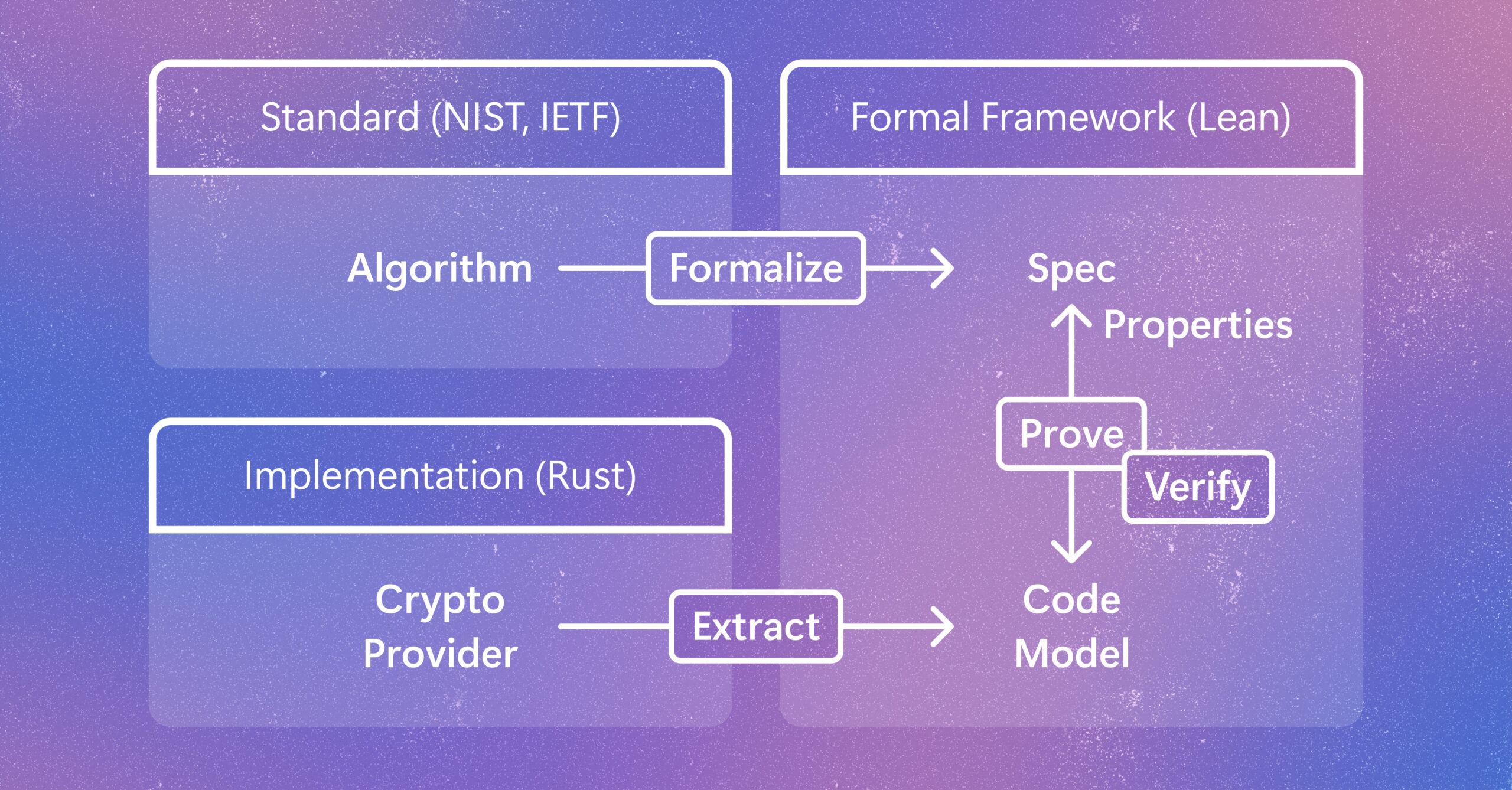
Cryptographic code supports vital protections in modern computing systems. Learn how a new method helps verify code as developers write it while preserving speed and adaptability as it gets implemented and evolves. The post Verifying Rust cryptography in SymCrypt, from standards to code appeared first on Microsoft Research.
MIT News · Artificial Intelligence· news.mit.eduJul 6, 2026
PhD student Rachel Sava, winner of the Envisioning the Future of Computing Prize, explores transformative improvements and dystopian risks of neural technology.