Cooperative localization (CL) is a key enabler for future cooperative intelligent transportation system applications. By sharing and fusing multisource information, it can provide high-accuracy localization for connected autonomous vehicles in GNSS-denied or limited environments. Practical CL scenarios often involve he...
Sheng-Sheng Xing, Hai-Gen Min, Xia Wu et al.· IEEE Internet of Things Jour...· 0 citations
Multi-UAV systems in Space-Air-Ground Integrated Networks (SAGINs) offer solutions for diverse applications, but realizing their full potential in search and rescue (SAR) is challenged by complex terrains, limited infrastructure, and dynamic interferences. These demanding environments reveal shortcomings in jointly opt...
Peng-Xin Zhao, Hong-Bing Cheng, Hang-Yu Zhang et al.· IEEE Transactions on Mobile...· 0 citations
Multi-vehicle collaborative perception (MvCP) is a promising paradigm to enhance the capability of autonomous driving (AD). However, meeting the low latency and high accuracy requirements in a distributed, dynamic, and heterogeneous vehicular network is challenging. In this paper, we formulate a distributed framework e...
Wen-Zhao Zhang, Shu-Jun Han, Xiao-Dong Xu et al.· IEEE Transactions on Mobile...· 0 citations
With the rapid advancement of mobile technology and ubiquitous computing, spatial crowdsourcing has emerged as a promising computing paradigm. The growing complexity of spatial tasks has increasingly driven the demand for coordination among interdependent tasks and the cooperative participation of mobile workers, which...
Lin-Shen Luan, Wei Chen, Ran Feng et al.· IEEE Transactions on Mobile...· 0 citations
Reach audiences
Advertise in front of researchers, engineers, and readers.
Adversarial example detectors are often tied to the classifier backbone they were trained on, limiting reuse when the protected model is replaced or upgraded. Directly transferring such detectors across backbones is challenging because different networks generally produce incompatible internal representations. We propo...
In recent years, Graph Neural Networks (GNNs) and architecture search frameworks have gained extensive application in non-Euclidean data processing, attributable to their superior capacity in managing unstructured data. Nevertheless, traditional approaches typically apply uniform convolution operations to all nodes, re...
Lintao Yanga, Sirui Lia, Ya-Qing Wang et al.· 0 citations
Abstract Colorectal cancer remains a leading cause of global mortality, driving demand for precise screening methodologies that leverage complex genomic architectures. The functional interplay between spatial chromatin organization and regulatory networks is increasingly recognized as an important component of malignan...
Min-Gyu Go, Ji-Won Im, In-Su Jang et al.· Scientific Reports· 0 citations
Abstract Cheminformatics focuses on the accurate prediction of physicochemical properties, which plays a crucial role in molecular modeling and materials science, as experimental determination is often time-consuming and costly. In this study, we propose a machine learning based framework for predicting physicochemical...
Naveed Iqbal, Wakeel Ahmed, Muhammad Waseem Akram et al.· Scientific Reports· 0 citations
Grid pattern recognition is of great significance for spatial pattern cognition, cartographic generalization, and multi-scale representation. To address the issues that existing methods rarely consider multi-level features and insufficiently utilize the learning and mining capabilities of intelligent models, this paper...
Grid pattern recognition is of great significance for spatial pattern cognition, cartographic generalization, and multi-scale representation. To address the issues that existing methods rarely consider multi-level features and insufficiently utilize the learning and mining capabilities of intelligent models, this paper...
Data and trained model weights for "Accelerating dynamic polarizability calculations of organic molecules using equivariant graph neural networks". This record contains the datasets and the trained model weights used in the manuscript. The code is available on GitHub: https://github.com/aimat-lab/DynPolDetanet Contents...
Houssam Metni, M. Kraus, Marie Louise Schubert et al.· Zenodo (CERN European Organi...· 0 citations
Some Breast Imaging Reporting and Data System (BI-RADS) 4 category microcalcifications (MCs) exhibit atypical or overlapping characteristics in terms of morphology and distribution, posing a diagnostic challenge for doctors. The aim was to develop and evaluate a deep learning (DL) model for predicting the malignancy of...
Zhaoxiang Dou, Zhenzhen Shao, Shuzhen Li et al.· BMC Medical Imaging· 0 citations
Assistant Professor Pat Pataranutaporn describes a new interface that lets everyday users glimpse inside an AI's neural network before their chatbot ever says a word.
Microsoft Research Blog· microsoft.comJul 13, 2026
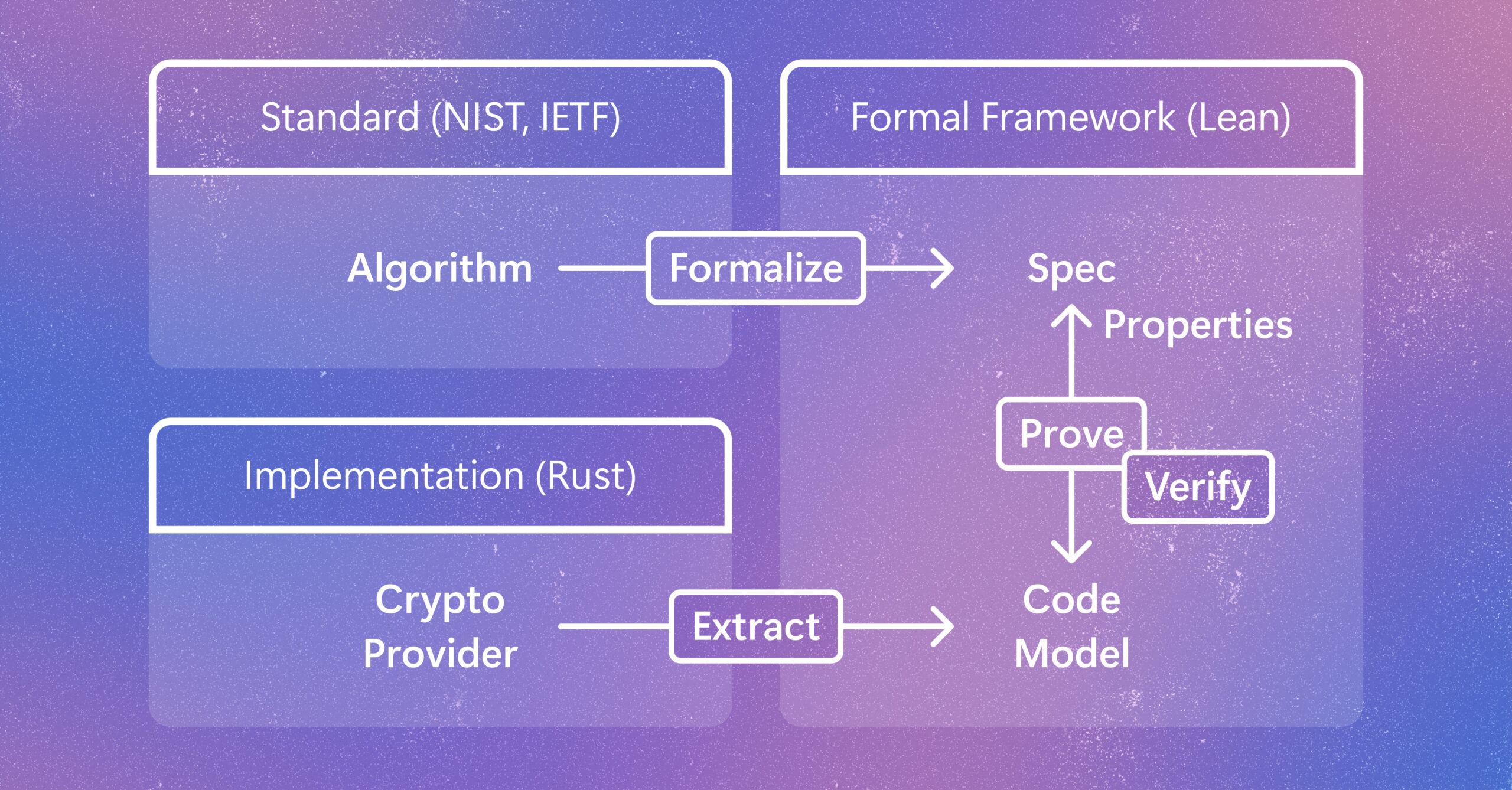
Cryptographic code supports vital protections in modern computing systems. Learn how a new method helps verify code as developers write it while preserving speed and adaptability as it gets implemented and evolves. The post Verifying Rust cryptography in SymCrypt, from standards to code appeared first on Microsoft Research.
MIT News · Artificial Intelligence· news.mit.eduJul 6, 2026
PhD student Rachel Sava, winner of the Envisioning the Future of Computing Prize, explores transformative improvements and dystopian risks of neural technology.