
3 Questions: Neural transparency and the future of AI design
Assistant Professor Pat Pataranutaporn describes a new interface that lets everyday users glimpse inside an AI's neural network before their chatbot ever says a word.
More from the blog
3 Questions: What is the best path forward for AI in academia?
MIT Statistics and Data Science Center Director Alexander (Sasha) Rakhlin shares important considerations for departments and institutions.
Discovering the value of humanistic inquiry
Students in MIT’s Concourse program delve deeply into the human condition, debate challenging questions, and learn to develop judgment about issues that can’t be quantified.
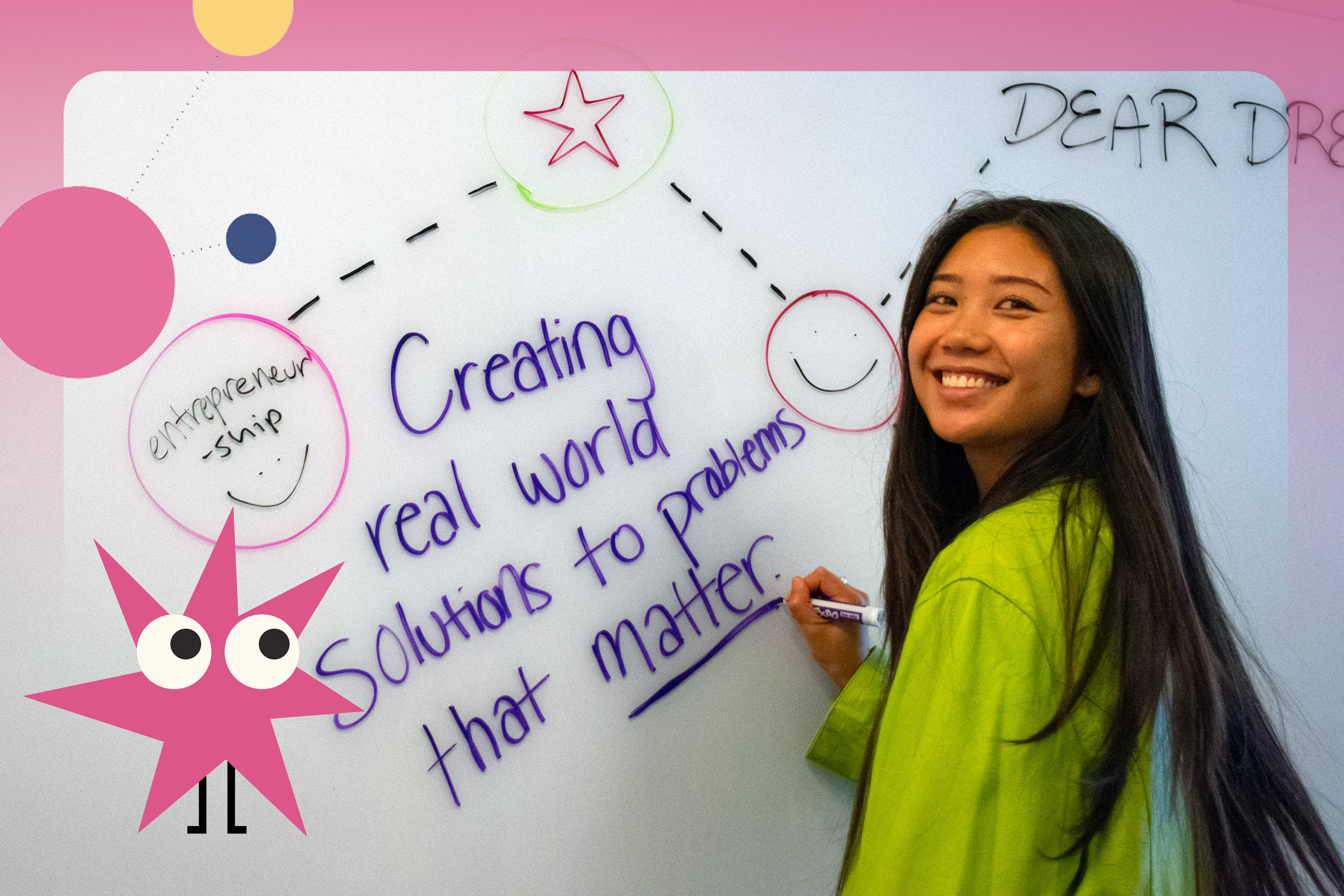
3 Questions: A new resource to empower young entrepreneurs
Martin Trust Center Managing Director Bill Aulet introduces Dear Dreamer, a free platform for middle and high school students who want to learn about entrepreneurship.

New tool lets users repair AI-generated 3D models, then fabricate them just the way they want
“InstructMesh” can generate designs for everyday objects that are easy to edit and fabricate for both experts and newcomers to 3D modeling.
Related papers
Unified and explainable molecular representation learning for imperfectly annotated data from the hypergraph view
OmniMol is presented, a framework using hypergraphs to improve predictions of molecular properties, addressing challenges of imperfect data annotation and enhancing model explainability, and achieves state-of-the-art performance in properties prediction.
AI-Powered Anomaly Detection in Cloud-Based Applications
The findings suggest that AI-powered anomaly detection significantly strengthens observability and security in cloud-based applications, enabling proactive threat mitigation and operational optimization in increasingly complex distributed environments.
Toward a Unified Security Systems Theory for Autonomous AI Systems
This paper synthesizes the findings of the five-paper AI Agent Security Series into a unified, formal, and falsifiable theory of autonomous agent security, and establishes three meta-theorems: the Component Insufficiency Theorem, the Dynamic Necessity Theorem, and the Interaction Irreducibility Theorem.
Anomaly detection in smart power grids with graph-regularized MS-SVDD: a multimodal subspace learning approach
A generalized Multimodal Subspace Support Vector Data Description model with graph-embedded regularization is proposed, illustrating how relational and structural information can be systematically embedded into one-class models, enabling robust learning under complex, high-dimensional, and multimodal conditions.