This paper compares descriptor models and geometric point graph neural networks for structural response prediction in procedurally generated L-shaped brackets with zero to eight holes. Complexity is quantified using hole count, removed-area fraction, boundary multiplier, inverse compactness and normalized minimum ligam...
Pancho Dachkinov, Tanio Tanev· Zenodo (CERN European Organi...· 0 citations
Abstract Quantum machine learning holds the promise of combining the success of classical machine learning methods with the power of quantum computing, however one of the largest obstacles facing the field is the problem of barren plateaus. Parameterised quantum circuits offer a flexible framework for developing quantu...
Tiffany Duneau, Colin Krawchuk, Anna Pearson· Quantum Science and Technolo...· 0 citations
Abstract The continuous development of modern electronic devices has resulted in increasingly complex Integrated Circuits (ICs). As the number of logic gates and circuit components increases, designing efficient electronic systems becomes more challenging. Engineers need to consider several important factors, including...
JOHN PAULO ALCANTARA· Zenodo (CERN European Organi...· 0 citations
Reach audiences
Advertise in front of researchers, engineers, and readers.
Abstract The continuous development of modern electronic devices has resulted in increasingly complex Integrated Circuits (ICs). As the number of logic gates and circuit components increases, designing efficient electronic systems becomes more challenging. Engineers need to consider several important factors, including...
JOHN PAULO ALCANTARA· Zenodo (CERN European Organi...· 0 citations
Predicting ligand activity across G protein-coupled receptors (GPCRs) requires models that capture both molecular structure and receptor-specific information while remaining robust to chemical and target-domain shifts. We developed a multimodal graph neural network that combines explicit ligand molecular graphs with fr...
Manashi De, Ekarsi Lodh, Shalini Majumder et al.· bioRxiv (Cold Spring Harbor...· 0 citations
This repository provides the complete computational workflow for AlloyGCN-based prediction, surrogate modeling, and explainable analysis of Cantor alloys with additional alloying elements. The pipeline includes: Graph neural network (AlloyGCN) training and evaluation for process-dependent mechanical property prediction...
Jaemin Wang· Zenodo (CERN European Organi...· 0 citations
Graph Neural Network Guided Progressive Metric Updates (GNN-PMU), a graph-aware scheduler that ranks metric changes using topology, utilization, queue, capacity, and pending-update information, is presented.
The fraud of money laundering costs the global financial system USD 800 billion to USD 2 trillion annually, while digital banking contributes to the increasing number and complexity of money laundering transactions. If there are adversarial forces that are constantly adapting their approach to avoid complying with a co...
Tanvir Sajid, Sajida Hafeez· Future Business Journal· 0 citations
The novelty of this work lies in providing a unified, leakage-free comparative framework spanning graph- and non-graph-based deep learning architectures under identical experimental conditions, which provides a realistic and extensible benchmark for future power-grid cybersecurity research.
Graph Neural Networks (GNNs) have achieved widespread success from social networks to AI-for-Science. Most existing GNN frameworks adopt scatter-first (edge-centric) or gather-first (vertex-centric) scheduling paradigms for message passing. However, these paradigms are closely tied to traditional CUDA-core execution mo...
Jin-Liang Shi, Shi-Gang Li, Rong-Tian Fu et al.· IEEE Transactions on Paralle...· 0 citations
Assistant Professor Pat Pataranutaporn describes a new interface that lets everyday users glimpse inside an AI's neural network before their chatbot ever says a word.
Microsoft Research Blog· microsoft.comJul 13, 2026
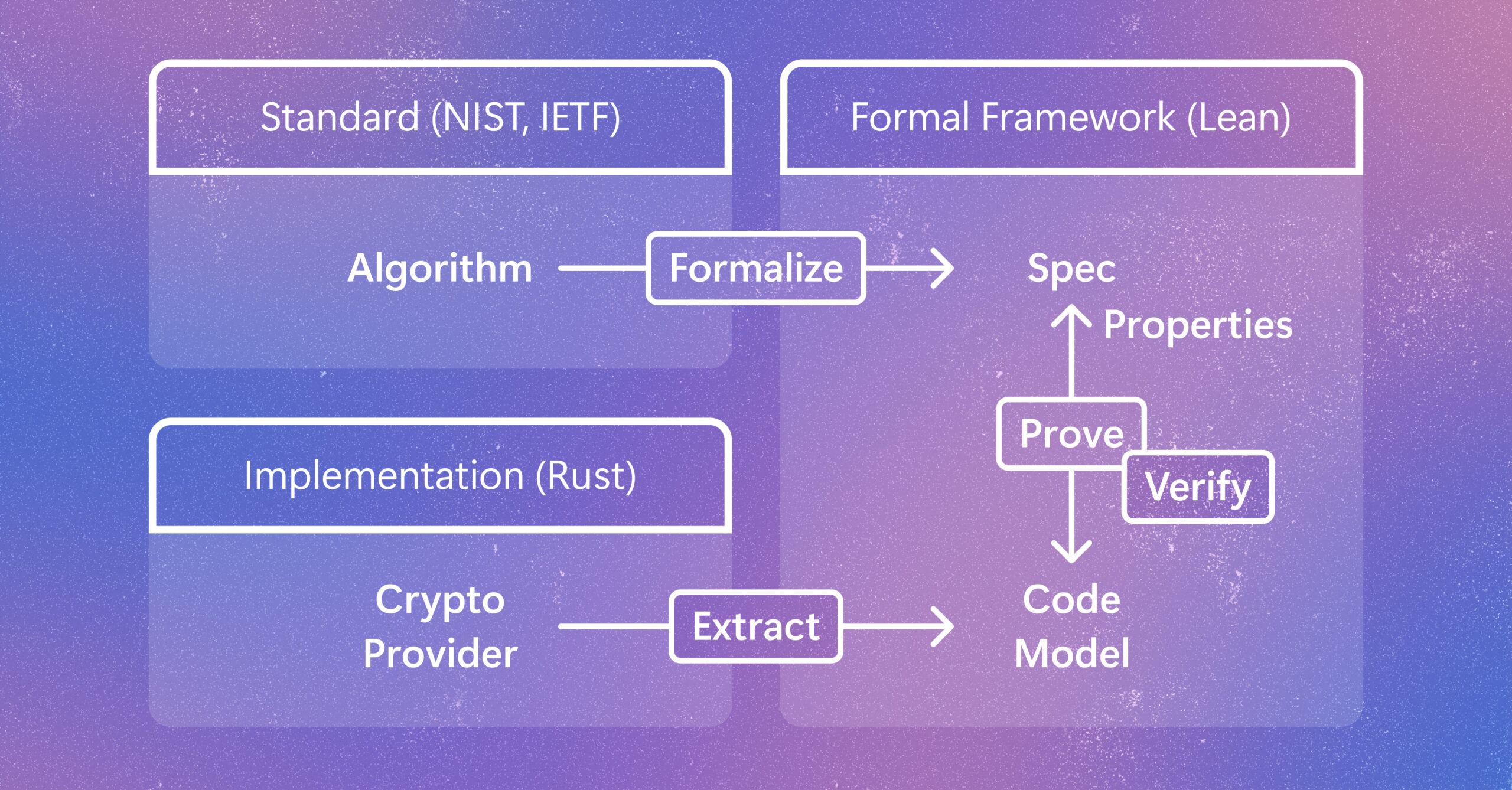
Cryptographic code supports vital protections in modern computing systems. Learn how a new method helps verify code as developers write it while preserving speed and adaptability as it gets implemented and evolves. The post Verifying Rust cryptography in SymCrypt, from standards to code appeared first on Microsoft Research.
MIT News · Artificial Intelligence· news.mit.eduJul 6, 2026
PhD student Rachel Sava, winner of the Envisioning the Future of Computing Prize, explores transformative improvements and dystopian risks of neural technology.