Molecular properties depend on chemical structure at different ranges, from local polar groups governing solvation to extended substructures shaping bioactivity, yet graph neural networks usually fix one propagation scale for every atom. We present PRISM (Per-atom Routing over Intermediate States of Message Passing), i...
R. Zhang, Hong-Gang Wen, Zong-Ru Li et al.· Journal of Chemical Informat...· 0 citations
This work introduces a two-stage source localization with subgraph GNNs (TSLSGs) framework and employs subgraph GNNs to restrict the message-passing receptive field strictly within localized subgraphs, effectively preserving local heterogeneity and mitigating the oversmoothing problem.
Qing Bao, Dong-Shuai Niu, Peng-Fei Jiao et al.· IEEE Internet of Things Jour...· 0 citations
Security-aware API context droid (SACD) is proposed as robust and interpretable detector that outperforms representative baselines under both in-distribution malware detection and cross-year detection and remains stable under obfuscation transformations and maintains malware recall under problem-space perturbations.
De-Qiang Li, Chen-Jian Guo, Peng-Chuan Wang et al.· IEEE Internet of Things Jour...· 0 citations
A problem-driven two-stage spatiotemporal graph network (TSTGN) is proposed, which decomposes the forecasting task into topology-aware wind speed prediction and auxiliary-variable-aware power estimation and suggests that separating wind speed evolution from auxiliary-variable-aware power conversion is a practical model...
Shi-Han Yao, Xing-Yu Ye, Long Wang et al.· IEEE Internet of Things Jour...· 0 citations
Reach audiences
Advertise in front of researchers, engineers, and readers.
Simulation results demonstrate that AMG-routing consistently outperforms traditional and state-of-the-art MARL/GNN-based routing schemes in terms of E2E delay and throughput.
Dong Liu, Li-Ke Jian, Jian-Feng Ma et al.· IEEE Transactions on Mobile...· 0 citations
Precise tumor subtype classification is important for guiding personalized treatment, characterizing tumor heterogeneity, and investigating molecular mechanisms. However, most existing multi-label classification models use flat architectures and do not fully exploit the inherent hierarchical relationships and biologica...
Fault diagnosis of mechanical equipment is essential for ensuring safe and reliable operation and reducing losses caused by unplanned downtime. With the large-scale deployment of sensors and the Industrial Internet of Things, condition-monitoring data have grown rapidly in both volume and dimensionality. Conventional d...
Yan-Lin Chen· Computers and artificial int...· 0 citations
This paper presents a centralised rolling-horizon framework for dynamic freight matching in port-centric supply chains. Rather than solving one large static assignment, the framework advances through the planning horizon in short steps, splitting the dynamic many-to-many problem over time into a sequence of small per-s...
Information diffusion prediction aims to infer future user activations from observed cascade prefixes in social networks, where diffusion unfolds as a complex, irregular, continuous-time process. Existing methods typically model dynamic user preferences by discretizing diffusion into temporal graph or hypergraph snapsh...
Jian Zheng, Fei Xiong, Zhi-Yuan Zhang et al.· Transactions on Graph Intell...· 0 citations
Machine-learning networks can learn without detailed instructions from a designer. Those that do may offer insight into how the brain reorganizes itself during learning.
MIT News · Artificial Intelligence· news.mit.eduJul 15, 2026
Assistant Professor Pat Pataranutaporn describes a new interface that lets everyday users glimpse inside an AI's neural network before their chatbot ever says a word.
Microsoft Research Blog· microsoft.comJul 13, 2026
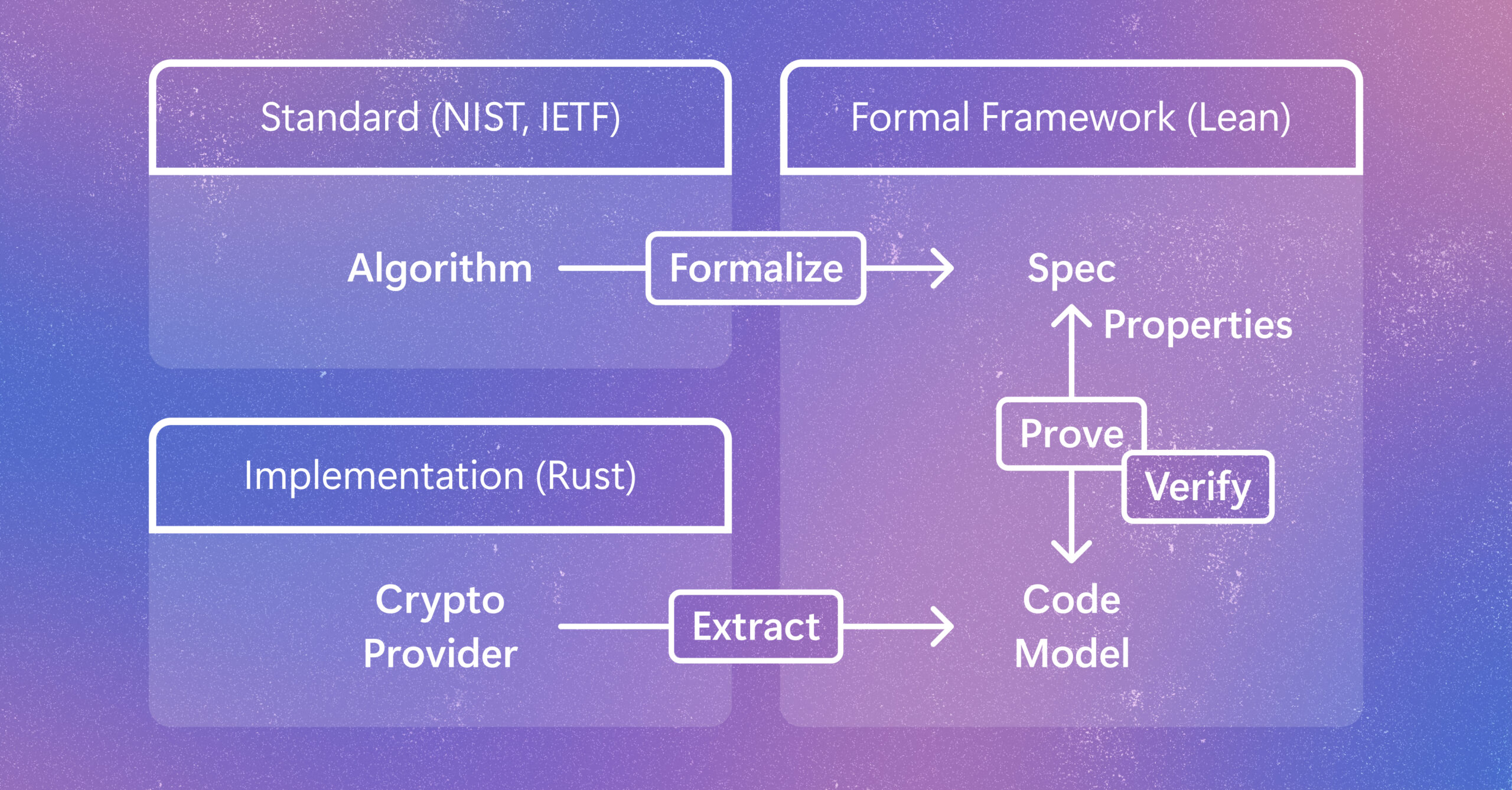
Cryptographic code supports vital protections in modern computing systems. Learn how a new method helps verify code as developers write it while preserving speed and adaptability as it gets implemented and evolves. The post Verifying Rust cryptography in SymCrypt, from standards to code appeared first on Microsoft Research.
MIT News · Artificial Intelligence· news.mit.eduJul 6, 2026
PhD student Rachel Sava, winner of the Envisioning the Future of Computing Prize, explores transformative improvements and dystopian risks of neural technology.
We use cookies to run the site and, with your consent, for analytics and to show ads.
See our Cookie Policy.