Temporal knowledge graph forecasting aims to predict future missing facts from continuously evolving relational data in dynamic information systems. Such forecasting tasks are increasingly important for intelligent applications involving complex interactions among entities, events, and evolving environments. Existing a...
Fei Chen, Bing Guo, Yan Shen et al.· Technologies· 0 citations
Abstract Machine learning interatomic potentials (MLIPs) have emerged as scalable alternatives to first-principles methods such as density functional theory (DFT). Among them, E(3)-equivariant graph neural networks (GNNs) like PACE and MACE are highly accurate but structurally rigid, limiting the incorporation of rich,...
Gautam Jha· Journal of Chemical Theory a...· 0 citations
Artificial Intelligence of Things (AIoT) refers to the deliberate pairing of artificial intelligence with the sensing and connectivity that the Internet of Things (IoT) already provides, so that the data streaming in from distributed devices turns into insight and, ultimately, action [1]. A properly designed AIoT syste...
Abijai M P, Riya Jyothish, L. C. Manikandan· Zenodo (CERN European Organi...· 0 citations
Abstract Digital logic circuits are becoming increasingly complex, making efficient circuit optimization an important part of Electronic Design Automation (EDA). Traditional circuit optimization methods may require extensive computation and predefined rules when dealing with complex circuit structures. This study aims...
Julius Cezar Costa· Zenodo (CERN European Organi...· 0 citations
Reach audiences
Advertise in front of researchers, engineers, and readers.
The loss of indigenous botanical knowledge poses risks to biodiversity conservation and community health by weakening the knowledge of medicinal plants and their traditional use as local plant-based health care options. An integrated system that combines deep learning image recognition with a user-friendly mobile inter...
Code and data accompanying the manuscript Polymer Property Prediction via an Automated Molecular Dynamics Pipeline and Transfer Learning (J. N. Law, D. Lazarenko, T. Bernat, B. C. Knott, M. R. Shirts). The study builds short oligomers (trimers) directly from monomer SMILES and a polymerization mechanism, parameterizes...
Jeffrey Law, Daria Lazarenko, Timotej Bernat et al.· Zenodo (CERN European Organi...· 0 citations
Graph Theory has been established as a fundamental approach to modeling relational data in Artificial Intelligence and Data Science. In this paper, a thorough study of graph-related methods has been conducted with a special focus on Graph Neural Networks (GNNs) and its variants for processing non-Euclidean data structu...
Dr.V.Bhagyalakshmi, Gunnam Prasada Rao· International Journal of Sci...· 0 citations
When edges are removed from a graph, do graph neural networks lose performance because they lose information, or because they lose specific structural signals? We study this with a controlled edge-removal probe. We sparsify graphs from 0% to 95% under three strategies: random removal, removal of cross-label (heterophil...
Aayush Pokhrel· Zenodo (CERN European Organi...· 0 citations
This paper compares descriptor models and geometric point graph neural networks for structural response prediction in procedurally generated L-shaped brackets with zero to eight holes. Complexity is quantified using hole count, removed-area fraction, boundary multiplier, inverse compactness and normalized minimum ligam...
Pancho Dachkinov, Tanio Tanev· Zenodo (CERN European Organi...· 0 citations
Artificial Intelligence of Things (AIoT) refers to the deliberate pairing of artificial intelligence with the sensing and connectivity that the Internet of Things (IoT) already provides, so that the data streaming in from distributed devices turns into insight and, ultimately, action [1]. A properly designed AIoT syste...
Abijai M P, Riya Jyothish, L. C. Manikandan· Zenodo (CERN European Organi...· 0 citations
Reproducibility package accompanying the manuscript Quantization fragility under image corruption is recipe-dependent: paired evidence from INT8 and FP8 object detectors, prepared for Neural Networks. The release contains analysis, pipeline, and validation code; frozen configurations and manifests; compact deterministi...
Dinh Thuan Nguyen, Lam Phuong Nguyen, Vinh Huy Nguyen et al.· Zenodo (CERN European Organi...· 0 citations
This paper compares descriptor models and geometric point graph neural networks for structural response prediction in procedurally generated L-shaped brackets with zero to eight holes. Complexity is quantified using hole count, removed-area fraction, boundary multiplier, inverse compactness and normalized minimum ligam...
Pancho Dachkinov, Tanio Tanev· Zenodo (CERN European Organi...· 0 citations
Assistant Professor Pat Pataranutaporn describes a new interface that lets everyday users glimpse inside an AI's neural network before their chatbot ever says a word.
Microsoft Research Blog· microsoft.comJul 13, 2026
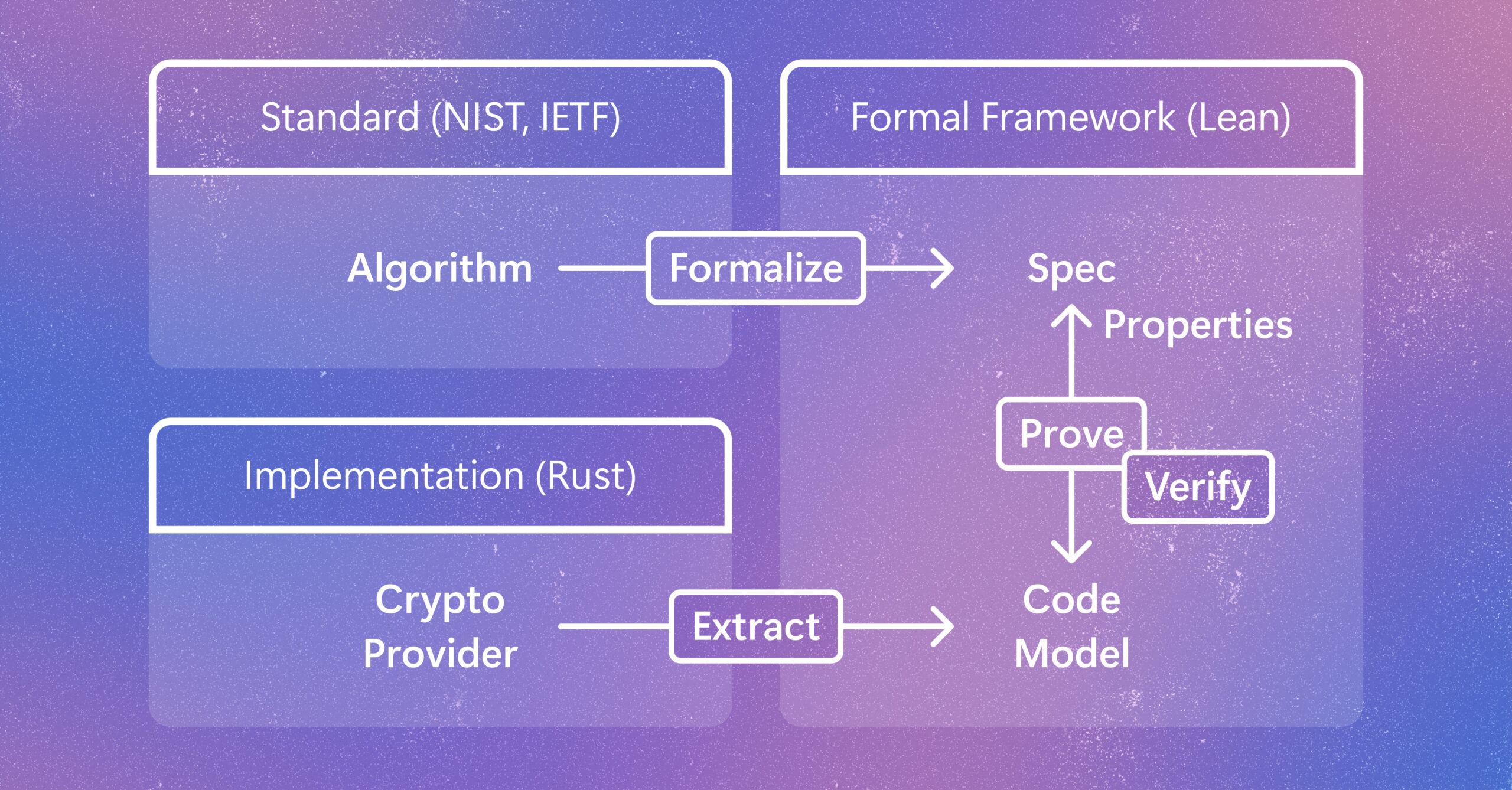
Cryptographic code supports vital protections in modern computing systems. Learn how a new method helps verify code as developers write it while preserving speed and adaptability as it gets implemented and evolves. The post Verifying Rust cryptography in SymCrypt, from standards to code appeared first on Microsoft Research.
MIT News · Artificial Intelligence· news.mit.eduJul 6, 2026
PhD student Rachel Sava, winner of the Envisioning the Future of Computing Prize, explores transformative improvements and dystopian risks of neural technology.