Skip to content

Meta-MARL-ESA: Toward Zero Shot Generalization for Energy Efficient Sleep Scheduling in Dynamic UAV Assisted 6G HetNets

Nov 2026 · Future Internet
UAV Applications and Optimization

Abstract

UAV, mounted aerial base stations offer remarkable deployment flexibility for 6G Non Terrestrial Networks (NTNs), yet their hovering energy demands present a critical sustainability bottleneck, particularly as network topologies continuously evolve in practice. As a first step, we develop MARL-ESA (Energy-Saving Adaptation), a Multi Agent Reinforcement Learning (MARL) framework achieving 48% energy savings in static UAV assisted heterogeneous networks (HetNets) compared with always-on operation through centralized training with decentralized execution (CTDE). However, MARL-ESA remains inherently topology specific, requiring over 1500 retraining episodes whenever UAV positions or traffic patterns change. To overcome this limitation, we propose Meta-MARL-ESA, a meta reinforcement learning extension that enables zero shot generalization across unseen network configurations. The problem is formulated as a Decentralized Partially Observable Markov Decision Process (Dec-POMDP) over a task distribution τ∼p(T), with a permutation invariant Graph Neural Network (GNN) policy trained via Model Agnostic Meta Learning (MAML). Simulation results demonstrate that Meta-MARL-ESA achieves 12× faster convergence on new topologies, preserves 82% of optimal performance in zero shot deployment, improves energy efficiency (EE) by 21.5% over converged baselines in out of distribution (OOD) scenarios, and recovers to 98% of optimal performance within 8 decision epochs during dynamic UAV repositioning events.

View source

Similar papers

#machine learning Review Open access Oct 2014

Software development in startup companies: A systematic mapping study

The results indicate that software engineering work practices are chosen opportunistically, adapted and configured to provide value under the constrains imposed by the startup context.

Nicolò Paternoster, Carmine Giardino, M. Unterkalmsteiner et al. · 394 citations · ⚡54
#machine learning Review Open access Jun 2014

Why Early-Stage Software Startups Fail: A Behavioral Framework

This state-of-practice investigation was performed using a literature review followed by a multiple-case study approach and presents how inconsistency between managerial strategies and execution can lead to failure by means of a behavioral framework.

Carmine Giardino, Xiaofeng Wang, P. Abrahamsson · 175 citations · ⚡19
#machine learning Review Open access Oct 2016

“Failures” to be celebrated: an analysis of major pivots of software startups

This study conducts a case survey study based on the secondary data of the major pivots happened in 49 software startups, and demonstrates that customer need pivot is the most common among all pivot types.

Sohaib Shahid Bajwa, Xiaofeng Wang, Anh Nguyen-Duc et al. · 127 citations · ⚡15
#computer vision Review Open access Mar 2016

Determinants of overweight or obesity among ever-married adult women in Bangladesh

The findings of the study indicate that a large number of women in Bangladesh are suffering from being overweight or obese, and multiple factors are responsible for this including, older age,being from wealthy households, higher education, being from food-secured households, watching TV at least once a week, and being...

Haribondhu Sarma, N. Saquib, M. Hasan et al. · 75 citations · ⚡5
#artificial intelligence Open access Sep 2026

Generating Interesting Scientific Ideas using Knowledge Graphs and LLMs: Evaluations with 100 Research Group Leaders

The rapid growth of scientific literature makes it increasingly challenging for researchers to identify novel and impactful ideas, especially across disciplines. Modern artificial intelligence (AI) systems offer new opportunities for scientific ideation, but how compelling are AI-generated ideas, and how can their qual...

Xuemei Gu, Mario Krenn · 65 citations

Related blog posts

Microsoft Research Blog Jul 13, 2026

Verifying Rust cryptography in SymCrypt, from standards to code

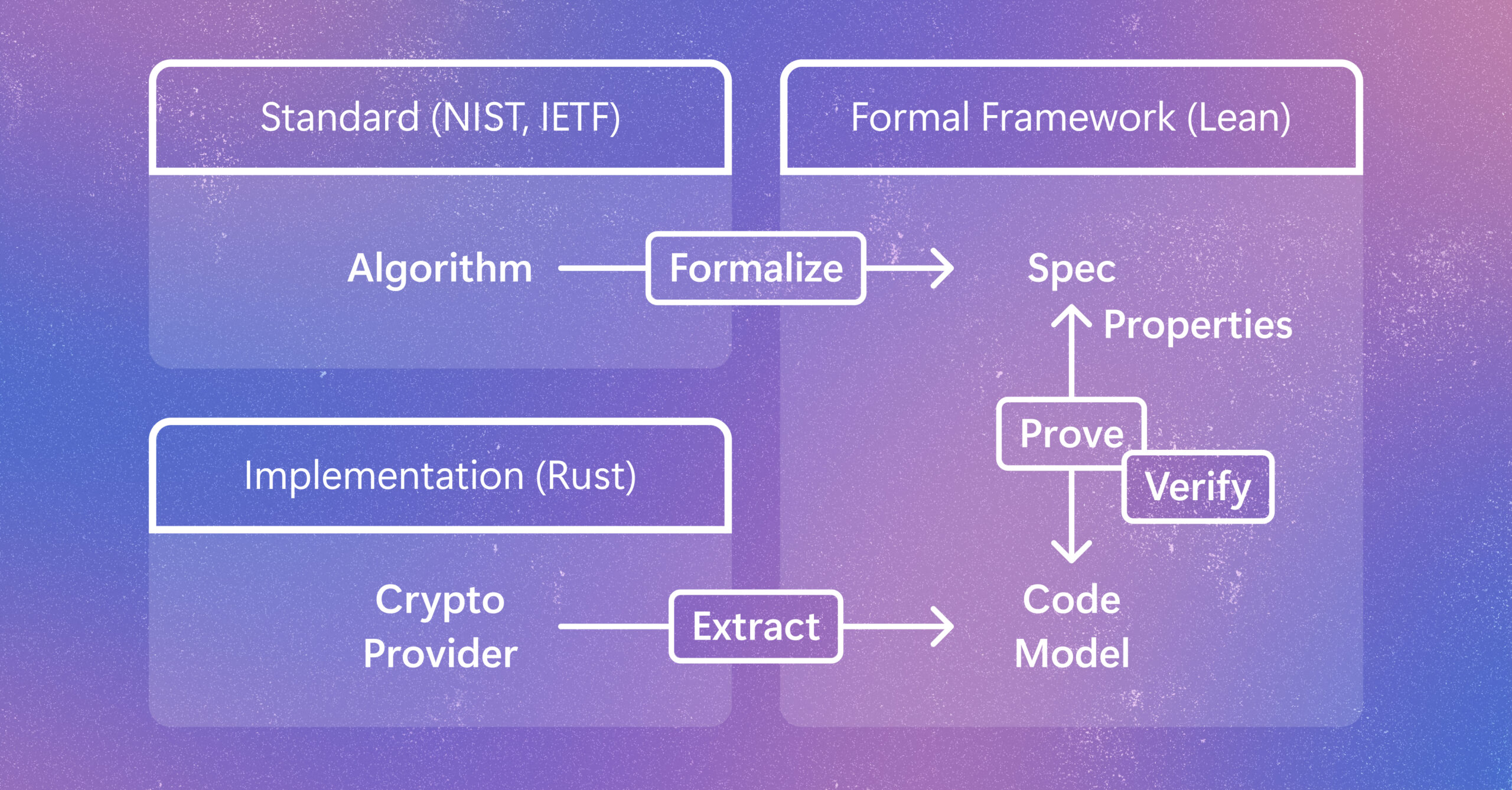
Cryptographic code supports vital protections in modern computing systems. Learn how a new method helps verify code as developers write it while preserving speed and adaptability as it gets implemented and evolves. The post Verifying Rust cryptography in SymCrypt, from standards to code appeared first on Microsoft Research.

We use cookies to run the site and, with your consent, for analytics and to show ads. See our Cookie Policy.
