Intelligent sensing networks generate heterogeneous application-level service requests from aggregated sensing measurements and events, raising critical requirements for data integrity, traceability, and trustworthy service interactions. Blockchain-enabled Web 3.0 infrastructures provide decentralized trust, tamper-evi...
霍如, Xuepeng Shi, Wei Chen et al.· Sensors· 0 citations
Abstract The Internet of Things (IoT) has transformed numerous sectors by facilitating smart devices for collecting and exchanging data. However, the diversity and scale of IoT deployments introduce significant security risks. This paper proposes a generalizable and robust intrusion detection and data security system f...
Kshitiz Saxena, Dhowmya Bhatt· Research Square· 0 citations
A novel heterogeneous graph condensation framework that combines Leading-Tree-based super-node initialization with Joint-Granularity Gradient Matching is proposed, which effectively preserves the intrinsic structural characteristics of the original graph while maintaining stable optimization dynamics during condensatio...
Shen-Ao Yu, Feng-Lin Cen, Ji Xu et al.· IEEE Transactions on Knowled...· 0 citations
An unsupervised sharding blockchain framework based on Graph Neural Network (GNN) called GPBchain is proposed, which achieves explicit joint optimization of CST reduction and inter-shard workload balancing, thereby enhancing the overall throughput of sharding blockchain systems.
Kai-Min Zhang, Xing-Wei Wang, Bo Yi et al.· IEEE transactions on compute...· 0 citations
Reach audiences
Advertise in front of researchers, engineers, and readers.
DGRL designs a novel mechanism to realize distributed inference and training of GNNs, making it possible to generate site-wise deployment policies and drastically improve scalability for coupled decision-making, and exhibits superior scalability compared to federated learning.
Li-Xing Chen, Zhong-Qi Miao, Yang Bai et al.· IEEE transactions on compute...· 0 citations
This letter presents an adhesion-aware framework of joint grasp- and wrench-planning for robotic part removal using a parallel-jaw gripper. We model the effectiveness of part detachment using the peak von Mises stress at the adhered boundary and formulate planning as a constrained optimization that promotes interface s...
Bugart Lan, R. Stone, Xing-Nan Zhou et al.· IEEE Robotics and Automation...· 0 citations
TopCon, a novel hyperbolic Graph Neural Network (GNN) framework designed to models multi-level relationships among themes, concepts, and entities in KGs while mitigating node distribution imbalance, is proposed.
Jian-Ping Zhu, Jin-Song Chen, Kun He· IEEE Transactions on Big Dat...· 0 citations
Symphony is a sharded blockchain designed for efficient smart contract execution that offloads cross-shard smart contract transactions to Trusted Execution Environments (TEEs), where stateless EVMs perform off-chain execution to bypass multi-round consensus, significantly accelerating processing.
Rong-Kai Zhang, Qiu-Yu Ding, Qian-Yi Liu et al.· IEEE transactions on compute...· 0 citations
Machine-learning networks can learn without detailed instructions from a designer. Those that do may offer insight into how the brain reorganizes itself during learning.
MIT News · Artificial Intelligence· news.mit.eduJul 15, 2026
Assistant Professor Pat Pataranutaporn describes a new interface that lets everyday users glimpse inside an AI's neural network before their chatbot ever says a word.
Microsoft Research Blog· microsoft.comJul 13, 2026
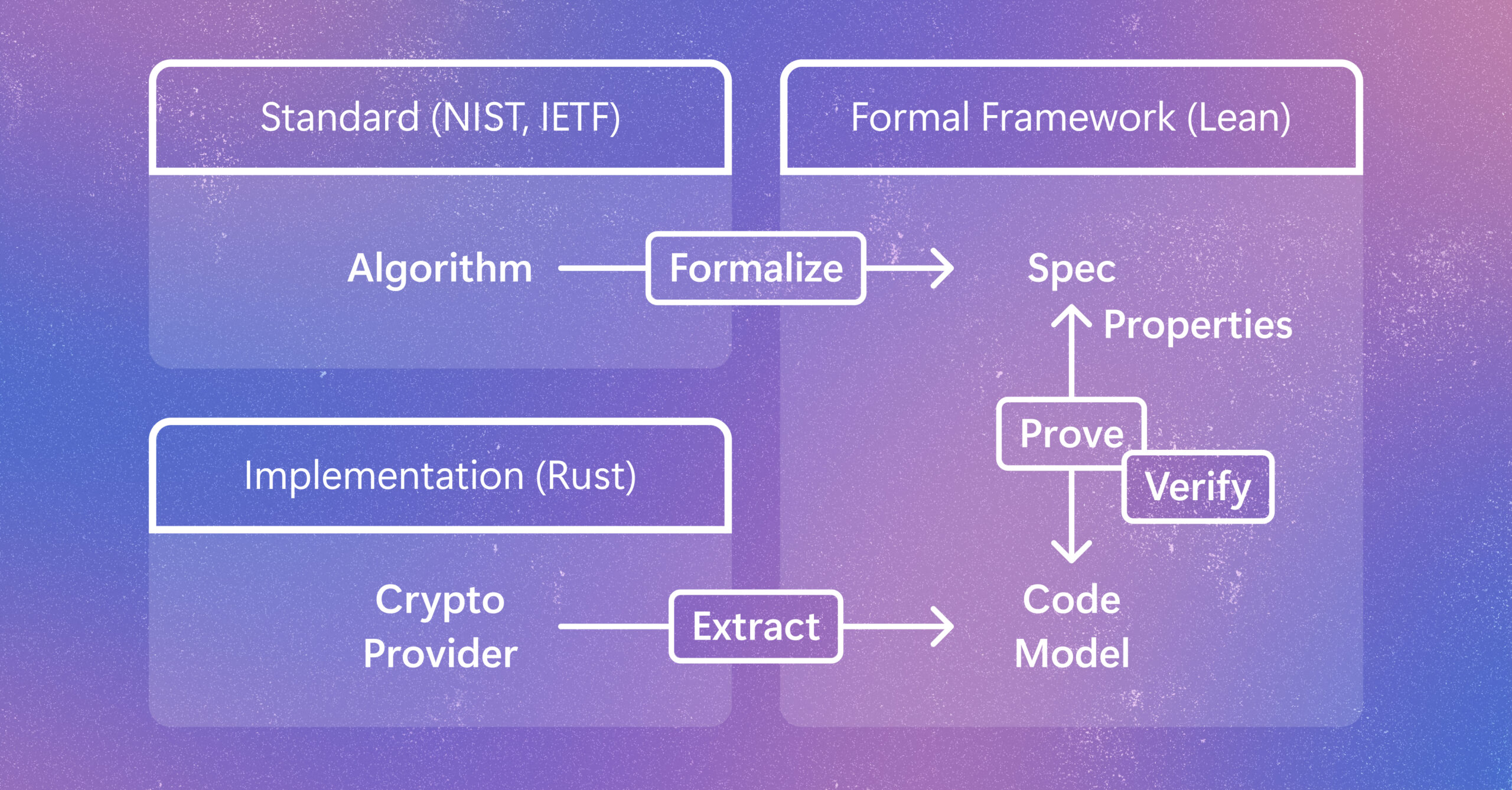
Cryptographic code supports vital protections in modern computing systems. Learn how a new method helps verify code as developers write it while preserving speed and adaptability as it gets implemented and evolves. The post Verifying Rust cryptography in SymCrypt, from standards to code appeared first on Microsoft Research.
MIT News · Artificial Intelligence· news.mit.eduJul 6, 2026
PhD student Rachel Sava, winner of the Envisioning the Future of Computing Prize, explores transformative improvements and dystopian risks of neural technology.
We use cookies to run the site and, with your consent, for analytics and to show ads.
See our Cookie Policy.