Coherence is fundamental to producing clear and logical academic writing. Despite its importance, most automated evaluation systems primarily target grammar and style, often overlooking this critical discourse-level quality. This study presents a comprehensive comparative analysis of multiple computational approaches l...
M. Yagnasri Priya, Samrudhi S. Kamble, Sanjivani P. Shendre et al.· Journal of Information & Kno...· 0 citations
Code, station lists and result tables accompanying the revised manuscript "Day-Ahead Soil Moisture Forecasting at Newly Instrumented Stations: A Controlled Study of Graph Neural Networks, Terrain Covariates, and Meteorological Forcing" (IEEE Access).
zeynepbarut· Zenodo (CERN European Organi...· 0 citations
Wide-area Mixture-of-Agents (MoA) collaboration requires the exchange of large payloads over the Optical Internet of Agents (O-IoA) under fluctuating traffic conditions. To increase agent participation within collaboration deadlines under network resource contention, we propose the Aggregation-Guided Buffering and Orch...
Xiao Lin, Zuqi Teng, Wang Li et al.· Journal of Intelligent Compu...· 0 citations
Abstract Global coupling is widely used to organize collective dynamics in reduced neural mean-field models, but three quantities are often interpreted separately: the numerical value assigned to coupling, the bifurcation mechanism associated with that coupling, and the temporal statistics extracted from simulated acti...
Financial crime detection requires identifying illicit activity within large transaction networks, where suspicious behaviour is rare and unfolds over time. Existing graph-based methods capture relationships among accounts but typically underuse the temporal behaviour encoded in account transaction histories. We introd...
Danae Natalie Savvidi, H. Çağrı Bilgi, Kubilay Atasu et al.· ACM International Conference...· 0 citations
We develop a transferable graph neural network (GNN) framework for budget-constrained intervention in large stochastic economic networks. Conventional node-wise optimization assigns one decision variable to each institution, producing a graph-specific intervention whose dimension grows with network size and that must b...
Zhanxin Wu, Hamed Amini· ACM International Conference...· 0 citations
ABSTRACT The increasingly wide use of deep machine learning techniques in computational mechanics has significantly accelerated simulations of problems that were considered unapproachable just a few years ago. However, in critical applications such as Digital Twins for engineering or medicine, fast responses are not en...
David Gonzalez, Alba Muixí, Beatriz Moya et al.· International Journal for Nu...· 0 citations
Multispecific antibodies (msAbs) offer transformative therapeutic potential by engaging multiple epitopes simultaneously, yet their efficacy is an emergent property governed by complex molecular architectures. Rational design is often bottlenecked by the inability to predict how subtle changes in domain topology influe...
Joshua Southern, Changpeng Lu, Santrupti Nerli et al.· Journal of Computational Bio...· 1 citation
The transition of the construction industry towards a circular economy demands Structural Design for Reuse (StDfR) from end-of-life assets. However, designing with finite stock constraints imposes a complex combinatorial problem. Traditional approaches aiming for single optimal solutions limit diversity, presenting hig...
Ana Arai, Elisa D. Sotelino, Cristiano Saad Travassos do Carmo· Buildings· 0 citations
Photovoltaic (PV) generation with high penetration in the distribution networks causes voltage rise, voltage deviation and three-phase imbalance between connected Medium-Voltage (MV) and Low-Voltage (LV) feeders. In this paper, a topology-conscious federated multi-agent reinforcement learning is introduced to subordina...
Vadivel S, Prakash M, - -· International Journal of Ele...· 0 citations
Machine-learning networks can learn without detailed instructions from a designer. Those that do may offer insight into how the brain reorganizes itself during learning.
MIT News · Artificial Intelligence· news.mit.eduJul 15, 2026
Assistant Professor Pat Pataranutaporn describes a new interface that lets everyday users glimpse inside an AI's neural network before their chatbot ever says a word.
Microsoft Research Blog· microsoft.comJul 13, 2026
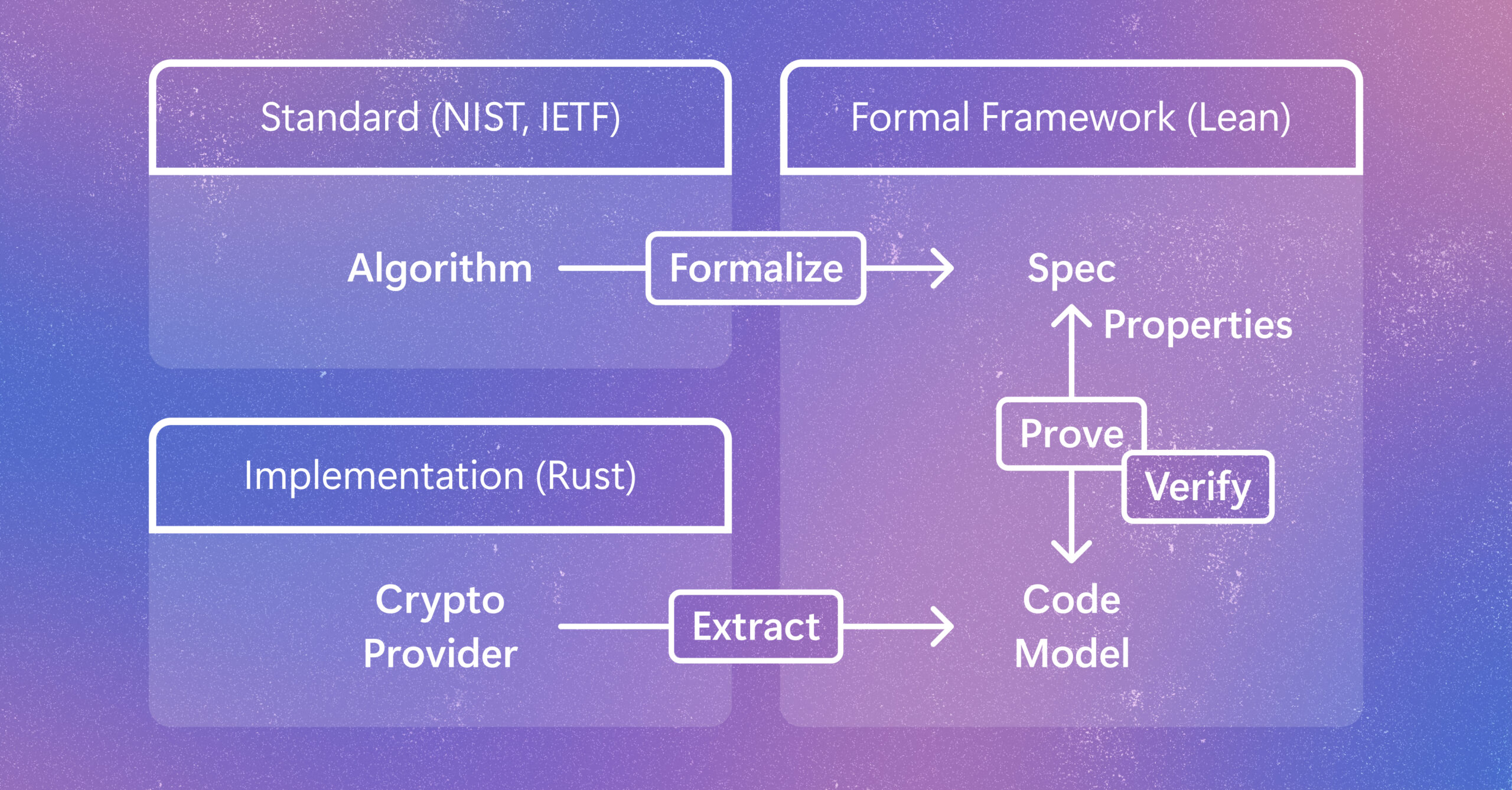
Cryptographic code supports vital protections in modern computing systems. Learn how a new method helps verify code as developers write it while preserving speed and adaptability as it gets implemented and evolves. The post Verifying Rust cryptography in SymCrypt, from standards to code appeared first on Microsoft Research.
MIT News · Artificial Intelligence· news.mit.eduJul 6, 2026
PhD student Rachel Sava, winner of the Envisioning the Future of Computing Prize, explores transformative improvements and dystopian risks of neural technology.
We use cookies to run the site and, with your consent, for analytics and to show ads.
See our Cookie Policy.