Snow cover fraction (SCF) reflects the regional snow cover changes in arid mountainous areas. We developed a terrain-aware graph convolutional network–long short-term memory network (GCN-LSTM), where 9 meteorological stations in Xinjiang serve as graph nodes and 15 monthly meteorological variables as dynamic node featu...
Improving an existing public transport route network is a challenging optimization problem, since service quality and operational efficiency must be improved without excessive changes to the established network. Most public transport network improvement methods modify route networks without considering the preservation...
Aleksandr S. Morozov, Ruslan Kozliak, Yana Zorina et al.· Smart Cities· 0 citations
Dynamic real-world networks, such as communication, social interaction, and infrastructure networks, evolve continuously, posing significant challenges for scalable graph analysis. Graph-based tasks such as critical node identification, community detection, and influence maximization must be updated as these networks c...
Graph neural networks (GNNs) for metal–organic frameworks (MOFs) usually connect every atom pair within a cutoff, so most edges are not chemical bonds. We found no sparsification method that guarantees the survival of chemically essential contacts and records each removal decision. ChemSPAR prunes periodic contact inst...
Cell‐penetrating peptides (CPPs) are bioactive molecules characterized by a positive charge, primarily attributed to lysine, arginine, or histidine residues, which enable their traversal across cells’ lipid bilayer membranes. This unique property positions CPPs as promising candidates for intracellular delivery of th...
Contemporary interface design and generative algorithmic systems operate under the ideological illusion of absolute weightlessness and friction-free interaction. In this work, I dismantle this myth by introducing a rigorous physical and field-theoretic framework for the Tensor of Computational Mass (M_comp^{μν}). Synth...
Konstantin Antonov· Zenodo (CERN European Organi...· 0 citations
LEGAL NOTICE: Access, usage, and distribution of this technical report and the associated codebase are strictly governed by the NeuraCryption Global Terms of Use (see Page 40 of this document) and at neuracryption.com/spectra-t&c. No commercial deployment, commercial model training, or commercial clone implementations...
NEURACRYPTION PRIVATE LIMITED· Zenodo (CERN European Organi...· 0 citations
Understanding neuronal connectivity is essential for investigating brain organization and neural information processing. However, large-scale connectome reconstruction remains challenging because automated synapse detectors may produce inconsistent and incomplete connectivity observations. This research investigates de...
Syed Muhammad Hassan Rizvi Rizvi· Zenodo (CERN European Organi...· 0 citations
With the rapid expansion of smart urban ecosystems, detecting and mitigating cyber-physical threats in road infrastructure has become critical for urban safety and traffic efficiency. This study proposes an AI-driven cognitive framework that integrates CNN-LSTM networks for temporal anomaly detection, Autoencoders for...
Abstract This study proposes a Power Grid Innovation Graph Representation Learning (PGI-GRL) framework for technology evolution-oriented hidden innovation relationship discovery in power grid networks. Existing approaches mainly rely on bibliometric analysis, text mining, or conventional graph learning methods, which a...
Caihua Song, ZiLan He, Zhaoxiong Guan et al.· Research Square· 0 citations
Machine-learning networks can learn without detailed instructions from a designer. Those that do may offer insight into how the brain reorganizes itself during learning.
MIT News · Artificial Intelligence· news.mit.eduJul 15, 2026
Assistant Professor Pat Pataranutaporn describes a new interface that lets everyday users glimpse inside an AI's neural network before their chatbot ever says a word.
Microsoft Research Blog· microsoft.comJul 13, 2026
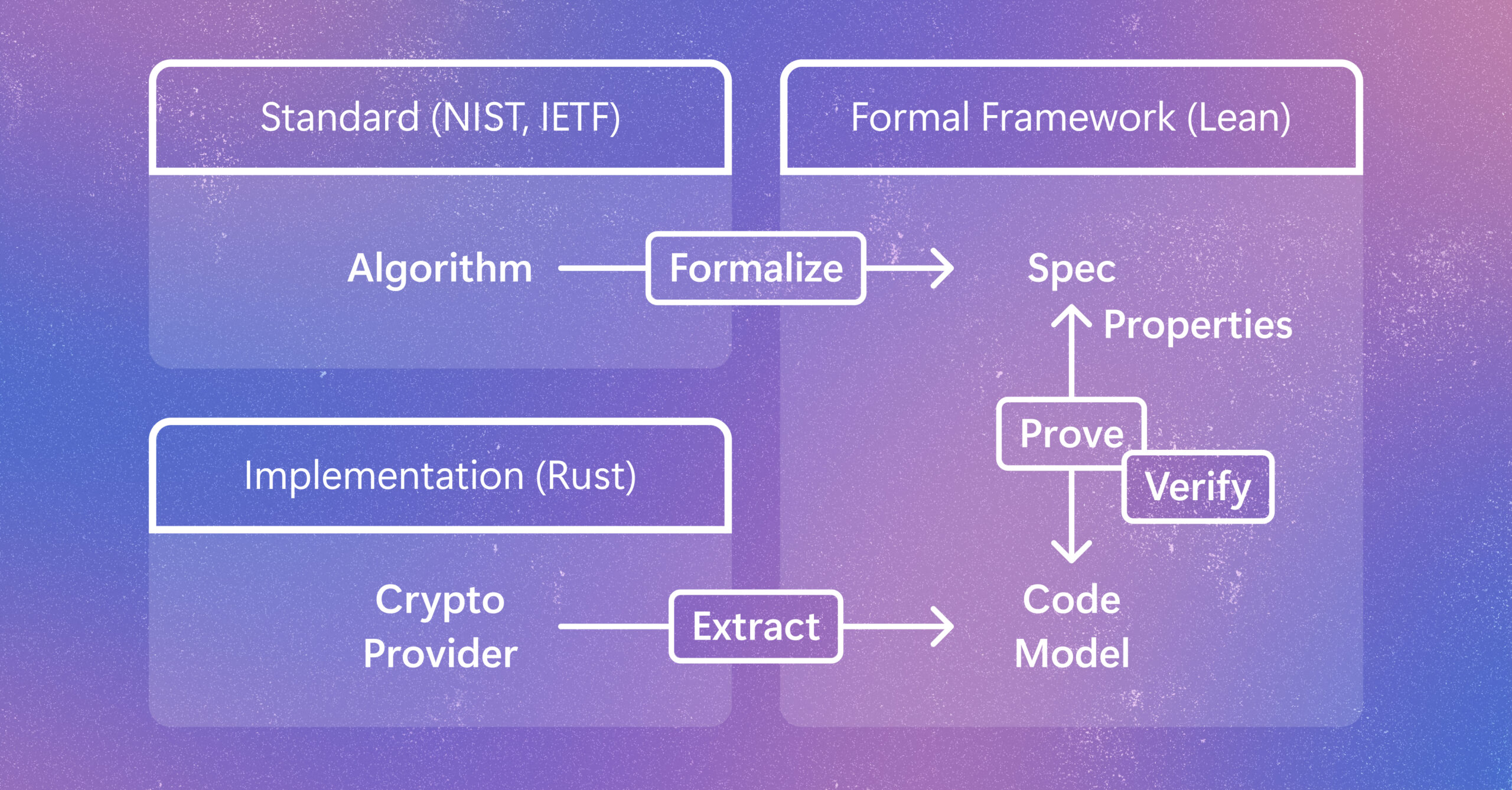
Cryptographic code supports vital protections in modern computing systems. Learn how a new method helps verify code as developers write it while preserving speed and adaptability as it gets implemented and evolves. The post Verifying Rust cryptography in SymCrypt, from standards to code appeared first on Microsoft Research.
MIT News · Artificial Intelligence· news.mit.eduJul 6, 2026
PhD student Rachel Sava, winner of the Envisioning the Future of Computing Prize, explores transformative improvements and dystopian risks of neural technology.
We use cookies to run the site and, with your consent, for analytics and to show ads.
See our Cookie Policy.