Skip to content

Enabling High-Throughput and Cost-Efficient Web 3.0 Services for Intelligent Sensing Networks via GNN-Enhanced Masked Deep Reinforcement Learning in Multi-Chain Systems

Nov 2026 · Sensors · Vol 26, pp. 7174 · 19 references
Blockchain Technology Applications and Security

Abstract

Intelligent sensing networks generate heterogeneous application-level service requests from aggregated sensing measurements and events, raising critical requirements for data integrity, traceability, and trustworthy service interactions. Blockchain-enabled Web 3.0 infrastructures provide decentralized trust, tamper-evident records, and verifiable service execution to support these requirements. However, the heterogeneous characteristics of blockchain platforms, coupled with complex smart-contract dependencies and diverse sensing-service requirements, introduce significant challenges in achieving cost-efficient and low-latency service deployment. To address these challenges, this paper investigates dependency-aware smart-contract orchestration across heterogeneous multi-chain systems at the blockchain service layer of intelligent sensing networks. Specifically, we formulate the smart-contract deployment problem as a constrained optimization problem that minimizes the weighted financial and time costs while satisfying transaction throughput, execution resource, security, and application latency constraints. To solve this problem, we propose a focus-aware graph neural network (GNN)-enhanced Masked Proximal Policy Optimization (PPO) framework. The proposed Focus-GNN employs edge-aware multi-head graph attention to capture smart-contract dependencies and incorporates a focus-context fusion mechanism to integrate the target contract representation, global graph features, and blockchain resource states. Furthermore, action masking eliminates infeasible deployment choices, enabling constraint-aware sequential decision-making. We evaluate the proposed framework using heterogeneous blockchain configurations and synthetic workloads representing anomaly warning, sensing data archiving, and environmental monitoring services. Experimental results demonstrate that the proposed framework achieves improved training performance and lower deployment overhead, highlighting its potential for efficient smart-contract orchestration in blockchain-enabled intelligent sensing networks.

View source

Similar papers

#machine learning Review Open access Oct 2014

Software development in startup companies: A systematic mapping study

The results indicate that software engineering work practices are chosen opportunistically, adapted and configured to provide value under the constrains imposed by the startup context.

Nicolò Paternoster, Carmine Giardino, M. Unterkalmsteiner et al. · 394 citations · ⚡54
#machine learning Review Open access Jun 2014

Why Early-Stage Software Startups Fail: A Behavioral Framework

This state-of-practice investigation was performed using a literature review followed by a multiple-case study approach and presents how inconsistency between managerial strategies and execution can lead to failure by means of a behavioral framework.

Carmine Giardino, Xiaofeng Wang, P. Abrahamsson · 175 citations · ⚡19
#machine learning Review Open access Oct 2016

“Failures” to be celebrated: an analysis of major pivots of software startups

This study conducts a case survey study based on the secondary data of the major pivots happened in 49 software startups, and demonstrates that customer need pivot is the most common among all pivot types.

Sohaib Shahid Bajwa, Xiaofeng Wang, Anh Nguyen-Duc et al. · 127 citations · ⚡15
#computer vision Review Open access Mar 2016

Determinants of overweight or obesity among ever-married adult women in Bangladesh

The findings of the study indicate that a large number of women in Bangladesh are suffering from being overweight or obese, and multiple factors are responsible for this including, older age,being from wealthy households, higher education, being from food-secured households, watching TV at least once a week, and being...

Haribondhu Sarma, N. Saquib, M. Hasan et al. · 75 citations · ⚡5
#artificial intelligence Open access Sep 2026

Generating Interesting Scientific Ideas using Knowledge Graphs and LLMs: Evaluations with 100 Research Group Leaders

The rapid growth of scientific literature makes it increasingly challenging for researchers to identify novel and impactful ideas, especially across disciplines. Modern artificial intelligence (AI) systems offer new opportunities for scientific ideation, but how compelling are AI-generated ideas, and how can their qual...

Xuemei Gu, Mario Krenn · 65 citations

Related blog posts

Microsoft Research Blog Jul 13, 2026

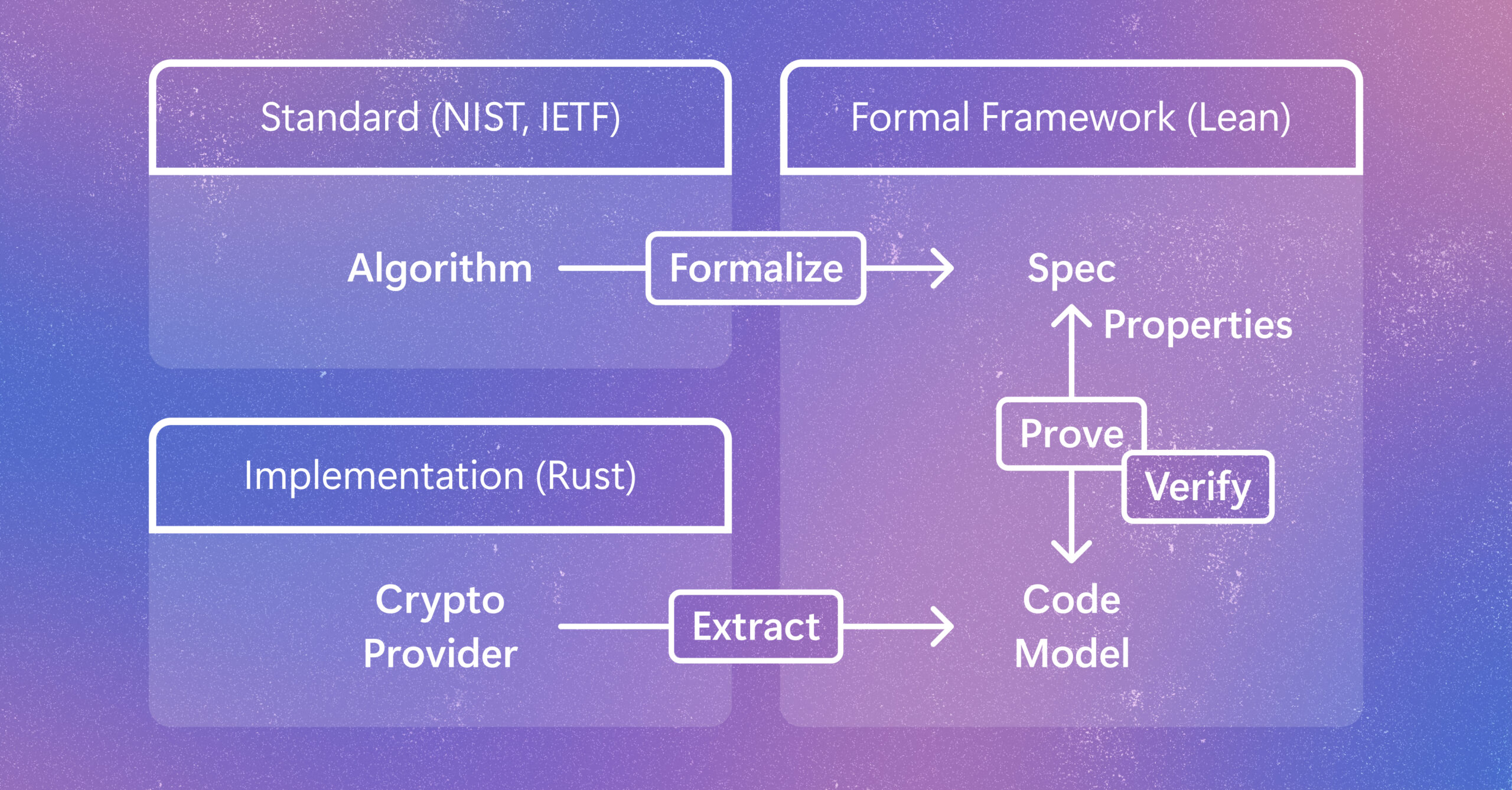
Verifying Rust cryptography in SymCrypt, from standards to code

Cryptographic code supports vital protections in modern computing systems. Learn how a new method helps verify code as developers write it while preserving speed and adaptability as it gets implemented and evolves. The post Verifying Rust cryptography in SymCrypt, from standards to code appeared first on Microsoft Research.

We use cookies to run the site and, with your consent, for analytics and to show ads. See our Cookie Policy.
