Skip to content

From Bellman to Real-Time: Extensions to Complex Weather Regimes, Physics-Informed Optimization, and Full-Scale Validation

Sep 2026 · Electronics · 18 references
Model Reduction and Neural Networks

Abstract

In our earlier methodology paper, we introduced a hierarchical framework combining graph compression, Diffusion Convolutional Recurrent Neural Networks (DCRNNs), and Multi-Agent Reinforcement Learning (MARL) to approximate Bellman’s optimality principle for real-time energy system control, validated using Palm Springs, California weather data. This extension paper addresses three critical advances. First, we provide a rigorous theoretical proof demonstrating that the DCRNN’s Markovian reduction of strongly path-dependent dynamics yields a bounded approximation error, with the error decaying exponentially in the mixing time of the underlying graph diffusion process. Second, we extend the framework to diverse weather regimes—from stable Mediterranean climates (San Diego) to highly variable marine west coast (Seattle), monsoon (Mumbai), and typhoon-prone regions (Hong Kong)—quantifying how weather-induced path dependence affects the required hidden state dimension and forecasting accuracy. We present comprehensive Leave-One-Out Cross-Validation (LOOCV) results across six cities, demonstrating consistent generalization with R2 drops of less than 0.1% under out-of-sample testing. A controlled baseline comparison under matched training protocols shows that the graph-free GRU achieves comparable or higher R2 on the one-step prediction task, which we attribute to the near-cumulative structure of the target and the small evaluation graph. We frame the DCRNN’s contribution around its theoretical guarantee and its potential advantage on larger graphs and longer horizons. We also characterize conditions under which the model expects to fail, specifically when weather stochasticity violates the geometric mixing assumption or when the effective temporal correlation length exceeds the GRU’s memory capacity. Third, we outline physics-informed enhancements that are proposed as future development: CFD-integrated loss functions, differentiable Model Predictive Control (MPC) heads, and a modular design enabling alternative turbine configurations. We also propose a standardized rooftop solar thermal deployment architecture with 200 m × 100 m, 100 m × 100 m, and 100 m × 50 m modules designed for data center footprints with pre-allocated HVAC space. We conclude with a stage-gated validation roadmap progressing from unit tests to hardware-in-the-loop simulation to full-scale FEED-site deployment. The completed contributions of this paper are the theorem, its empirical assumption verification, the multi-climate LOOCV study, the matched-protocol baseline comparison, and the sensor-failure robustness analysis. The remaining components are described as proposed extensions.

View source

Similar papers

#machine learning Review Open access Oct 2014

Software development in startup companies: A systematic mapping study

The results indicate that software engineering work practices are chosen opportunistically, adapted and configured to provide value under the constrains imposed by the startup context.

Nicolò Paternoster, Carmine Giardino, M. Unterkalmsteiner et al. · 394 citations · ⚡54
#computer vision Open access Jun 2016

Software Development in Startup Companies: The Greenfield Startup Model

The results are packaged in the Greenfield Startup Model (GSM), which explains the priority of startups to release the product as quickly as possible, and the need to shorten time-to-market, by speeding up the development through low-precision engineering activities.

Carmine Giardino, Nicolò Paternoster, M. Unterkalmsteiner et al. · 178 citations · ⚡14
#machine learning Review Open access Jun 2014

Why Early-Stage Software Startups Fail: A Behavioral Framework

This state-of-practice investigation was performed using a literature review followed by a multiple-case study approach and presents how inconsistency between managerial strategies and execution can lead to failure by means of a behavioral framework.

Carmine Giardino, Xiaofeng Wang, P. Abrahamsson · 175 citations · ⚡19
#computer vision Open access Oct 2016

Software Startups - A Research Agenda

Software startup companies develop innovative, software-intensive products within limited timeframes and with few resources, searching for sustainable and scalable business models.

M. Unterkalmsteiner, P. Abrahamsson, Xiaofeng Wang et al. · 157 citations · ⚡17
#machine learning Review Open access Oct 2016

“Failures” to be celebrated: an analysis of major pivots of software startups

This study conducts a case survey study based on the secondary data of the major pivots happened in 49 software startups, and demonstrates that customer need pivot is the most common among all pivot types.

Sohaib Shahid Bajwa, Xiaofeng Wang, Anh Nguyen-Duc et al. · 127 citations · ⚡15
#computer vision Review Open access May 2015

A survey study on major technical barriers affecting the decision to adopt cloud services

The comparison of adopter and non-adopter sample reveals three potential adoption inhibitor, security, data privacy, and portability, which underlines the importance of the technical and security perspectives for research investigating the adoption of technology.

Nattakarn Phaphoom, Xiaofeng Wang, S. Samuel et al. · 111 citations · ⚡8

Related blog posts

GPT-Lab Aug 28, 2026

We built an AI factory for HVAC control

What does it take to trust AI-driven HVAC optimization? Our AI Model Factory combines agents, machine learning, reinforcement learning and deterministic checks in a governed workflow designed for messy, real-world building data. The post We built an AI factory for HVAC control appeared first on GPT-Lab.

Microsoft Research Blog Jul 30, 2026

EvoLib: Turning experience into evolving knowledge

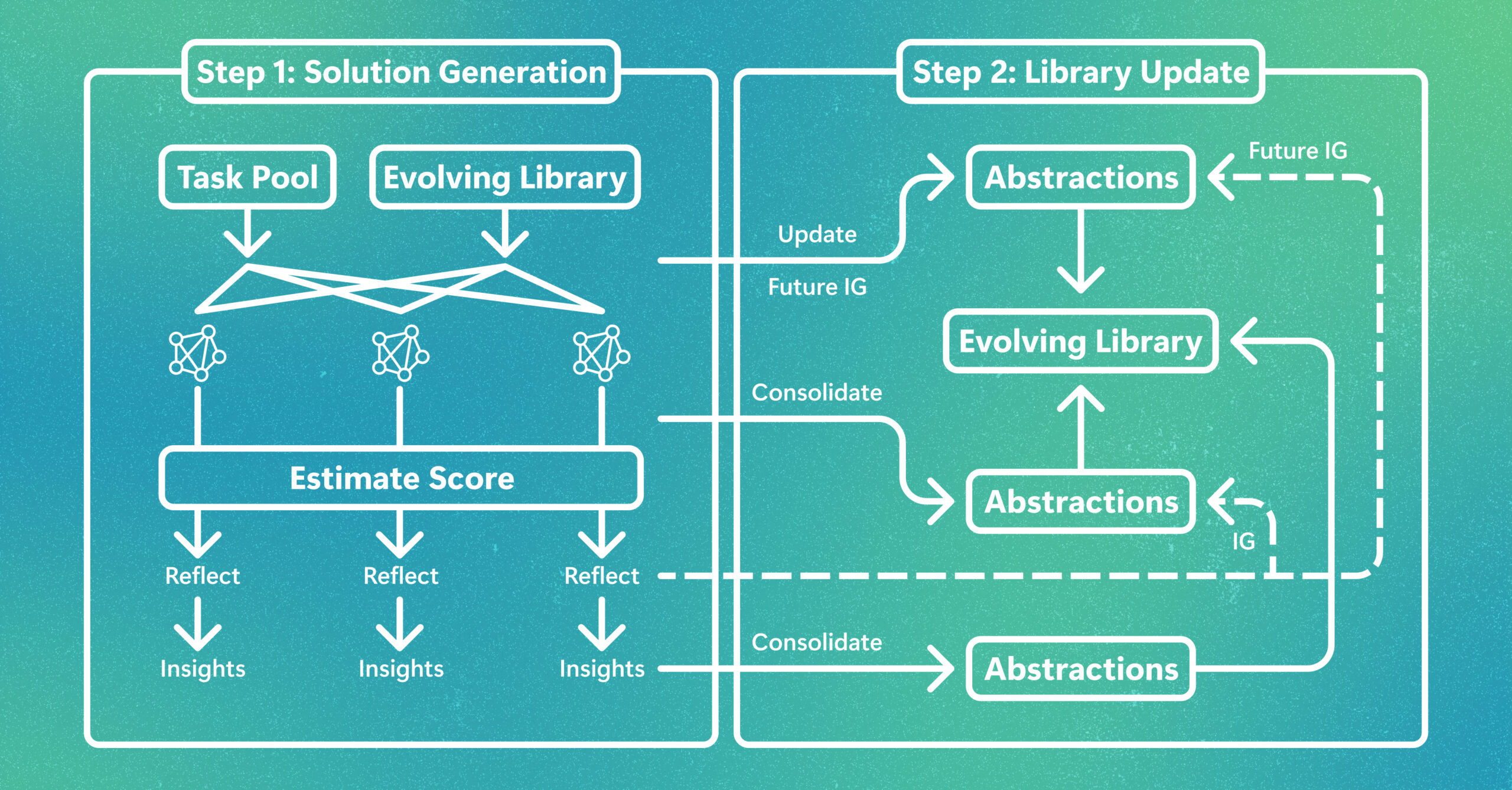
LLMs do not get smarter just by remembering more. EvoLib turns experience into evolving knowledge, taking reusable skills and insights that help models learn and adapt across tasks long after deployment. The post EvoLib: Turning experience into evolving knowledge appeared first on Microsoft Research.

Microsoft Research Blog Jul 13, 2026

Verifying Rust cryptography in SymCrypt, from standards to code

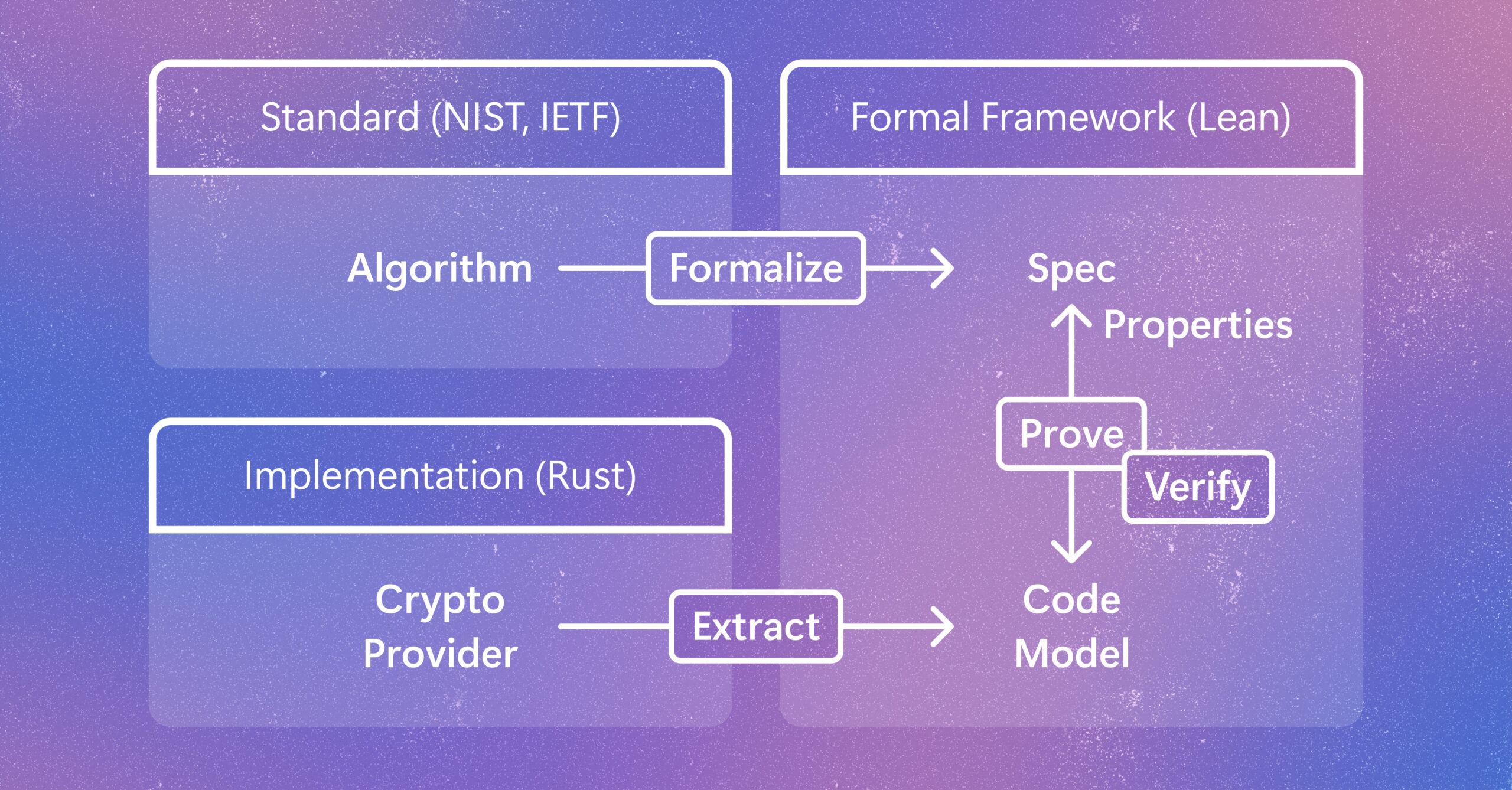
Cryptographic code supports vital protections in modern computing systems. Learn how a new method helps verify code as developers write it while preserving speed and adaptability as it gets implemented and evolves. The post Verifying Rust cryptography in SymCrypt, from standards to code appeared first on Microsoft Research.

We use cookies to run the site and, with your consent, for analytics and to show ads. See our Cookie Policy.