
EvoLib: Turning experience into evolving knowledge
LLMs do not get smarter just by remembering more. EvoLib turns experience into evolving knowledge, taking reusable skills and insights that help models learn and adapt across tasks long after deployment. The post EvoLib: Turning experience into evolving knowledge appeared first on Microsoft Research.
More from the blog
 GPT-Lab
· gpt-lab.eu
Sep 17, 2026
GPT-Lab
· gpt-lab.eu
Sep 17, 2026
Beyond Prompt Engineering: The Role of Tacit Knowledge in Software Engineering
AI is making software generation faster, but speed does not remove the need for expertise. As more work is delegated to AI, tacit knowledge may become one of the most important human advantages in software engineering. The post Beyond Prompt Engineering: The Role of Tacit Knowledge in Software Engineering appeared first on GPT-Lab.
MIT spinout turns plastic waste into resilient building materials
Atlas Building Composites is commercializing MIT research to turn plastic waste into parts for buildings and other infrastructure.
System helps humans predict when self-driving cars will make mistakes
A new method, called CW-Net, translates the reasoning process of an autonomous vehicle’s AI system into understandable concepts that explain its behavior.
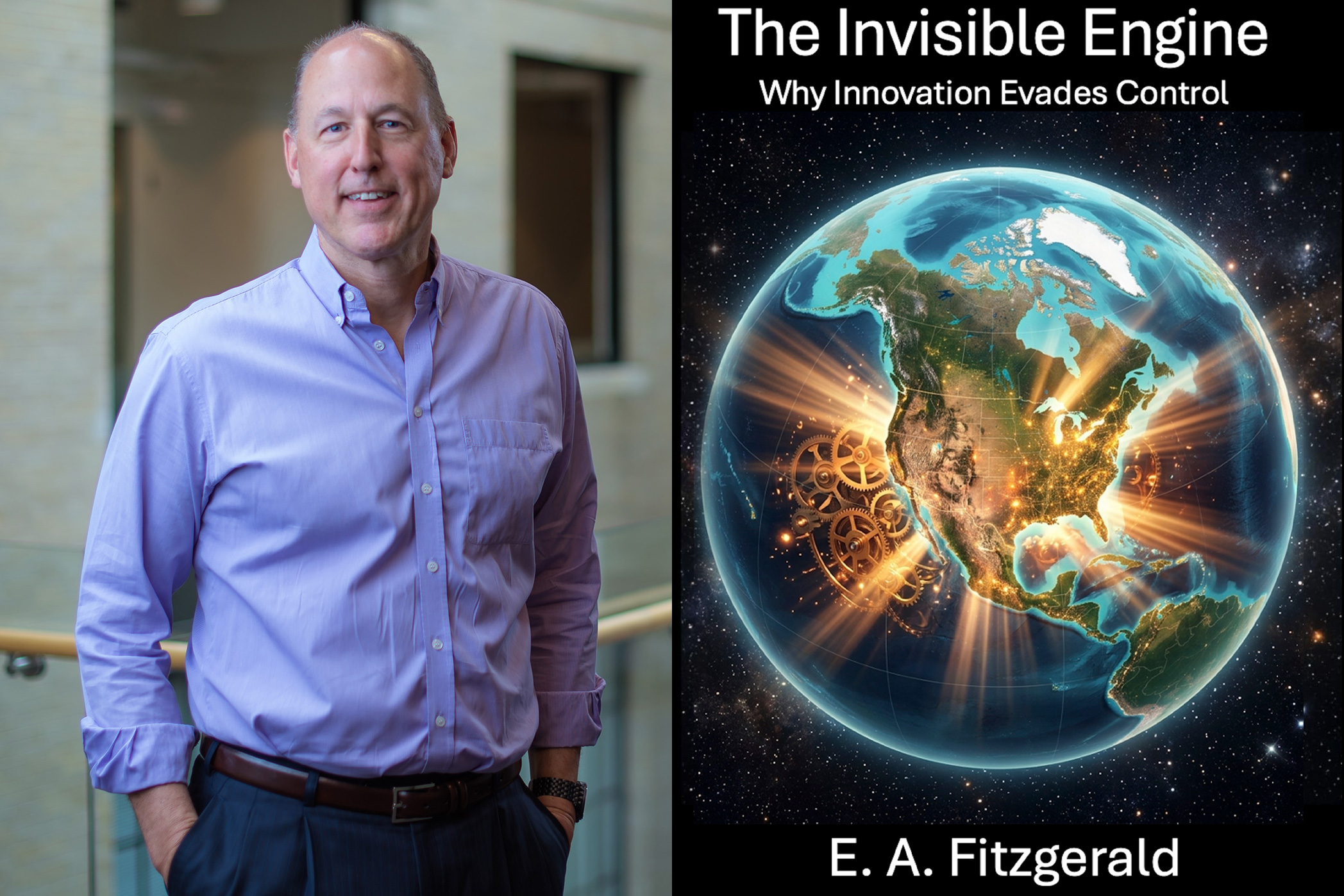
Q&A: Rethinking how innovation happens
In his latest book, Professor Eugene Fitzgerald examines the forces that turn breakthroughs into value — and why innovation resists simple formulas.
Related papers
“Failures” to be celebrated: an analysis of major pivots of software startups
This study conducts a case survey study based on the secondary data of the major pivots happened in 49 software startups, and demonstrates that customer need pivot is the most common among all pivot types.
What Influences the Speed of Prototyping? An Empirical Investigation of Twenty Software Startups
This study conducts a multiple case study on twenty European software startups and proposes a prototype-centric learning model in early stage software startups, and identifies factors that occur as barriers but also facilitators for prototyping in earlystage software startups.
RSGPT: a generative transformer model for retrosynthesis planning pre-trained on ten billion datapoints
RSGPT, a generative model pre-trained on ten billion data points, achieving state-of-the-art performance for synthesis planning, and introduces reinforcement learning to capture the relationships among products, reactants, and templates more accurately.
Time for AI (Ethics) Maturity Model Is Now
It is argued that AI software is still software and needs to be approached from the software development perspective, and whether the focus should be on AI ethics or the quality of an AI system, called a maturity model for the development of AI systems is discussed.