Code, instances, certificates and results for the paper "Certified Bounds on the Fractional Chromatic Number of Planar Graphs by Learned Subgraph Selection". The method computes certified lower bounds on the fractional chromatic number of planar graphs. A graph neural network ranks vertices, a small induced subgraph is...
Shamvi Md Abdullah, Md. Saidur Rahman, Afnan Ur Rayan et al.· Zenodo (CERN European Organi...· 0 citations
Code, instances, certificates and results for the paper "Certified Bounds on the Fractional Chromatic Number of Planar Graphs by Learned Subgraph Selection". The method computes certified lower bounds on the fractional chromatic number of planar graphs. A graph neural network ranks vertices, a small induced subgraph is...
Shamvi Md Abdullah, Md. Saidur Rahman, Afnan Ur Rayan et al.· Zenodo (CERN European Organi...· 0 citations
Abstract Background Ovarian cancer remains one of the most lethal gynecologic malignancies, largely due to pronounced molecular heterogeneity, nonspecific clinical presentation, and frequent diagnosis at advanced stages. Multiomics profiling—including genomics, transcriptomics, and epigenomics—offers a powerful avenue...
C. Marino, Claudia Diaz Paz· JMIR Bioinformatics and Biot...· 0 citations
This work presents a unified dynamical-systems perspective for shaping approaches that explicitly control and regulate the degree of propagation, conservation, and dissipation of information throughout the neural flow, and highlights how neural differential equations provide a coherent theoretical framework for designi...
Introduction Soil mercury (Hg) in karst agricultural regions is commonly characterized by strong local heterogeneity, which limits the ability of conventional interpolation methods to delineate localized enrichment. Methods We developed an interpretable graph neural network–residual kriging (GNN-RK) framework for soil...
Zhizhuo Liu, Zhizhuo Liu, Junjie Ning et al.· Frontiers in Environmental S...· 0 citations
Code, decontaminated data, and model weights for the manuscript "Chemical-space-aware routing enhances PFAS toxicity prediction: large-scale pretraining, conditional fine-tuning, and leakage control". The archive contains the complete pipeline for training and evaluating multi-task graph neural networks (Chemprop D-MPN...
Zhanting Yang· Zenodo (CERN European Organi...· 0 citations
We present a transferable graph neural network (GNN) surrogate framework for molecular dynamics (MD) that directly predicts atomic displacements and propagates atomistic configurations without explicit force evaluation or numerical time integration. The central objective of this work is to establish whether a common GN...
Graph Neural Network (GNN)-based intrusion detection systems (IDS) have emerged as powerful tools for modeling the structural patterns of network traffic. However, most existing methods rely on large, temporally aggregated graphs and random train-test splits, which risk information leakage from future traffic and overs...
Áron Kiss, K. Nehéz, O. Hornyák· Intelligent Data Analysis· 0 citations
Recent advances in artificial intelligence have transformed protein structure prediction and design. However, protein function is governed not only by static structures but also by the conformational dynamics that allow proteins to access distinct functional states. Predicting these dynamic transitions, central to many...
M. Marfoglia, Miguel A. Pedraza-Joya, L. Guirardel et al.· PLoS Biology· 0 citations
Assistant Professor Pat Pataranutaporn describes a new interface that lets everyday users glimpse inside an AI's neural network before their chatbot ever says a word.
Microsoft Research Blog· microsoft.comJul 13, 2026
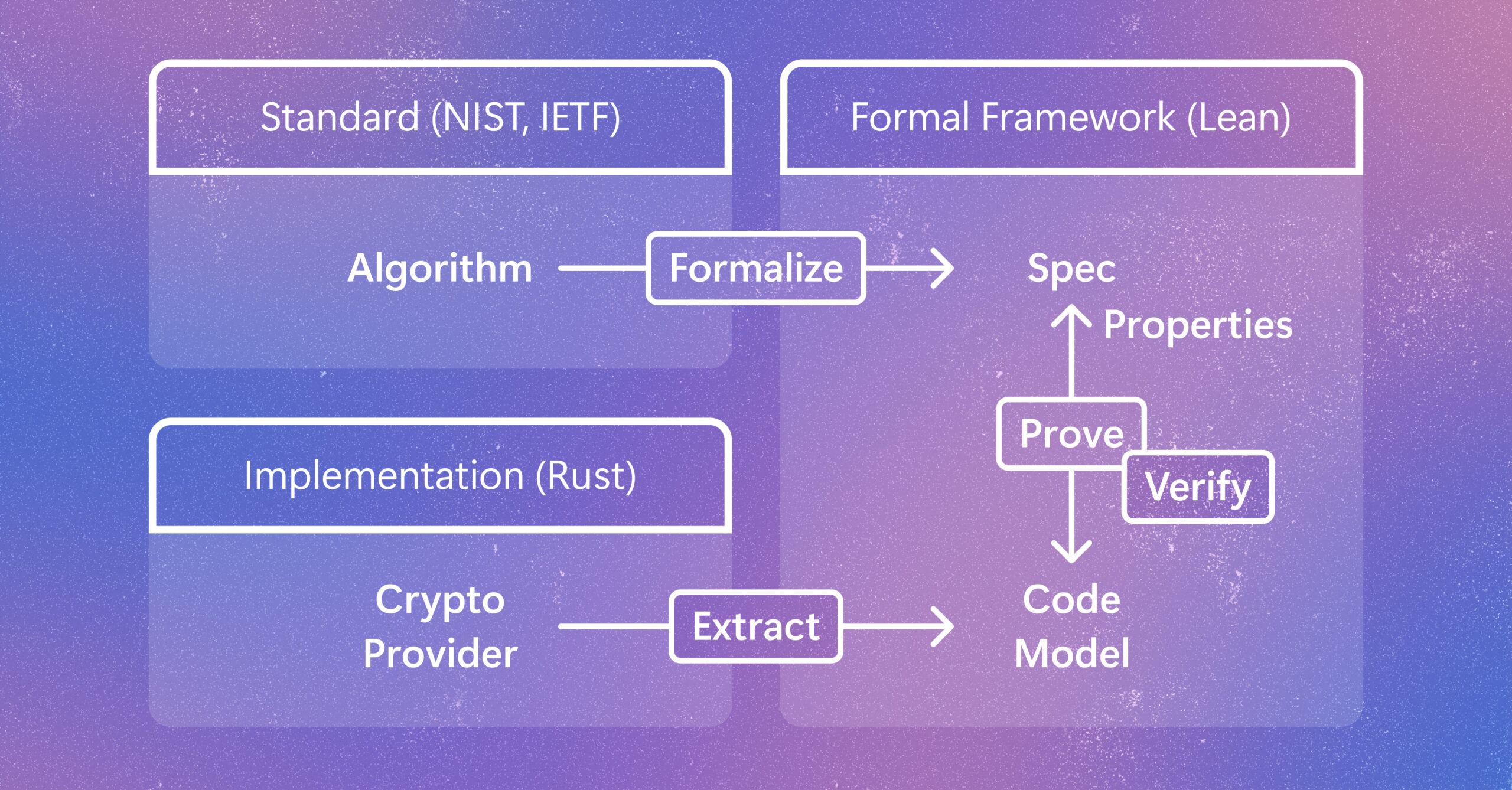
Cryptographic code supports vital protections in modern computing systems. Learn how a new method helps verify code as developers write it while preserving speed and adaptability as it gets implemented and evolves. The post Verifying Rust cryptography in SymCrypt, from standards to code appeared first on Microsoft Research.
MIT News · Artificial Intelligence· news.mit.eduJul 6, 2026
PhD student Rachel Sava, winner of the Envisioning the Future of Computing Prize, explores transformative improvements and dystopian risks of neural technology.