This work presents a unified dynamical-systems perspective for shaping approaches that explicitly control and regulate the degree of propagation, conservation, and dissipation of information throughout the neural flow, and highlights how neural differential equations provide a coherent theoretical framework for designing graph architectures with controllable stability, memory retention, and long-range information propagation guarantees.
Abstract
The dynamics of information diffusion in Graph Neural Networks (GNNs) is a key issue that heavily influences graph representation learning, especially when long-range propagation is required. In this work, we present a unified dynamical-systems perspective for shaping approaches that explicitly control and regulate the degree of propagation, conservation, and dissipation of information throughout the neural flow. By interpreting GNN layers as discretizations of continuous-time differential equations defined over graphs, we leverage tools from stability theory, Hamiltonian mechanics, and wave dynamics to design architectures with principled (long-range) propagation properties. We review and analyze three complementary formulations: antisymmetric parameterizations that enforce non-dissipative behavior via spectral control of the Jacobian, port-Hamiltonian and oscillatory dynamics that embed conservation laws directly into the architecture. Across long-range graph transfer and graph property prediction benchmarks, these differential-equation-inspired GNNs consistently outperform classical message-passing and transformer-based models, maintaining stable information flow even in extreme propagation regimes. More broadly, this work highlights how neural differential equations provide a coherent theoretical framework for designing graph architectures with controllable stability, memory retention, and long-range information propagation guarantees.
This work introduces a spectral transfer formalism for nonlinear synchronisation dynamics to resolve how internal dynamical activity redistributes across network scales, moving beyond traditional global observables like the Kuramoto order parameter. By projecting Kuramoto phase dynamics onto the eigenbasis of the graph...
Marcin Kowalczyk, Pietro Lió, Z. Struzik· 0 citations
This paper derives explicit Wasserstein stability bounds that quantify the effect of relative graph perturbations on the generated distributions and introduces a principled framework for designing stable graph filters that preserve the smoothing behavior of graph heat diffusion, while boosting structural stability.
Recent progress in network renormalization has identified various ways to transform network representations consistently across resolution levels. In particular, the renormalization flow describing how random graph models transform under node aggregation has identified a fixed point corresponding to an aggregation-inva...
Mattia Marzi, F. Pijpers, Diego Garlaschelli· 0 citations
This paper proves almost-sure pairwise noncollision, derive a uniform finite-horizon guarantee, and establish permutation equivariance in distribution for the stochastic dynamics and permutation-invariant graph outputs.
Symbolic regression offers a route to mechanistic understanding of complex network dynamics, but existing methods often infer node and edge equations independently, allowing errors in one component to be compensated by the other. We present Coordinated Genetic Search (CGS), a framework for discovering governing equatio...
Hai-Quan Qiu, Shu-Zhi Liu, You Wu et al.· AI Plus· 0 citations
This study extends the control channel from three-body coupling modulation to pairwise coupling modulation, and proposes an open-loop dynamical regulation strategy for global collective behaviors that leverages network stochastic resonance to achieve effective control without the need for real-time monitoring of the ne...
Wenchang Qi, Zheng Wang, Jinjie Zhu et al.· Journal of Physics: Complexi...· 0 citations
Related blog posts
MIT News · Artificial Intelligence· news.mit.eduJul 15, 2026
Assistant Professor Pat Pataranutaporn describes a new interface that lets everyday users glimpse inside an AI's neural network before their chatbot ever says a word.
Microsoft Research Blog· microsoft.comJul 13, 2026
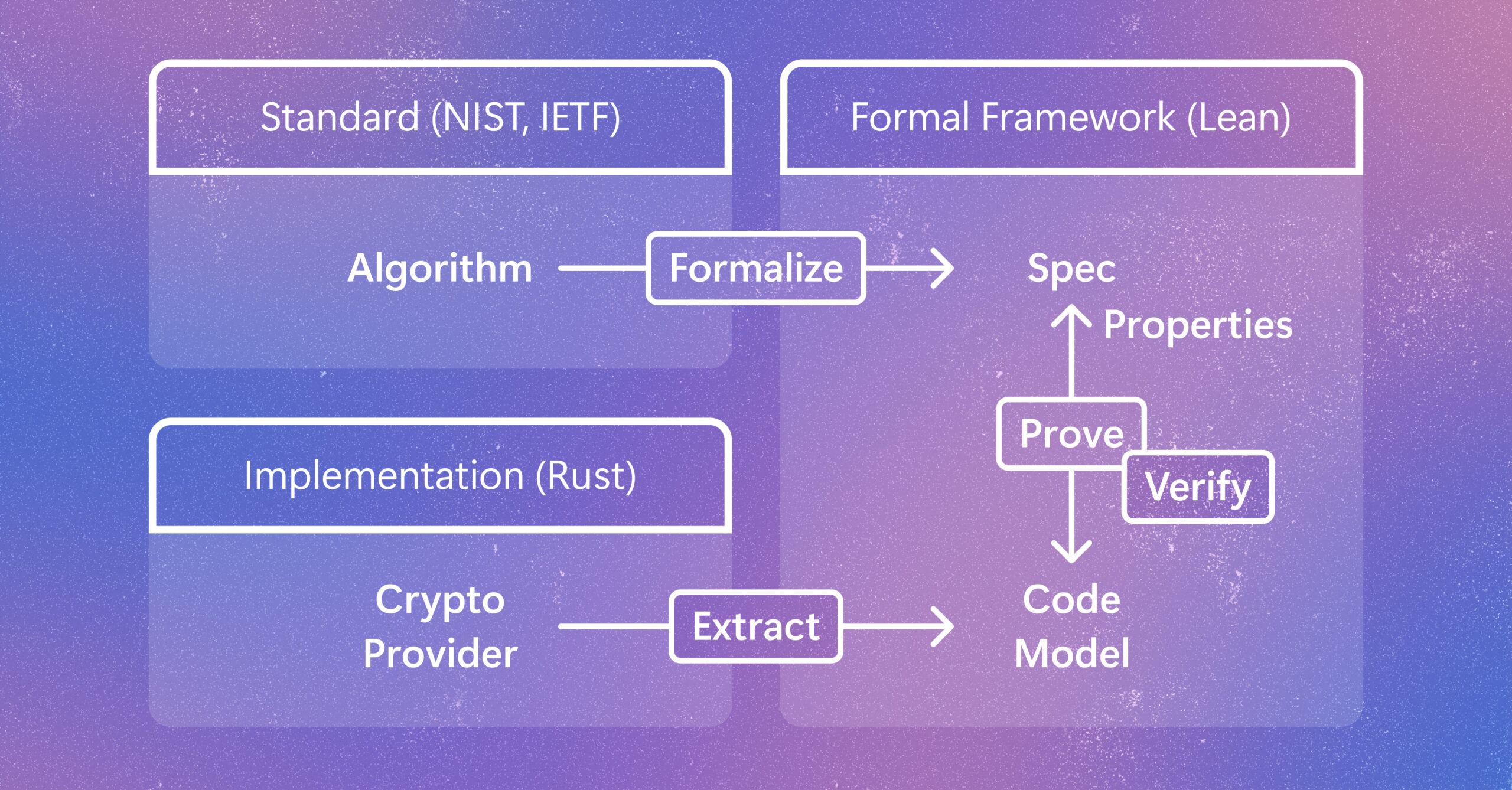
Cryptographic code supports vital protections in modern computing systems. Learn how a new method helps verify code as developers write it while preserving speed and adaptability as it gets implemented and evolves. The post Verifying Rust cryptography in SymCrypt, from standards to code appeared first on Microsoft Research.
MIT News · Artificial Intelligence· news.mit.eduJul 6, 2026
PhD student Rachel Sava, winner of the Envisioning the Future of Computing Prize, explores transformative improvements and dystopian risks of neural technology.