Skip to content

Interpretable GNN–Residual Kriging for spatial prediction and investigation-priority zoning of soil mercury in a karst agricultural region

Sep 2026 · Frontiers in Environmental Science · 42 references
Mercury impact and mitigation studies

Abstract

Introduction Soil mercury (Hg) in karst agricultural regions is commonly characterized by strong local heterogeneity, which limits the ability of conventional interpolation methods to delineate localized enrichment. Methods We developed an interpretable graph neural network–residual kriging (GNN-RK) framework for soil Hg prediction, uncertainty assessment, and investigation-priority zoning. The framework integrates 13 non-element environmental covariates, graph-based spatial learning, residual kriging, bootstrap uncertainty estimation, model-agnostic feature attribution, and GeoDetector analysis. It was applied to 149 surface-soil samples from agricultural land in Zhijin County, Guizhou Province, Southwest China. Results Soil Hg ranged from 0.0256 to 10.5983 mg kg −1 (mean 0.321; median 0.141 mg kg −1 ). Under the pH‐specific threshold scenario for non‐paddy agricultural land in GB 15618-2018, 147 samples were below the risk-screening values and two exceeded the risk-control values. In label-masked transductive five-fold spatial block cross-validation, GNN‐RK achieved the highest pooled performance among the evaluated models (R 2 = 0.632, RMSE = 0.695 mg kg −1 , MAE = 0.201 mg kg −1 ). Lithology was the primary explanatory factor, with BSI, distance to road, pH, nighttime light, NDVI, and elevation acting as secondary controls. Discussion The results suggest that localized Hg enrichment is associated with the spatial coupling of lithological background, surface exposure, and accessibility‐related disturbance. The spatially limited priority zones, mainly in eastern Zhijin, should be treated as targets for supplementary sampling, crop Hg testing, and field verification rather than as confirmed contaminated land.
View source

Similar papers

#computer vision Conference Aug 2008

Scrum in a Multiproject Environment: An Ethnographically-Inspired Case Study on the Adoption Challenges

Agile methods continue to gain popularity. In particular, the Scrum method appears to be on the verge of becoming a de-facto standard in the industry, leading the so called Agile movement. While there are success stories and recommendations, there is little scientifically valid evidence of the challenges in the adoptio...

A. Marchenko, P. Abrahamsson · 59 citations · ⚡11
#computer vision Open access Sep 2012

Making the leap to a software platform strategy: Issues and challenges

A comprehensive taxonomy of the challenges faced when a medium-scale organization decided to adopt software platforms is provided, namely: business challenges, organizational challenges, technical challenges, and people challenges.

Yaser Ghanam, F. Maurer, P. Abrahamsson · 41 citations · ⚡3
#machine learning Open access Mar 2024

Integration of molecular coarse-grained model into geometric representation learning framework for protein-protein complex property prediction

MCGLPPI, a novel geometric representation learning framework that combines graph neural networks (GNNs) with the MARTINI molecular coarse-grained (CG) model to predict overall PPI properties accurately and efficiently, offers an effective and efficient solution for PPI overall property predictions.

Yang Yue, Shu Li, Yihua Cheng et al. · 15 citations

PepPCBench is a Comprehensive Benchmarking Framework for Protein-Peptide Complex Structure Prediction

PepPCBench enables a robust evaluation of PFNN-based methods and supports their continued development for peptide-protein structure prediction, and highlights the influence of peptide length, conformational flexibility, and training set similarity on prediction accuracy.

Si-Long Zhai, Huifeng Zhao, Ji-Ke Wang et al. · 13 citations · ⚡1
#machine learning Open access Sep 2025

Unified and explainable molecular representation learning for imperfectly annotated data from the hypergraph view

OmniMol is presented, a framework using hypergraphs to improve predictions of molecular properties, addressing challenges of imperfect data annotation and enhancing model explainability, and achieves state-of-the-art performance in properties prediction.

Bowen Wang, Junyou Li, Donghao Zhou et al. · 11 citations

Related blog posts

Microsoft Research Blog Jul 13, 2026

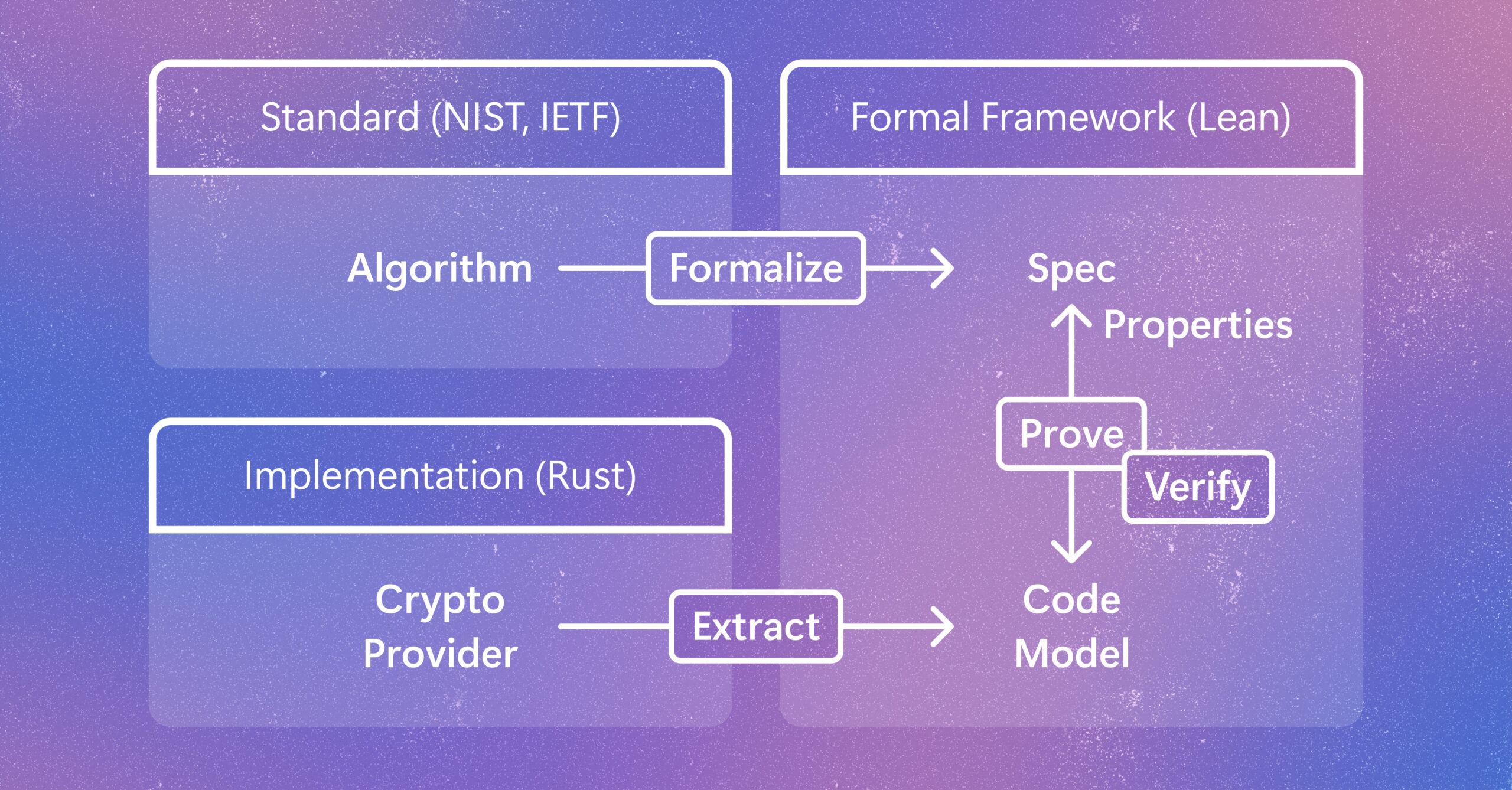
Verifying Rust cryptography in SymCrypt, from standards to code

Cryptographic code supports vital protections in modern computing systems. Learn how a new method helps verify code as developers write it while preserving speed and adaptability as it gets implemented and evolves. The post Verifying Rust cryptography in SymCrypt, from standards to code appeared first on Microsoft Research.

We use cookies to run the site and, with your consent, for analytics and to show ads. See our Cookie Policy.