Blood–brain barrier permeability (BBBP) prediction is important for central nervous system (CNS) drug discovery, yet the relative performance of traditional molecular feature-based models and graph neural networks (GNNs), as well as the sensitivity of BBBP predictions to molecular protonation states, remains insufficie...
Bocheng Xie, Dongjing Yang, Xuhang Dai et al.· Molecules· 0 citations
MYSTERIOUS EASTERN CULTURE VOLITIONAL TRAINING AND NEUROPLASTICITY FAMILY 21 · F101–F105 · Scientific Technical Notebook v1.0 讓古老的謎題保有詩意,讓未來的科學保有謙遜;讓每一個尚未解開的問題,都有機會成為下一個文明的起點。 Let ancient mysteries retain their poetry, and future science its humility; let every unanswered q...
Reconfigurable intelligent surfaces (RISs) enable programmable wireless propagation, but optimizing discrete RIS phases remains computationally demanding for large multiple-input multiple-output (MIMO) systems. This paper proposes the Surrogate-Assisted Rank-1 Genetic Algorithm (SARGA), a training-free framework that c...
Kinza Shafique, Bilal A. Khawaja, Arshad Karimbu Vallappil et al.· Algorithms· 0 citations
The design for environmental art can be an ideal combination of aesthetics and functionality. The traditional approaches to spatial layout design are limited by human experience, lack adaptability, and are heuristic and time-consuming, without explicitly constructing complex spatio-visual relationships. Developing an i...
The core challenge in cross-institution insurance fraud detection is that fraud-ring connectivity crosses institutional boundaries, while privacy regulations prohibit the centralized aggregation of raw claims data. This paper proposes CFGFraud, a federated graph detection framework for partially observable graphs. In t...
Chen Zhao· Journal of Digital Frontier· 0 citations
Accurate voltage forecasting is critical for maintaining the operational stability and reliability of smart microgrids under dynamic load and generation conditions. This paper proposes a novel Hybrid Graph Convolution Moving Average (Hyb-GCMA) spatio-temporal deep learning framework that synergistically integrates Grap...
Muhammad Anas, Muhammad Adnan, Sultan M. Alghamdi et al.· Scientific Reports· 0 citations
Abstract Proper classification of soils is essential for the choice of appropriate crops and promoting agricultural productivity. In this work, Convolutional Neural Network (CNN) and Hybrid Convolutional Graphical Neural Network (HCGNN) models are compared for the classification of soil images, which is used to determi...
Ramesh Patra, Mamata Garanayak, Bijay Kumar Paikaray et al.· Research Square· 0 citations
Virtual heat meters for district-heating networks are usually learned from data. On the open IMOS-SWIL data set the best published result comes from the graph neural network HSTGNN. The data set is a laboratory network at Aalborg University with two consumers and 30 h of records at a 2 s step. We tested what a physical...
V. Troshin, I. Komakhidze, A. Abakarov· Zenodo (CERN European Organi...· 0 citations
The increasing deployment of intelligent cyber–physical systems has created a strong demand for accurate state inference under incomplete and noisy observations. However, reconstructing high-dimensional system states from sparse data remains a challenging problem due to nonlinear dynamics, uncertainty, and missing info...
Xiao-Ping Lei, Li Zhang, Hao-Rong Xie· International Conference on...· 0 citations
Abstract This paper extends Axiomatic Design (AD) to address a fundamental design problem in physical architecture synthesis: functional-centric mapping fails to characterize physical field coupling, and decoupling components lack representation within the existing framework. The core scientific question is: Does funct...
Jinping Li, Guofu Ding· Research Square· 0 citations
This independent historical empirical benchmark has not been peer-reviewed. The research software evaluates Logistic Regression, LightGBM, GraphSAGE, graph attention networks, and GraphSAGE with historical GRU context on the original Elliptic Bitcoin dataset using chronological splits and matched 18-, 93-, and 165-feat...
Pattanapong Jetjaratpong· Zenodo (CERN European Organi...· 0 citations
Machine-learning networks can learn without detailed instructions from a designer. Those that do may offer insight into how the brain reorganizes itself during learning.
MIT News · Artificial Intelligence· news.mit.eduJul 15, 2026
Assistant Professor Pat Pataranutaporn describes a new interface that lets everyday users glimpse inside an AI's neural network before their chatbot ever says a word.
Microsoft Research Blog· microsoft.comJul 13, 2026
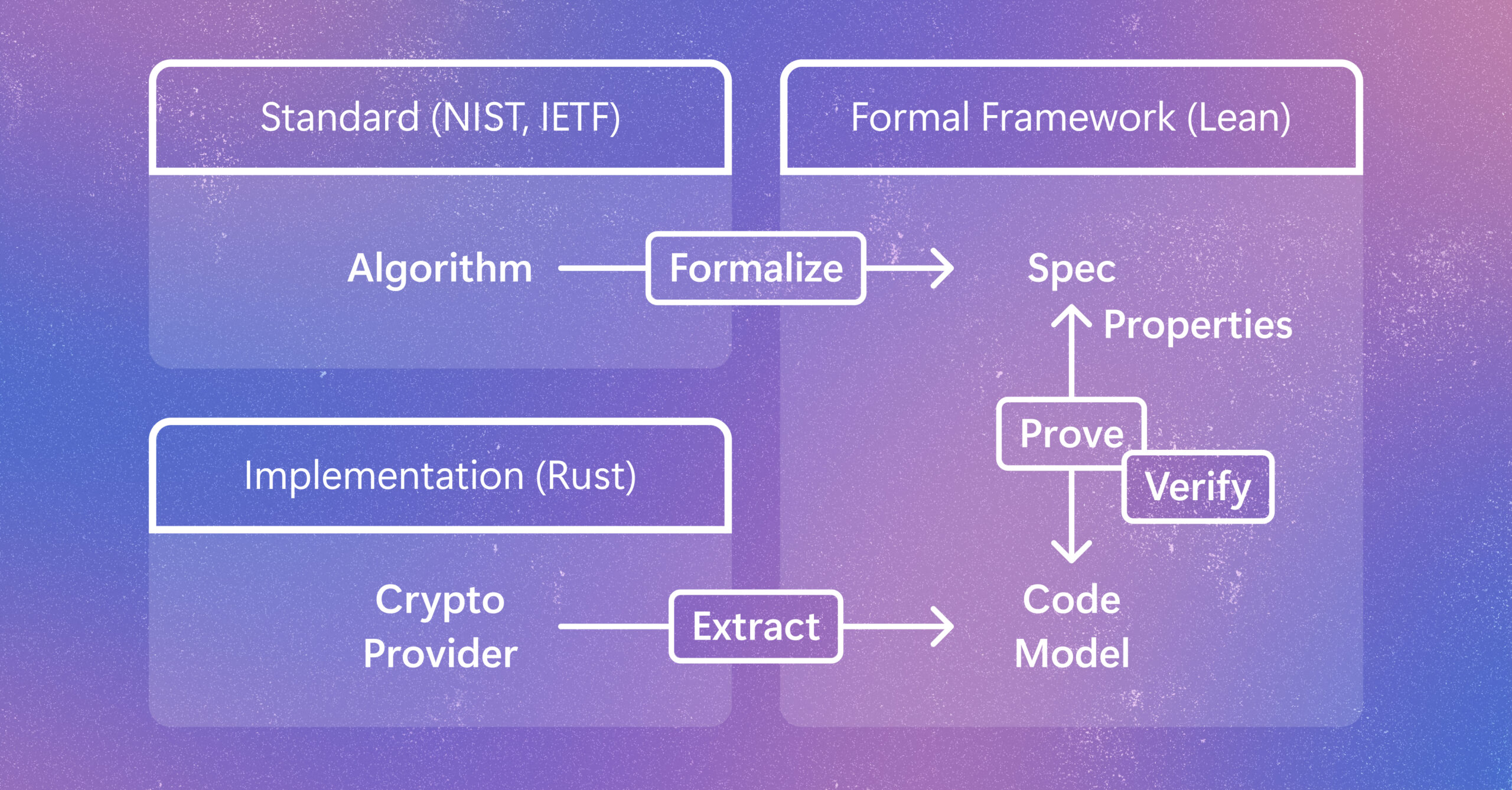
Cryptographic code supports vital protections in modern computing systems. Learn how a new method helps verify code as developers write it while preserving speed and adaptability as it gets implemented and evolves. The post Verifying Rust cryptography in SymCrypt, from standards to code appeared first on Microsoft Research.
MIT News · Artificial Intelligence· news.mit.eduJul 6, 2026
PhD student Rachel Sava, winner of the Envisioning the Future of Computing Prize, explores transformative improvements and dystopian risks of neural technology.
We use cookies to run the site and, with your consent, for analytics and to show ads.
See our Cookie Policy.