Cross-modal perception and decision-making are fundamental capabilities for intelligent digital humans operating in complex real-world environments. However, heterogeneous modality distributions, semantic misalignment, and partial modality degradation often lead to inconsistent or unstable decision behaviors in existin...
Gang Li, Chengzhi Xiong· International Conference on...· 0 citations
Abstract Fault diagnosis of rotating machinery under complex operating conditions requires the joint use of diverse signal representations, operating-condition information, and their dependencies. However, existing methods still provide insufficient differentiated modeling of such heterogeneous information. To address...
Chuang Liang, Jin Li, Chengcheng Wang et al.· Engineering Research Express· 0 citations
Accurate drug–target interaction prediction plays an important role in drug discovery and repositioning. However, existing methods often struggle to fully exploit the complementary information between molecular structures and sequence representations. To address this issue, we propose MFECL-DTI, a dual-branch predictio...
Yexin Chen, Run Zhong· Computers and artificial int...· 0 citations
In constructing the new type of power system, the installed capacity of various electrical equipment such as transformers, motors, distribution terminals, and switchgears keeps expanding. Challenges including variable operating conditions of equipment, scarce early-fault samples, and heterogeneous mixed multi-source mo...
Yuchen Zhu· Applied and Computational En...· 0 citations
Reach audiences
Advertise in front of researchers, engineers, and readers.
Abstract Emotion recognition from electroencephalogram (EEG) signals has emerged as a key research direction in affective computing and brain–computer interface (BCI) systems due to its objectivity and rich temporal dynamics. In this work, we propose a novel Spiking Graph-LSTM framework integrated with multi-head tempo...
Niharika Gudikandula, Ravichander Janapati, Rajchandar K· Research Square· 0 citations
With the refinement of basketball game data analysis and the increasing demand for intelligent training, the identification of tactical intentions and the prediction of opposing strategies have become core technical support for improving teams' competitive performance. Addressing the limitations of traditional methods,...
Yongming Wang, Xingchao Xie, Le Wu et al.· Discover Artificial Intellig...· 0 citations
Protein-protein interactions (PPIs) govern virtually every cellular process and represent compelling targets for therapeutic intervention. Computational prediction of PPI from structural data holds the promise of accelerating the identification of novel interaction interfaces at scale, yet existing methods face a persi...
Paola Vottero· ERA: Education and Research...· 0 citations
Static program analysis is a cornerstone of modern software engineering, supporting bug detection, ensuring security checks, and enabling compiler optimizations that improve both performance and maintainability of programs. By identifying issues in programs early, static analyzers help development teams reduce debuggin...
Jiaqi He· ERA: Education and Research...· 0 citations
Abstract Reconstructing Hamiltonian parameters from noisy scattering data is an ill-posed inverse problem in non-Hermitian quantum systems. We propose an S-matrix Constrained Equivariant Graph Neural Network (SCEGNN) that embeds two architectural hard constraints to reduce the solution ambiguity. An equivariant message...
Dongkai Qi, Huang Huang, Xiaohong Ye et al.· Machine Learning Science and...· 0 citations
Machine-learning networks can learn without detailed instructions from a designer. Those that do may offer insight into how the brain reorganizes itself during learning.
MIT News · Artificial Intelligence· news.mit.eduJul 15, 2026
Assistant Professor Pat Pataranutaporn describes a new interface that lets everyday users glimpse inside an AI's neural network before their chatbot ever says a word.
Microsoft Research Blog· microsoft.comJul 13, 2026
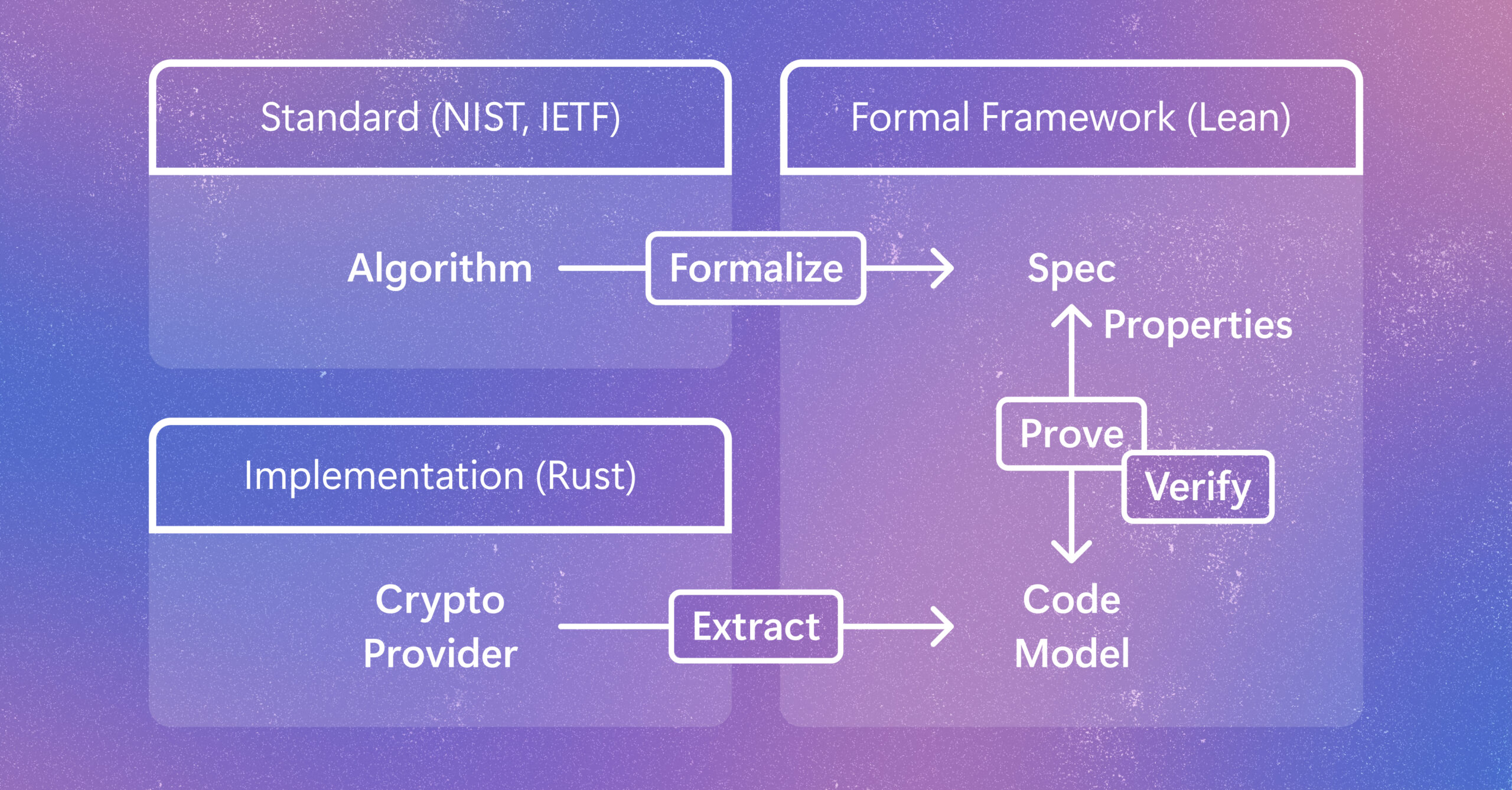
Cryptographic code supports vital protections in modern computing systems. Learn how a new method helps verify code as developers write it while preserving speed and adaptability as it gets implemented and evolves. The post Verifying Rust cryptography in SymCrypt, from standards to code appeared first on Microsoft Research.
MIT News · Artificial Intelligence· news.mit.eduJul 6, 2026
PhD student Rachel Sava, winner of the Envisioning the Future of Computing Prize, explores transformative improvements and dystopian risks of neural technology.
We use cookies to run the site and, with your consent, for analytics and to show ads.
See our Cookie Policy.