Nov 2026· Journal of Digital Frontier· 27 references
Privacy-Preserving Technologies in Data
Abstract
The core challenge in cross-institution insurance fraud detection is that fraud-ring connectivity crosses institutional boundaries, while privacy regulations prohibit the centralized aggregation of raw claims data. This paper proposes CFGFraud, a federated graph detection framework for partially observable graphs. In this framework, a virtual-node placeholder mechanism makes the local model aware of cross-institutional hub entities; institutional attention mask separates the parameterization of real and virtual connections and imposes a learnable attenuation coefficient; and a federated attention alignment strategy constrains drift in each institution’s attention pattern during aggregation. The non-IID experiment with five clients on the IEEE-CIS dataset shows that CFGFraud achieves an AUPRC of 0.791, 0.057 higher than FedAvg+GAT. Fraud-ring recall reaches 0.723, 24.4% higher than FedAvg+GAT. The standard deviation across clients is compressed from 0.029 to 0.012. Single-round computation costs increase by about 8%, while communication overhead increases by less than 0.01%. Ablation experiments show that the virtual-node mechanism accounts for 31.1% of the fraud-ring recall gain, and collaboration gain is positively correlated with entity overlap across institutions. This framework provides a deployable technical path for cross-agency relational fraud detection under the constraint of data confinement.

The results indicate that software engineering work practices are chosen opportunistically, adapted and configured to provide value under the constrains imposed by the startup context.
Nicolò Paternoster, Carmine Giardino, M. Unterkalmsteiner et al.· Information and Software Tec...· 394 citations· ⚡54
This state-of-practice investigation was performed using a literature review followed by a multiple-case study approach and presents how inconsistency between managerial strategies and execution can lead to failure by means of a behavioral framework.
Carmine Giardino, Xiaofeng Wang, P. Abrahamsson· International Conference on...· 175 citations· ⚡19
This study conducts a case survey study based on the secondary data of the major pivots happened in 49 software startups, and demonstrates that customer need pivot is the most common among all pivot types.
Sohaib Shahid Bajwa, Xiaofeng Wang, Anh Nguyen-Duc et al.· Empirical Software Engineeri...· 127 citations· ⚡15
It is found that roles of MVPs in startups were not fully aware by entrepreneurs, and entrepreneurs should consider a systematic approach to fully explore the value of MVP, as a multiple facet product (MFP).
Anh Nguyen-Duc, P. Abrahamsson· International Conference on...· 93 citations· ⚡9
The findings of the study indicate that a large number of women in Bangladesh are suffering from being overweight or obese, and multiple factors are responsible for this including, older age,being from wealthy households, higher education, being from food-secured households, watching TV at least once a week, and being...
Haribondhu Sarma, N. Saquib, M. Hasan et al.· BMC Obesity· 75 citations· ⚡5
The rapid growth of scientific literature makes it increasingly challenging for researchers to identify novel and impactful ideas, especially across disciplines. Modern artificial intelligence (AI) systems offer new opportunities for scientific ideation, but how compelling are AI-generated ideas, and how can their qual...
Xuemei Gu, Mario Krenn· Proceedings of the National...· 65 citations
Related blog posts
MIT News · Artificial Intelligence· news.mit.eduOct 13, 2026
Machine-learning networks can learn without detailed instructions from a designer. Those that do may offer insight into how the brain reorganizes itself during learning.
Microsoft Research Blog· microsoft.comJul 13, 2026
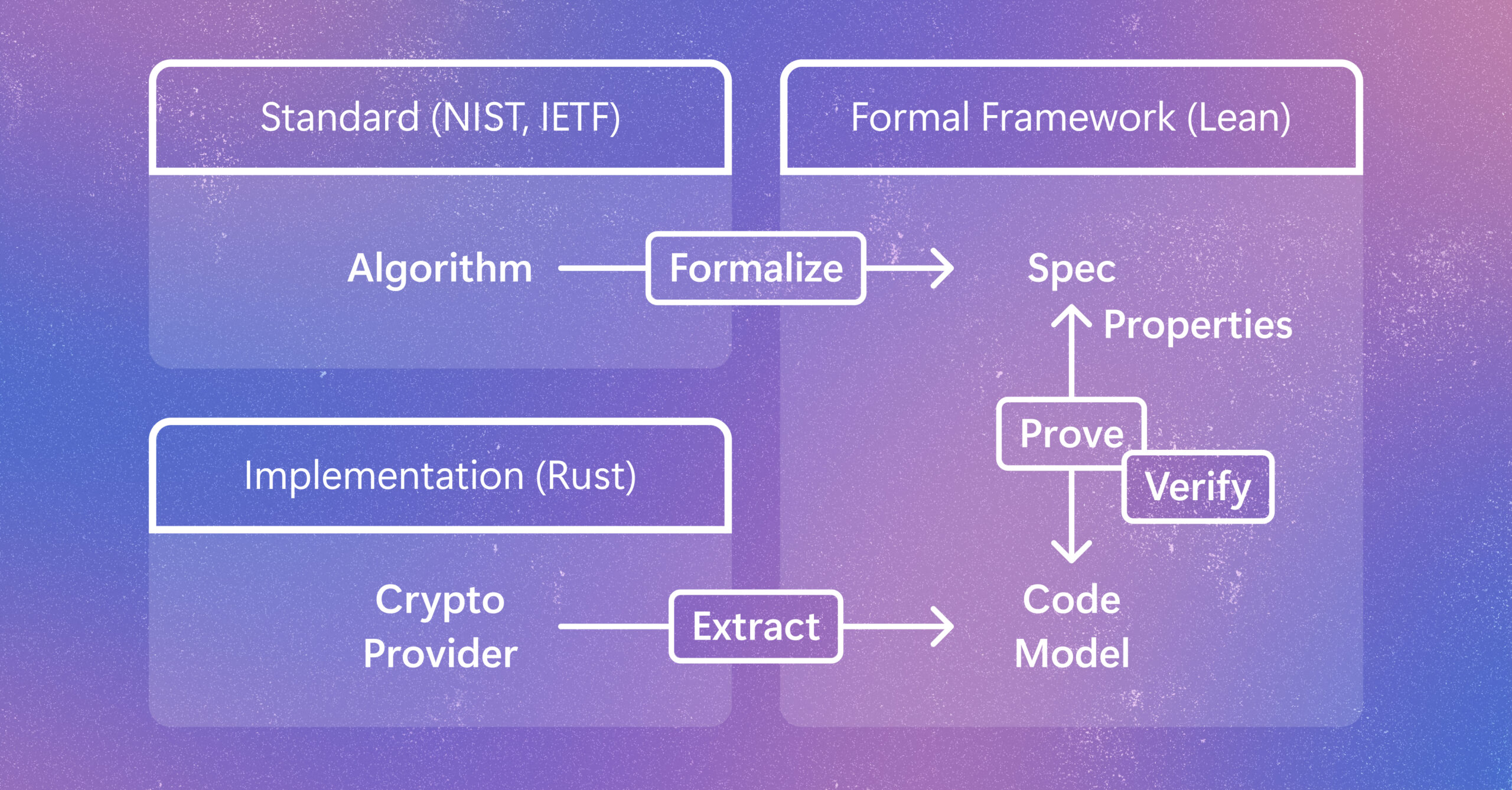
Cryptographic code supports vital protections in modern computing systems. Learn how a new method helps verify code as developers write it while preserving speed and adaptability as it gets implemented and evolves. The post Verifying Rust cryptography in SymCrypt, from standards to code appeared first on Microsoft Research.