Vision-based swimmer and drowning detection systems, built primarily on lightweight YOLO architectures, have achieved measurable gains in accuracy while shrinking model size for resource-constrained edge hardware. However, Field-Programmable Gate Array (FPGA) accelerators hosting these models continue to rely on conven...
Luigi Bautista· Zenodo (CERN European Organi...· 0 citations
Code, prespecified analysis protocol, leakage unit tests and run-level results accompanying the article 'Federated Semi-Supervised Graph Neural Networks for the Prediction of Gestational and Other Diabetes from Tabular Records: A Leakage-Controlled Evaluation'. No patient data are included; the datasets are available f...
Gonzalo Daniel, Venkatesan M· Zenodo (CERN European Organi...· 0 citations
AbstractProgrammable Logic Controllers (PLCs) rely on fixed-threshold comparators that frequently trigger false emergency trips when exposed to electromagnetic interference, thermal drift, and mechanical vibrations. This paper evaluates applying machine learning to industrial logic gate synthesis, using Graph Neural Ne...
Nico Ivan Rosales· Zenodo (CERN European Organi...· 0 citations
As integrated circuit fabrication approaches physical limits, classical Electronic Design Automation (EDA) algorithms struggle with high-dimensional search spaces during multi-objective Power, Performance, and Area (PPA) optimization. Binary addition circuits form the core bottleneck of arithmetic processing units; thu...
Enrico Jose Gonzaga· Zenodo (CERN European Organi...· 0 citations
This work rethink financial risk contagion from the perspective of frequency domain analysis in signal processing and proposes an innovative Frequency-Guided Adaptive Graph Network (FAGNet) framework, proving the effectiveness of frequency domain decoupling.
Chong-De Zhou, Sanchuan Xiao, Chan Hu· International Journal of Mac...· 0 citations
Abstract: Infectious disease transmission involves interactions occurring at multiple organizational levels, including individuals,households, communities, and regions. Conventional graph and hypergraph neural networks represent pairwise and higher order interactions, but they do not directly provide a recursive repres...
Victor Wanjala, John Matuya, Amenya Collins· Zenodo (CERN European Organi...· 0 citations
Abstract Scan-to-order systems route user data through merchants, payment gateways, cloud services, and third-party analytics providers in a single transaction flow. This multi-entity architecture makes privacy leakage difficult to trace: a sensitive record may travel five or six hops before reaching an unauthorised pa...
Jiaxing Zhou, Di Wu· Discover Artificial Intellig...· 0 citations
Autonomous AI-Based Cloud Security Monitoring and Attack Prediction System Using Deep Neural Networks presents a comprehensive approach to modern cloud cybersecurity by combining cloud monitoring, artificial intelligence, deep learning, anomaly detection, attack classification, threat prediction, risk assessment, and a...
Anantha Raman Rathinam, M. Sakthivel, Dr. J. Gladson Maria Britto· Zenodo (CERN European Organi...· 0 citations
Background Autism Spectrum Disorder (ASD) is a neurodevelopmental condition characterized by impairments in social communication and restricted or repetitive behaviours. Early diagnosis is important for timely intervention, motivating increasing interest in computer-aided diagnostic systems based on neuroimaging data....
Sneha Nayak, Anjan Gudigar, R. U. et al.· F1000Research· 0 citations
Assistant Professor Pat Pataranutaporn describes a new interface that lets everyday users glimpse inside an AI's neural network before their chatbot ever says a word.
Microsoft Research Blog· microsoft.comJul 13, 2026
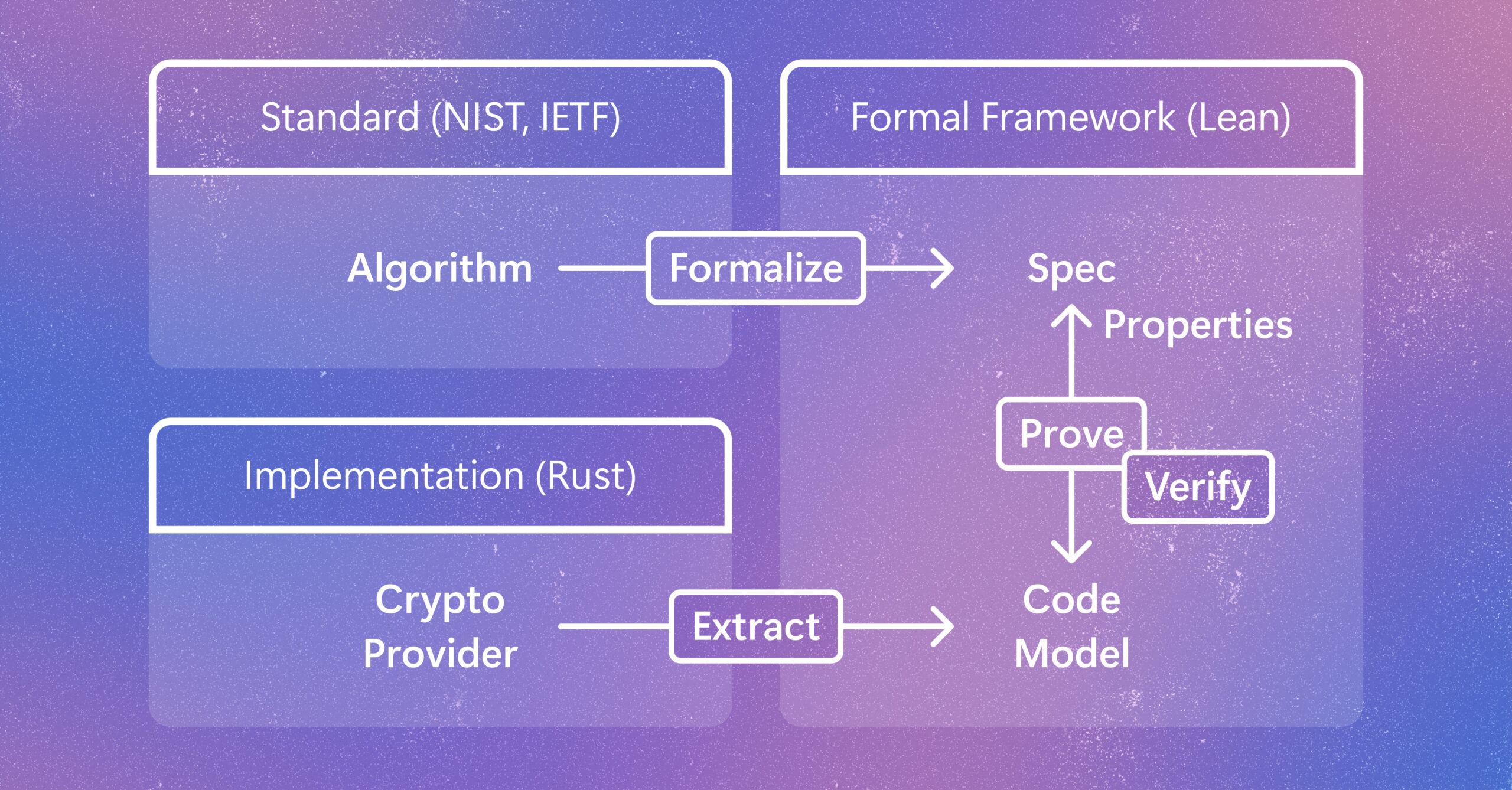
Cryptographic code supports vital protections in modern computing systems. Learn how a new method helps verify code as developers write it while preserving speed and adaptability as it gets implemented and evolves. The post Verifying Rust cryptography in SymCrypt, from standards to code appeared first on Microsoft Research.
MIT News · Artificial Intelligence· news.mit.eduJul 6, 2026
PhD student Rachel Sava, winner of the Envisioning the Future of Computing Prize, explores transformative improvements and dystopian risks of neural technology.