CrystalGRW is introduced, a diffusion-based generative model on Riemannian manifolds that proposes candidate crystal configurations in stable phases, validated through density functional theory calculations, thereby accelerating materials discovery and inverse design.
Krit Tangsongcharoen, T. Pakornchote, C. Atthapak et al.· Scientific Reports· 1 citation
Predicting macroscopic properties of crystalline materials from atomic structure remains a central challenge in computational materials science. We introduce Pformer, a modular crystal representation framework built around a Fourier-inspired source encoder. The source model is trained by supervised scalar-property re...
We present a transferable graph neural network (GNN) surrogate framework for molecular dynamics (MD) that directly predicts atomic displacements and propagates atomistic configurations without explicit force evaluation or numerical time integration. The central objective of this work is to establish whether a common GN...
J. Immanuel, A. Mahata, Aniruddha Maiti· 0 citations
Molecular crystal packing shapes properties from drug bioavailability to charge transport, yet generating realistic structures requires coordinating molecular flexibility, intermolecular interactions and symmetry. Here we introduce SALA, a flow-matching model built on state--context separation: it evolves only asymmetr...
Crystals are cornerstone materials for semiconductors and renewable energy, yet their discovery is hindered by the prohibitive cost of Density Functional Theory (DFT). While geometric graph neural networks have advanced Crystal Structure Prediction (CSP) and energy estimation, existing methods treat these tasks as disp...
Songyou Li, Mingze Li, Qianpu Liu et al.· Proceedings of the 32nd ACM...· 1 citation
Crystal structure governs material properties, making crystal structure prediction (CSP) a fundamental problem in materials science. Generative models are a promising approach for solving this problem, but the prevalence of polymorphism, coupled with large unit cells and complex packing geometry, makes the molecular CS...
T. Egg, Harry W. Sullivan, Maya M. Martirossyan et al.· 0 citations
Related blog posts
MIT News · Artificial Intelligence· news.mit.eduJul 15, 2026
Assistant Professor Pat Pataranutaporn describes a new interface that lets everyday users glimpse inside an AI's neural network before their chatbot ever says a word.
Microsoft Research Blog· microsoft.comJul 13, 2026
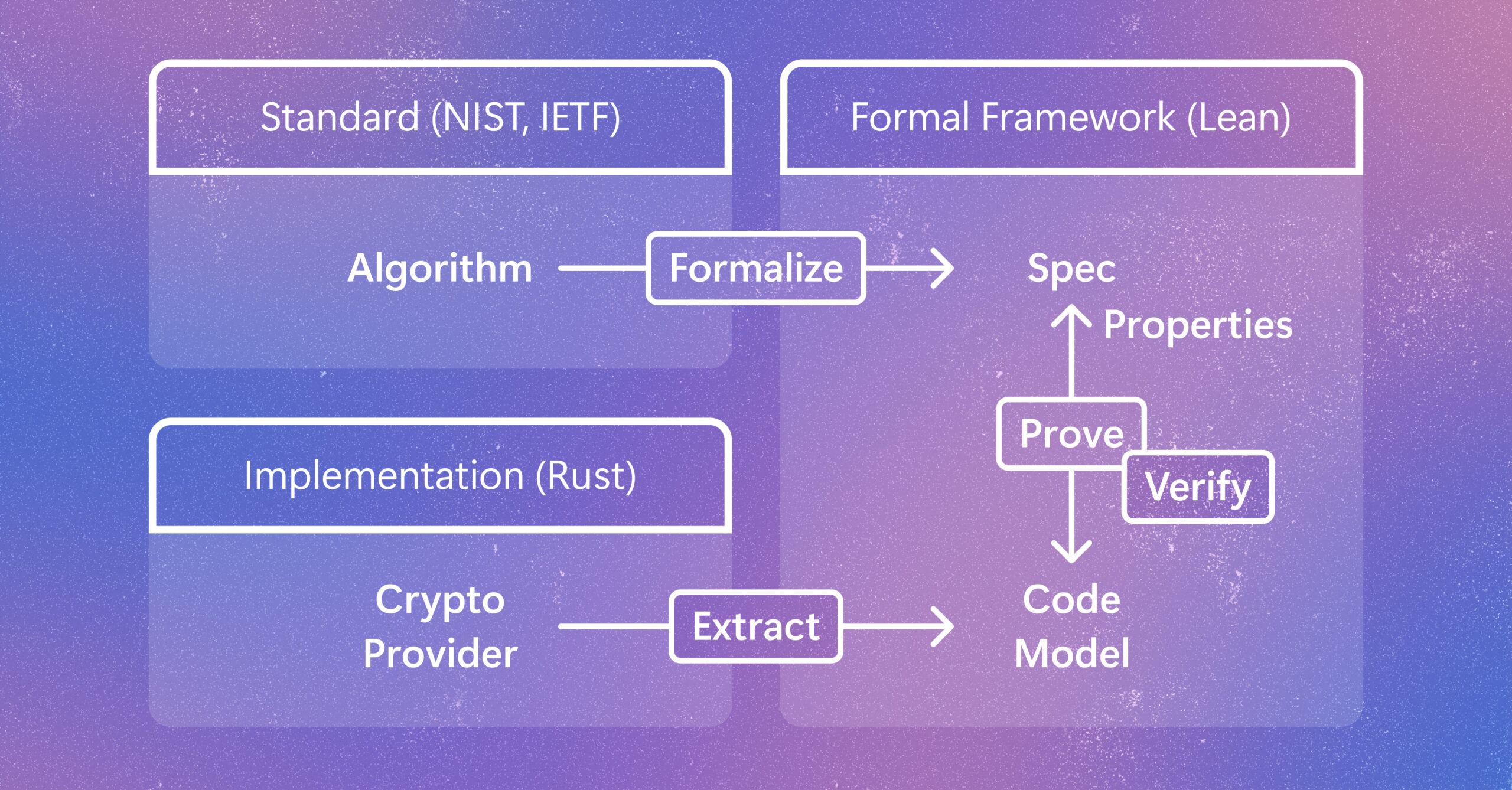
Cryptographic code supports vital protections in modern computing systems. Learn how a new method helps verify code as developers write it while preserving speed and adaptability as it gets implemented and evolves. The post Verifying Rust cryptography in SymCrypt, from standards to code appeared first on Microsoft Research.
MIT News · Artificial Intelligence· news.mit.eduJul 6, 2026
PhD student Rachel Sava, winner of the Envisioning the Future of Computing Prize, explores transformative improvements and dystopian risks of neural technology.