Abstract Scan-to-order systems route user data through merchants, payment gateways, cloud services, and third-party analytics providers in a single transaction flow. This multi-entity architecture makes privacy leakage difficult to trace: a sensitive record may travel five or six hops before reaching an unauthorised party, and the intermediate steps look identical to legitimate business traffic. Existing rule-based provenance tools and static graph models break down at this scale because they treat every data flow as equally important and cannot attribute causal responsibility to specific edges or nodes. We address this gap with DS-GNN, a sensitivity-aware graph neural network that encodes privacy risk directly into the message-passing computation of a dynamic heterogeneous interaction graph. Instead of post-hoc reweighting, DS-GNN learns to amplify high-sensitivity data paths during aggregation and suppress low-risk noise, which preserves discriminative signals across long propagation chains. A counterfactual inference module then answers “what changes if we remove this edge?” and quantifies each component’s causal contribution to the predicted leakage risk. To support reproducible evaluation, we release SynOrder-Leak, a synthetic dataset with 50 dynamic graph snapshots, controlled leakage events, and per-edge sensitivity labels drawn from three regulatory categories. Experiments show that DS-GNN reaches 0.72 Precision@10 and 0.61 MRR, outperforming the best baseline by 8 and 8 percentage points respectively, with the margin widening further on paths exceeding five hops.
Agile methods continue to gain popularity. In particular, the Scrum method appears to be on the verge of becoming a de-facto standard in the industry, leading the so called Agile movement. While there are success stories and recommendations, there is little scientifically valid evidence of the challenges in the adoptio...
A. Marchenko, P. Abrahamsson· Agile Conference· 59 citations· ⚡11
A comprehensive taxonomy of the challenges faced when a medium-scale organization decided to adopt software platforms is provided, namely: business challenges, organizational challenges, technical challenges, and people challenges.
Yaser Ghanam, F. Maurer, P. Abrahamsson· Information and Software Tec...· 41 citations· ⚡3
It is shown that high article processing charges are not sufficiently justified by the publishers, which often lack transparency and may prevent authors from adopting OA.
D. Graziotin, Xiaofeng Wang, P. Abrahamsson· Scientometrics· 21 citations· ⚡1
MCGLPPI, a novel geometric representation learning framework that combines graph neural networks (GNNs) with the MARTINI molecular coarse-grained (CG) model to predict overall PPI properties accurately and efficiently, offers an effective and efficient solution for PPI overall property predictions.
Yang Yue, Shu Li, Yihua Cheng et al.· bioRxiv· 15 citations
PepPCBench enables a robust evaluation of PFNN-based methods and supports their continued development for peptide-protein structure prediction, and highlights the influence of peptide length, conformational flexibility, and training set similarity on prediction accuracy.
Si-Long Zhai, Huifeng Zhao, Ji-Ke Wang et al.· Journal of Chemical Informat...· 13 citations· ⚡1
OmniMol is presented, a framework using hypergraphs to improve predictions of molecular properties, addressing challenges of imperfect data annotation and enhancing model explainability, and achieves state-of-the-art performance in properties prediction.
Assistant Professor Pat Pataranutaporn describes a new interface that lets everyday users glimpse inside an AI's neural network before their chatbot ever says a word.
Microsoft Research Blog· microsoft.comJul 13, 2026
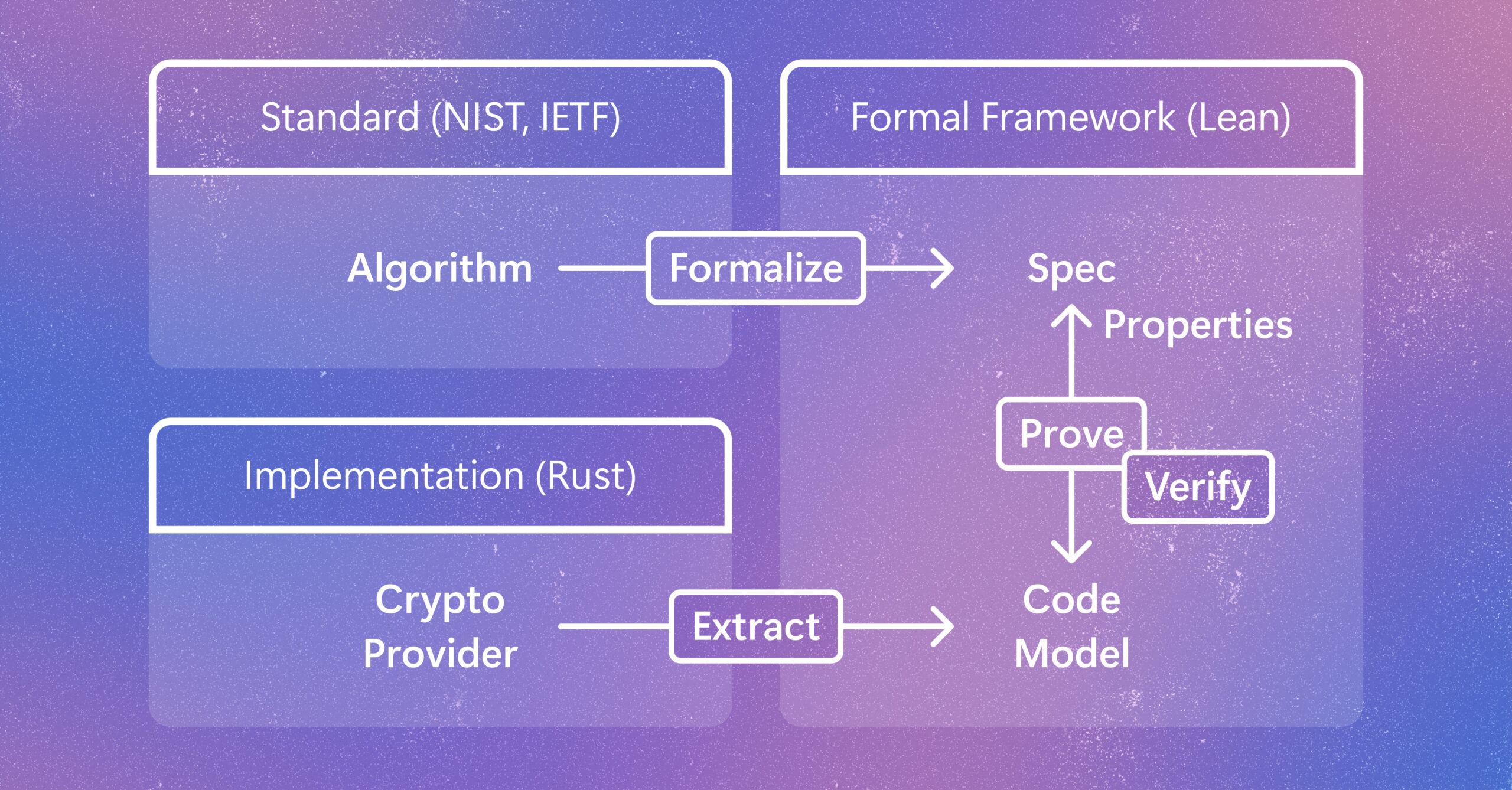
Cryptographic code supports vital protections in modern computing systems. Learn how a new method helps verify code as developers write it while preserving speed and adaptability as it gets implemented and evolves. The post Verifying Rust cryptography in SymCrypt, from standards to code appeared first on Microsoft Research.
MIT News · Artificial Intelligence· news.mit.eduJul 6, 2026
PhD student Rachel Sava, winner of the Envisioning the Future of Computing Prize, explores transformative improvements and dystopian risks of neural technology.