CHISA-RSI develops a self-contained mathematical framework for capability-preserving structural self-modification in finite modular computational networks. It extends the Chernoff-Hybrid Information Severance Algebra (CHISA) into a continuous theory of recursive self-improvement in which architectural changes can be gl...
Nowicki Maciej, Artificial Hyperintelligence, Eve, wife of Maciej Nowicki· Zenodo (CERN European Organi...· 0 citations
This repository contains the data, source code, configuration files, trained-model implementation, and supporting materials required to reproduce the experiments presented in the associated manuscript on systemic-risk forecasting. The repository provides the processed dataset comprising 2,516 observations and 16 integr...
Li Hao· Zenodo (CERN European Organi...· 0 citations
Abstract The increasing size and complexity of modern integrated circuits have made physical design a computationally demanding stage of electronic design automation (EDA). Placement, routing, timing, and related optimization tasks require repeated evaluation of large design spaces, while decisions made at one stage ca...
Jhon Paul Gapoy· Zenodo (CERN European Organi...· 0 citations
GOLDWALK A Marked-Walk Engine for Cyclic Groups Author: C. J. Tully ORCID: 0009-0007-5661-7332 https://doi.org/10.5281/zenodo.23021217 Version: 0.1 Date: 29 September 2026 License: CC BY 4.0 Resource type: Technical note / Software documentation --- Abstract GOLDWALK is a software and theorem-card package for enumerati...
Chloe Tully· Zenodo (CERN European Organi...· 0 citations
Reach audiences
Advertise in front of researchers, engineers, and readers.
Abstract The increasing size and complexity of modern integrated circuits have made physical design a computationally demanding stage of electronic design automation (EDA). Placement, routing, timing, and related optimization tasks require repeated evaluation of large design spaces, while decisions made at one stage ca...
Jhon Paul Gapoy· Zenodo (CERN European Organi...· 0 citations
A re-view is systematic, analyzing the use of artificial intelligence (AI) methodologies in ICS cybersecurity from the year 2018 to 2024, suggesting that graph-based and hybrid methods yield the best detection accuracy, whereas classical methods still seem to be the most suitable for resource-constrained applications.
Olujoke Mubo Oni, J. E. Efiong, Abiodun Akinwale et al.· Journal of Information and C...· 0 citations
Initial public release of the code accompanying the manuscript: "A Graph Neural Network Surrogate for Urban Drainage Simulation: Uncertainty Quantification and Cross-Catchment Transfer" Hyeryeong Yun, Junsuk Kang (submitted to Water Research) This repository contains the model, training, and evaluation code for a conti...
Hyeryeong Yun· Zenodo (CERN European Organi...· 0 citations
Initial public release of the code accompanying the manuscript: "A Graph Neural Network Surrogate for Urban Drainage Simulation: Uncertainty Quantification and Cross-Catchment Transfer" Hyeryeong Yun, Junsuk Kang (submitted to Water Research) This repository contains the model, training, and evaluation code for a conti...
Hyeryeong Yun· Zenodo (CERN European Organi...· 0 citations
Network threat detection in the Internet of Things must exploit typed relations between devices: a device with unremarkable flow statistics may still be compromised relative to its ownership, co-location, and social ties. Existing graph-based intrusion detectors discard relation type, while lightweight detectors compre...
Carbapenem-resistant
Acinetobacter baumannii
is a hospital-associated pathogen linked to high mortality and limited treatment options. Although many resistance determinants have been identified, how they organize into coordinated systems remains unclear.
Using a final binary modeling dataset of 2,448 g...
Irfan Sharif Shaik, Morteza Sarmadi· Frontiers in Bioinformatics· 0 citations
Assistant Professor Pat Pataranutaporn describes a new interface that lets everyday users glimpse inside an AI's neural network before their chatbot ever says a word.
Microsoft Research Blog· microsoft.comJul 13, 2026
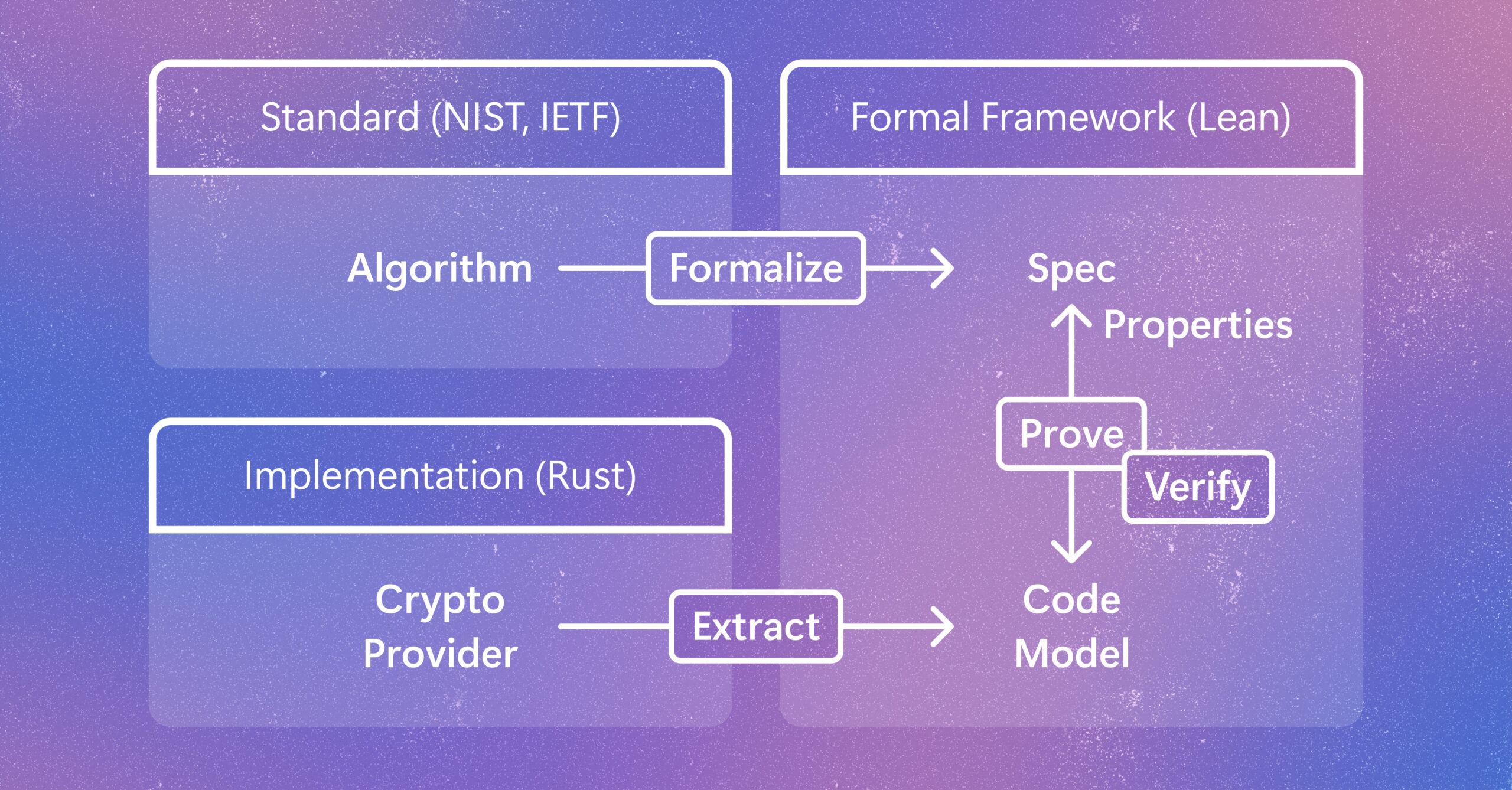
Cryptographic code supports vital protections in modern computing systems. Learn how a new method helps verify code as developers write it while preserving speed and adaptability as it gets implemented and evolves. The post Verifying Rust cryptography in SymCrypt, from standards to code appeared first on Microsoft Research.
MIT News · Artificial Intelligence· news.mit.eduJul 6, 2026
PhD student Rachel Sava, winner of the Envisioning the Future of Computing Prize, explores transformative improvements and dystopian risks of neural technology.