A comparative analysis of graph neural networks and classical machine learning for carbapenem-resistance prediction and genomic interpretation in Acinetobacter baumannii
Sep 2026· Frontiers in Bioinformatics· 0 citations· 47 references
Abstract
Carbapenem-resistant
Acinetobacter baumannii
is a hospital-associated pathogen linked to high mortality and limited treatment options. Although many resistance determinants have been identified, how they organize into coordinated systems remains unclear.
Using a final binary modeling dataset of 2,448 genomes, we benchmarked machine-learning and graph-based models and developed a framework that pairs accurate prediction with systems-level genomic interpretation.
Across five random seeds and 10-fold stratified cross-validation, a Random Forest classifier achieved the strongest internal performance using a bag-of-genes representation, with an accuracy of 0.9328 ± 0.0175 and ROC-AUC of 0.9650 ± 0.0138. Random Forest also generalized best in an independent BV-BRC Asia validation cohort of 2,500 genomes, achieving an accuracy of 0.7728 and ROC-AUC of 0.8392. In parallel, a Graph Convolutional Network trained on gene-adjacency graphs enabled interpretation through
post hoc
explainability, prioritizing genes consistent with a candidate three-layer resistance architecture: (i) canonical rapid-response resistance genes, (ii) a cell-surface “Sugar Shield” centered on GDP/UDP-epimerase, and (iii) a metabolic “Command Center” involving regulators such as DnaA and quinone oxidoreductase 1. Explanation-stability analysis identified a reproducible consensus subset while supporting cautious interpretation of individual rankings. Complementary computational analyses, including protein–protein interaction enrichment, Gene Ontology enrichment, structural modeling, and molecular docking, supported the biological coherence and structural plausibility of the proposed architecture.
Together, these findings suggest that carbapenem resistance may reflect a coordinated, multi-layer defense system and nominate GDP/UDP-epimerase and quinone oxidoreductase 1 as candidates for future experimental investigation.

The comparison of adopter and non-adopter sample reveals three potential adoption inhibitor, security, data privacy, and portability, which underlines the importance of the technical and security perspectives for research investigating the adoption of technology.
Nattakarn Phaphoom, Xiaofeng Wang, S. Samuel et al.· Journal of Systems and Softw...· 111 citations· ⚡8
This study investigates how Lean internal startup facilitates software product innovation in large companies and identifies its enablers and inhibitors, and shows the potential of the method-in-action framework to investigate the Lean startup approach in non-startup context.
Henry Edison, Nina M. Smørsgård, Xiaofeng Wang et al.· Journal of Systems and Softw...· 78 citations· ⚡6
Agile methods continue to gain popularity. In particular, the Scrum method appears to be on the verge of becoming a de-facto standard in the industry, leading the so called Agile movement. While there are success stories and recommendations, there is little scientifically valid evidence of the challenges in the adoptio...
A. Marchenko, P. Abrahamsson· Agile Conference· 59 citations· ⚡11
This paper highlights the challenges to conduct proper affect-related studies with psychology, provides a comprehensive literature review in affect theory, and proposes guidelines for conducting psychoempirical software engineering.
D. Graziotin, Xiaofeng Wang, P. Abrahamsson· SSE@SIGSOFT FSE· 56 citations· ⚡4
This study conducts a multiple case study on twenty European software startups and proposes a prototype-centric learning model in early stage software startups, and identifies factors that occur as barriers but also facilitators for prototyping in earlystage software startups.
Anh Nguyen-Duc, Xiaofeng Wang, P. Abrahamsson· International Conference on...· 44 citations· ⚡5
It is demonstrated that linker-free PROTACs can outperform traditional designs, marking a paradigm shift in PROTAC development for targeted protein degradation.
A new machine-learning framework aims to improve the success rate of computational protein design while moving away from results that reproduce sequences found in nature.
MIT News · Artificial Intelligence· news.mit.eduJul 15, 2026
Assistant Professor Pat Pataranutaporn describes a new interface that lets everyday users glimpse inside an AI's neural network before their chatbot ever says a word.
Microsoft Research Blog· microsoft.comJul 13, 2026
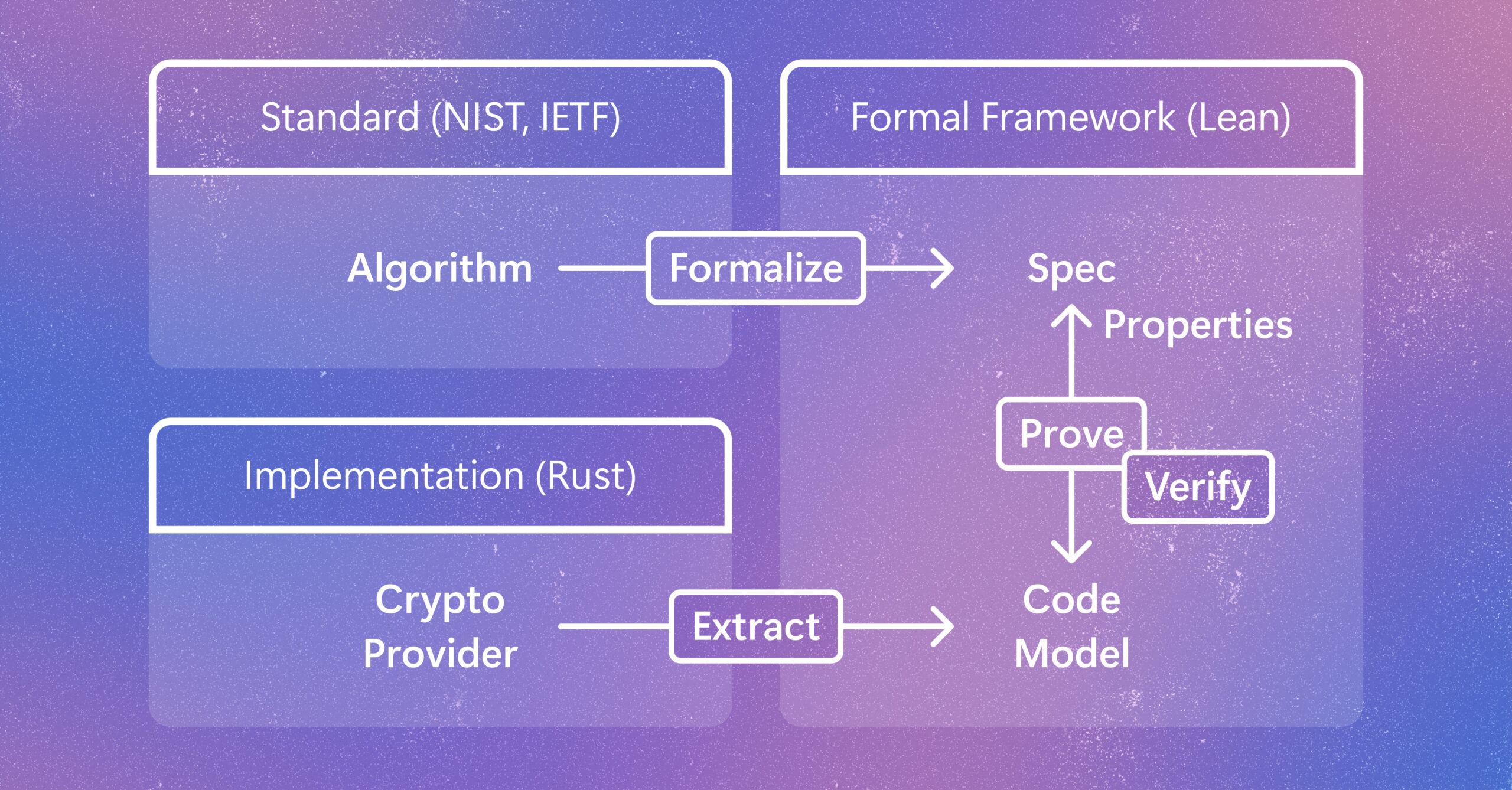
Cryptographic code supports vital protections in modern computing systems. Learn how a new method helps verify code as developers write it while preserving speed and adaptability as it gets implemented and evolves. The post Verifying Rust cryptography in SymCrypt, from standards to code appeared first on Microsoft Research.
We use cookies to run the site and, with your consent, for analytics and to show ads.
See our Cookie Policy.