A completion-aware graph neural network with deep reinforcement learning for permutation flow-shop scheduling
Yuwen Li, Yu Wang, Wen-Yin Gong
· Expert systems with applicat... · 0 citations
 AI Networking Cookbook: Practical recipes for AI-assisted network automation and development
Category
2,608 papers
We present a dedicated graph neural network (GNN)-based methodology for the extraction of the Higgs boson signal strength \mu μ , incorporating systematic uncertainties. The architecture features two branches: a deterministic GNN that processes kinematic variables unaffected by nuisance parameters, and an uncertainty-a...
Artificial intelligence, and generative modelling in particular, is creating new opportunities in bioinformatics. Conventional computational biology relied on physics-based simulation, sequence alignment and manual feature engineering, each limited by computational cost and the need for expert interpretation. This pape...
Graph neural networks are increasingly used for network intrusion detection, but their reported advantages often depend on evaluation choices. We present STAR-IDS, which builds a graph from every window of ten consecutive network flows, applies two-level graph attention and a prototype memory bank, and estimates predic...
Reach audiences
Advertise in front of researchers, engineers, and readers.
Neural renormalization-group (RG) methods and machine-learned holographic maps train a network on lattice samples or on a lattice action and read physics off the result: coarse couplings, critical exponents, or an emergent bulk geometry. We ask which of these outputs the training objective and the readout themselves de...
Graph learning has emerged as a powerful framework for brain network analysis. However, growing evidence suggest that fundamental brain functions arise from higher-order interactions among multiple regions, which cannot be fully captured by pairwise graph models. Such pairwise representations are may therefore fail to...
This record contains all code and data for the article "Data-Driven First-Principles Modelling of Microstructure Evolution in Quantum Magnetic Materials Using Graph Neural Networks" (H. Fareed, Y. Zhao, submitted to Computational Materials Science, manuscript COMMAT-D-26-04920). BFE-GNN-CrIBr3_code_results.zip contains...
Financial fraud has become a major challenge with the rapid growth of online banking, digital payments,and e-commerce, causing significant financial losses. Traditional fraud detection methods often analysetransactions independently, making it difficult to identify complex patterns involving multiple entities. Graph Ne...
Abstract Objective Accurate localization of the seizure onset zone (SOZ) is critical for the presurgical evaluation of drug‐resistant epilepsy. Intracranial electroencephalography captures high‐resolution seizure dynamics, but interpreting complex spatiotemporal patterns across implanted electrodes is clinically challe...
Deep mining releases accumulated strain energy violently, and microseismic arrays record the fracturing that precedes rockbursts. Graph neural networks have already been applied to seismic and microseismic tasks such as phase association, source characterisation and event forecasting; what those graphs share is a topol...
Reinforcement learning-based adaptive traffic signal controllers have traditionally prioritised efficiency, with only recent studies beginning to incorporate safety considerations into signal design. However, most safety-oriented approaches rely on simulated trajectories that oversimplify driver behaviour, leading to p...
A Blog post by NVIDIA on Hugging Face
A cross-section of the MIT community convened discussions on topics ranging from data centers and super pollutants to agriculture and education.
Machine-learning networks can learn without detailed instructions from a designer. Those that do may offer insight into how the brain reorganizes itself during learning.
Assistant Professor Pat Pataranutaporn describes a new interface that lets everyday users glimpse inside an AI's neural network before their chatbot ever says a word.
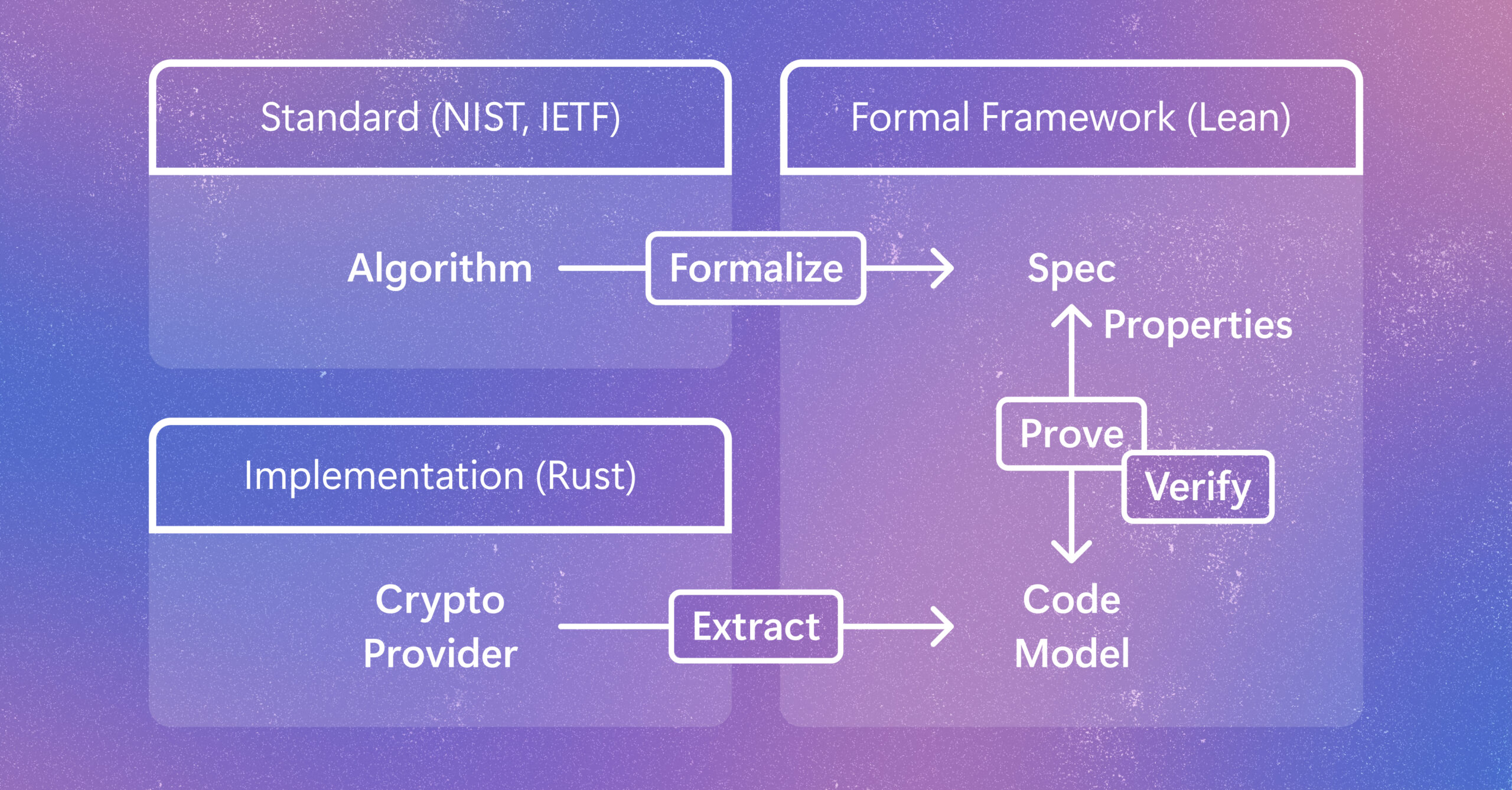
Cryptographic code supports vital protections in modern computing systems. Learn how a new method helps verify code as developers write it while preserving speed and adaptability as it gets implemented and evolves. The post Verifying Rust cryptography in SymCrypt, from standards to code appeared first on Microsoft Research.
PhD student Rachel Sava, winner of the Envisioning the Future of Computing Prize, explores transformative improvements and dystopian risks of neural technology.
We use cookies to run the site and, with your consent, for analytics and to show ads. See our Cookie Policy.