HyperCare is proposed, a longitudinal heterogeneous hypergraph neural network for modeling patient health trajectories from multimodal EHRs that consistently outperforms state-of-the-art methods and exhibits strong few-shot generalization.
This paper proposes Autoregressive Tool Selection (ARTS), which formulates toolset construction as a sequential decision-making problem, where the next tool is selected conditioned on the query and the previously selected tools.
Zhuo-Qi Hu, Shi-Wei Li, Hao-Zhao Wang et al.· 0 citations
The proposed HiGMR-Net introduces a hierarchical memory-guided multi-view fusion mechanism that jointly models channel-level and region-level graphs, where graph-level memory preserves persistent region-wise connectivity patterns and edge-level refinement updates channel-level interactions using higher-level graph cont...
Debashis Das Chakladar, I. Jang, Adeel Razi et al.· 0 citations
Robotic grasp detection aims to learn reliable grasp poses from 3D point clouds. Existing methods primarily train neural networks to estimate grasp poses but often overlook the dataset biases stemming from imbalanced scene distributions. Specifically, due to the underrepresentation of densely cluttered and severely occ...
Yang-Fu Zhu, Wei-Zhen Tian, Yuan-Dong Wang et al.· 0 citations
Reach audiences
Advertise in front of researchers, engineers, and readers.
This paper presents a framework that automatically converts a pre-trained Keras model into a CKKS equivalent, handling parameter inference, bootstrap placement and encrypted execution without retraining, with the user only providing a configuration of the encryption parameters.
Dennis van der Werff, Georgios Tasopoulos, Francesco Regazzoni· Proceedings of the 14th Work...· 0 citations
In modern industry, bearing fault diagnosis is important for maintaining the reliability and safety of rotating machinery. With the widespread deployment of the industrial internet of things, large volumes of sensor data have become available, supporting the application of end-to-end deep learning models in this field....
Yu-Huang Jia, Xin-Hui Shao, Jiang-Hua Liu et al.· Measurement science and tech...· 0 citations
The proposed CAMIE, a Context-Aware Motif Importance Explainer designed for multi-task molecular classification, leverages a Knowledge Distillation-inspired pseudo target to effectively distill assay-specific motif-removal responses, transferring explanatory patterns across tasks without requiring ground-truth labels.
Yejin Yoon, Jaesung Lim, Jinhee Choi et al.· 0 citations
This paper constructs a semantic state transition graph (SemSTG) from time series with a self-supervised state recognition approach, and introduces a novel graph neural network to learn robust representations of the semantic state transition graph.
Jie Zhang, Peng Wang, Wei Wang· Proceedings of the 35th ACM...· 0 citations
Machine-learning networks can learn without detailed instructions from a designer. Those that do may offer insight into how the brain reorganizes itself during learning.
MIT News · Artificial Intelligence· news.mit.eduJul 15, 2026
Assistant Professor Pat Pataranutaporn describes a new interface that lets everyday users glimpse inside an AI's neural network before their chatbot ever says a word.
Microsoft Research Blog· microsoft.comJul 13, 2026
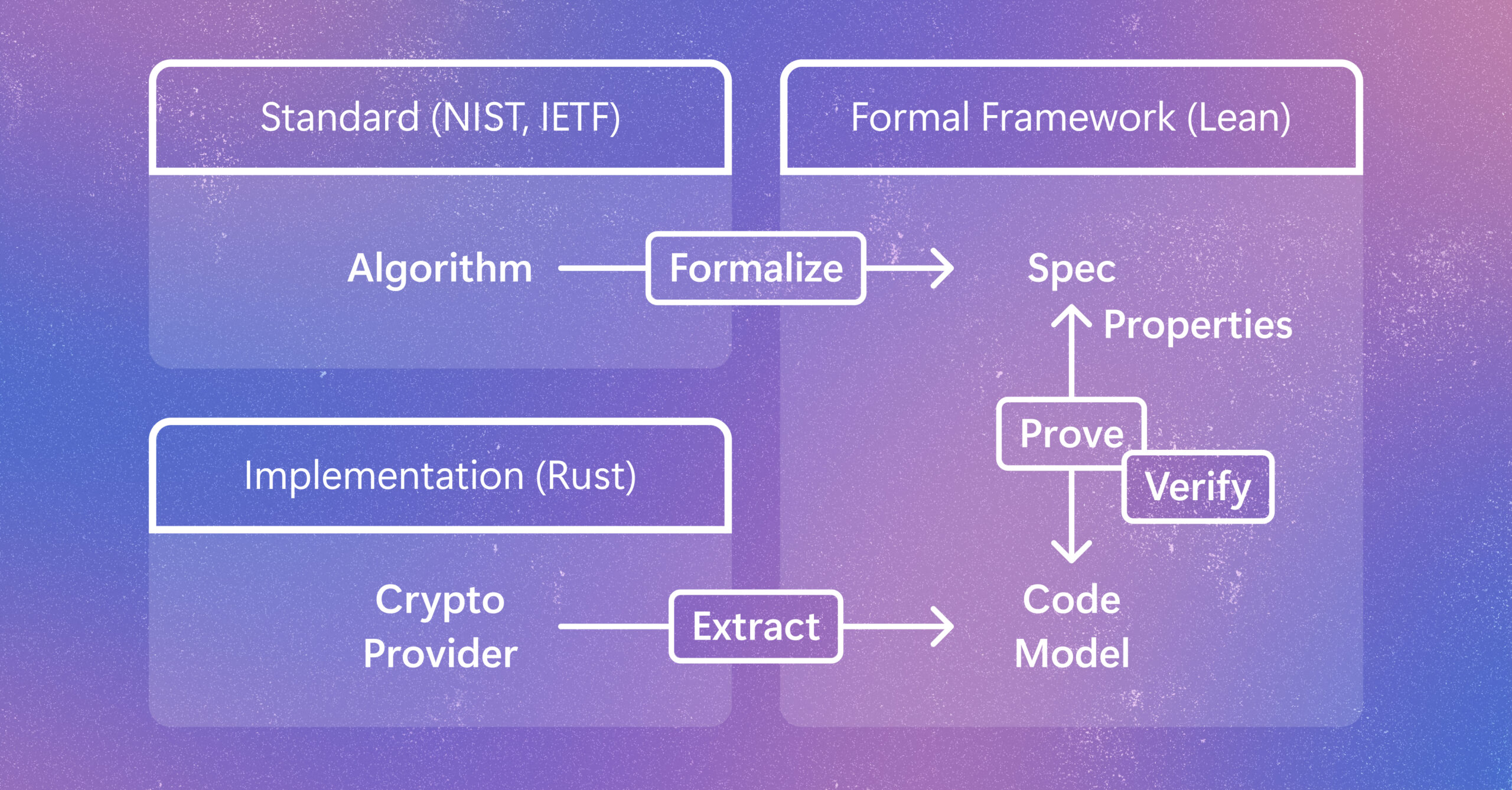
Cryptographic code supports vital protections in modern computing systems. Learn how a new method helps verify code as developers write it while preserving speed and adaptability as it gets implemented and evolves. The post Verifying Rust cryptography in SymCrypt, from standards to code appeared first on Microsoft Research.
MIT News · Artificial Intelligence· news.mit.eduJul 6, 2026
PhD student Rachel Sava, winner of the Envisioning the Future of Computing Prize, explores transformative improvements and dystopian risks of neural technology.
We use cookies to run the site and, with your consent, for analytics and to show ads.
See our Cookie Policy.