Skip to content

Optimising traffic signal timings for safety and efficiency using graph-based reinforcement learning

Nov 2026 · Accident Analysis & Prevention · 21 references
Traffic control and management

Abstract

Reinforcement learning-based adaptive traffic signal controllers have traditionally prioritised efficiency, with only recent studies beginning to incorporate safety considerations into signal design. However, most safety-oriented approaches rely on simulated trajectories that oversimplify driver behaviour, leading to potentially unreliable safety estimates. In contrast, studies based on real-world traffic conflicts often depend on rare critical events and fail to capture the safety conditions across the broader range of traffic interactions. Moreover, existing safety-oriented controllers typically employ fixed state representations tied to specific intersection layouts, limiting the transferability of learned signal policies across different geometric configurations. To address these limitations, this study proposes a graph-based reinforcement learning framework to optimise signal timings for both safety and efficiency. The safety objective minimises time spent in conflict, measured using the proportion of stopping distance, while the efficiency objective reduces queue length. A multi-objective deep reinforcement learning algorithm was used to optimise both objectives simultaneously. The intersection was represented as a graph of lanes and movements, which was processed through a graph neural network to capture underlying traffic dynamics. Video data were collected over two weekdays from two four-legged signalised intersections in Queensland, Australia. Road user trajectories were extracted using artificial intelligence-based video analytics and subsequently used to calibrate a microscopic traffic simulation environment via genetic algorithms. The trained signal control policy was then evaluated within these calibrated environments and compared with the existing field signal plan, as well as safety-oriented and efficiency-oriented reinforcement learning variants. Relative to the field signal plan, the proposed safety-efficiency framework achieved reductions of 5.1 % in average waiting time, 7.9 % in queue length, and 17.3 % in time spent in conflict. When transferred to a new intersection with a different layout, the learned policy continued to outperform the field signal plan across both safety and efficiency metrics. These findings demonstrate that traffic signals can be redesigned to improve safety without compromising efficiency. Overall, the proposed graph-based reinforcement learning framework offers a promising direction for intelligent signal control systems.

View source

Similar papers

#machine learning Review Open access Oct 2014

Software development in startup companies: A systematic mapping study

The results indicate that software engineering work practices are chosen opportunistically, adapted and configured to provide value under the constrains imposed by the startup context.

Nicolò Paternoster, Carmine Giardino, M. Unterkalmsteiner et al. · 394 citations · ⚡54
#machine learning Review Open access Jun 2014

Why Early-Stage Software Startups Fail: A Behavioral Framework

This state-of-practice investigation was performed using a literature review followed by a multiple-case study approach and presents how inconsistency between managerial strategies and execution can lead to failure by means of a behavioral framework.

Carmine Giardino, Xiaofeng Wang, P. Abrahamsson · 175 citations · ⚡19
#machine learning Review Open access Oct 2016

“Failures” to be celebrated: an analysis of major pivots of software startups

This study conducts a case survey study based on the secondary data of the major pivots happened in 49 software startups, and demonstrates that customer need pivot is the most common among all pivot types.

Sohaib Shahid Bajwa, Xiaofeng Wang, Anh Nguyen-Duc et al. · 127 citations · ⚡15
#computer vision Review Open access Mar 2016

Determinants of overweight or obesity among ever-married adult women in Bangladesh

The findings of the study indicate that a large number of women in Bangladesh are suffering from being overweight or obese, and multiple factors are responsible for this including, older age,being from wealthy households, higher education, being from food-secured households, watching TV at least once a week, and being...

Haribondhu Sarma, N. Saquib, M. Hasan et al. · 75 citations · ⚡5
#artificial intelligence Open access Sep 2026

Generating Interesting Scientific Ideas using Knowledge Graphs and LLMs: Evaluations with 100 Research Group Leaders

The rapid growth of scientific literature makes it increasingly challenging for researchers to identify novel and impactful ideas, especially across disciplines. Modern artificial intelligence (AI) systems offer new opportunities for scientific ideation, but how compelling are AI-generated ideas, and how can their qual...

Xuemei Gu, Mario Krenn · 65 citations

Related blog posts

Microsoft Research Blog Jul 13, 2026

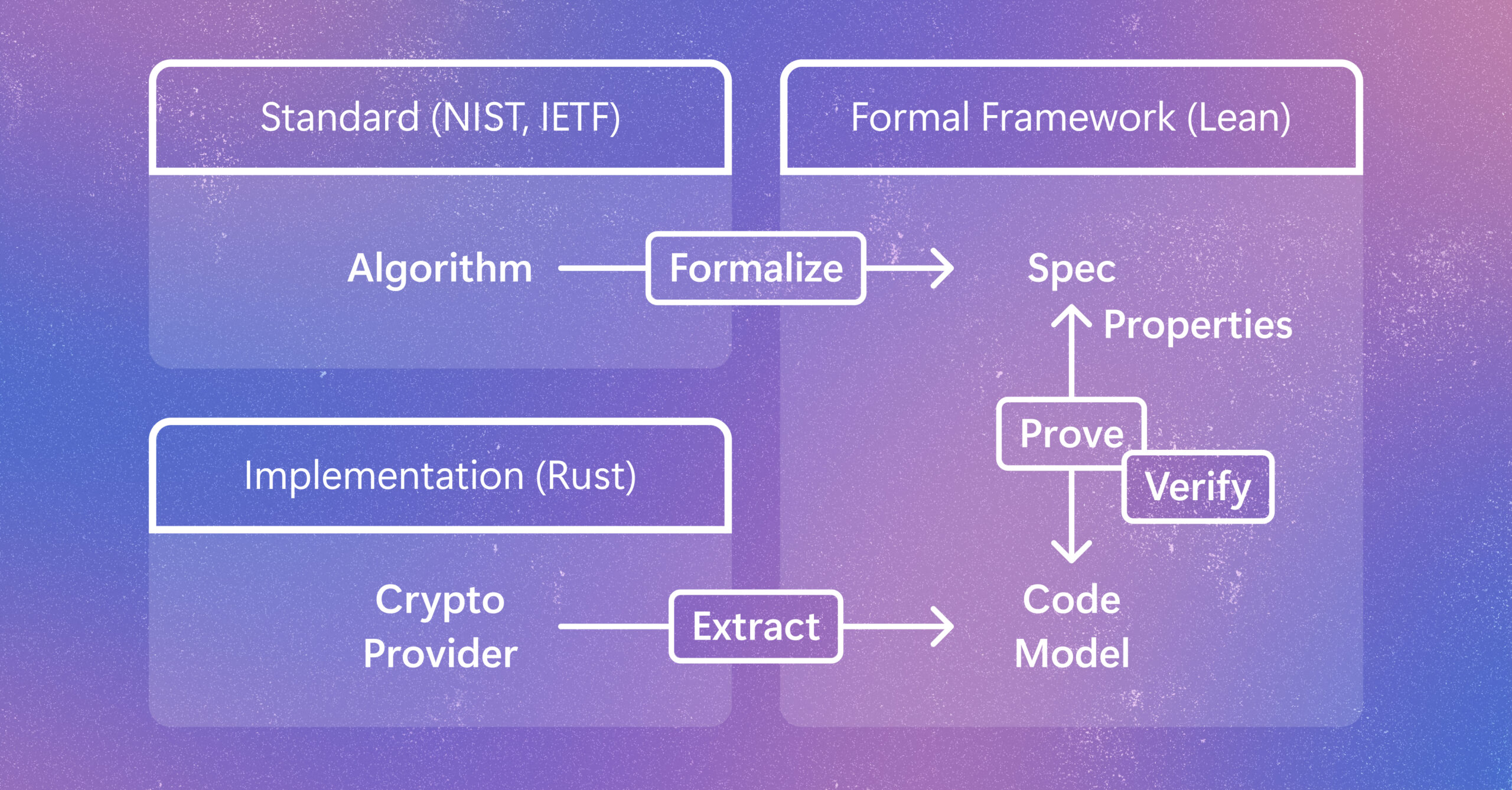
Verifying Rust cryptography in SymCrypt, from standards to code

Cryptographic code supports vital protections in modern computing systems. Learn how a new method helps verify code as developers write it while preserving speed and adaptability as it gets implemented and evolves. The post Verifying Rust cryptography in SymCrypt, from standards to code appeared first on Microsoft Research.

We use cookies to run the site and, with your consent, for analytics and to show ads. See our Cookie Policy.
