Skip to content

Transfer-Aware Anomaly Detection for Sustainable AIoT-Enabled Water Infrastructures: A Systematic Review of Graph-Based Models, Tabular Foundation Models, and Privacy-Preserving Adaptation

Nov 2026 · Sustainability · Vol 18, pp. 11431
Water Systems and Optimization

Abstract

Early detection of leaks, bursts, process faults, and cyber-physical attacks is a direct lever for the sustainable management of water infrastructures: it reduces non-revenue water, the energy spent on treating and pumping lost water, and service interruptions (Sustainable Development Goal 6). Anomaly detectors for water distribution networks (WDNs) and wastewater treatment plants (WWTPs) are increasingly deployed through Artificial Intelligence of Things (AIoT) architectures, yet a detector that performs well on one system cannot be assumed to transfer to another with a different topology, sensor layout, demand pattern, and label availability. This systematic review examines the literature through this transfer problem, with graph neural networks (GNNs) as topology-aware models, tabular foundation models (TFMs; in the retrieved evidence, the TabPFN family) as candidate local screeners, federated learning as privacy-preserving adaptation, and digital twins and explainable artificial intelligence as validation and trust layers. It follows PRISMA 2020 and is registered retrospectively in the Open Science Framework (DOI 10.17605/OSF.IO/D7RXU). Peer-reviewed articles, theses, and preprints in English or Spanish were identified through modular block searches (Google Scholar, publisher sites, three Spanish repositories), author-supplied sources, and citation chasing, verified against primary records on 6–7 September 2026, screened in two stages, coded with a predefined framework, appraised with a six-item checklist, and synthesized descriptively because tasks, datasets, and metrics are not commensurable. The corpus comprises 150 unique works: 76 water-specific experimental studies, 21 benchmark or testbed studies, and 53 method, review, or contextual works. Graph-based approaches have the stronger water-specific evidence for topology-dependent tasks in WDNs, whereas TabPFN-family TFMs rest on general tabular-learning evidence and one water-adjacent prediction study, with no validated water anomaly-detection use. Only 6 of the 76 experimental studies evaluate an explicit transfer mechanism, federated evidence is limited to one water study, and no study reports an operator evaluation of explanations. The review contributes a transfer taxonomy with study counts, an evidence-class scheme, a gap map of demonstrated and proposed components on a transfer-aware AIoT layout, and an evaluation agenda based on source–target protocols, and identifies the evidence utilities need before transferable detectors can support sustainable operation at scale.

View source

Similar papers

#machine learning Review Open access Oct 2014

Software development in startup companies: A systematic mapping study

The results indicate that software engineering work practices are chosen opportunistically, adapted and configured to provide value under the constrains imposed by the startup context.

Nicolò Paternoster, Carmine Giardino, M. Unterkalmsteiner et al. · 394 citations · ⚡54
#machine learning Review Open access Jun 2014

Why Early-Stage Software Startups Fail: A Behavioral Framework

This state-of-practice investigation was performed using a literature review followed by a multiple-case study approach and presents how inconsistency between managerial strategies and execution can lead to failure by means of a behavioral framework.

Carmine Giardino, Xiaofeng Wang, P. Abrahamsson · 175 citations · ⚡19
#machine learning Review Open access Oct 2016

“Failures” to be celebrated: an analysis of major pivots of software startups

This study conducts a case survey study based on the secondary data of the major pivots happened in 49 software startups, and demonstrates that customer need pivot is the most common among all pivot types.

Sohaib Shahid Bajwa, Xiaofeng Wang, Anh Nguyen-Duc et al. · 127 citations · ⚡15
#computer vision Review Open access Mar 2016

Determinants of overweight or obesity among ever-married adult women in Bangladesh

The findings of the study indicate that a large number of women in Bangladesh are suffering from being overweight or obese, and multiple factors are responsible for this including, older age,being from wealthy households, higher education, being from food-secured households, watching TV at least once a week, and being...

Haribondhu Sarma, N. Saquib, M. Hasan et al. · 75 citations · ⚡5
#artificial intelligence Open access Sep 2026

Generating Interesting Scientific Ideas using Knowledge Graphs and LLMs: Evaluations with 100 Research Group Leaders

The rapid growth of scientific literature makes it increasingly challenging for researchers to identify novel and impactful ideas, especially across disciplines. Modern artificial intelligence (AI) systems offer new opportunities for scientific ideation, but how compelling are AI-generated ideas, and how can their qual...

Xuemei Gu, Mario Krenn · 65 citations

Related blog posts

Microsoft Research Blog Jul 13, 2026

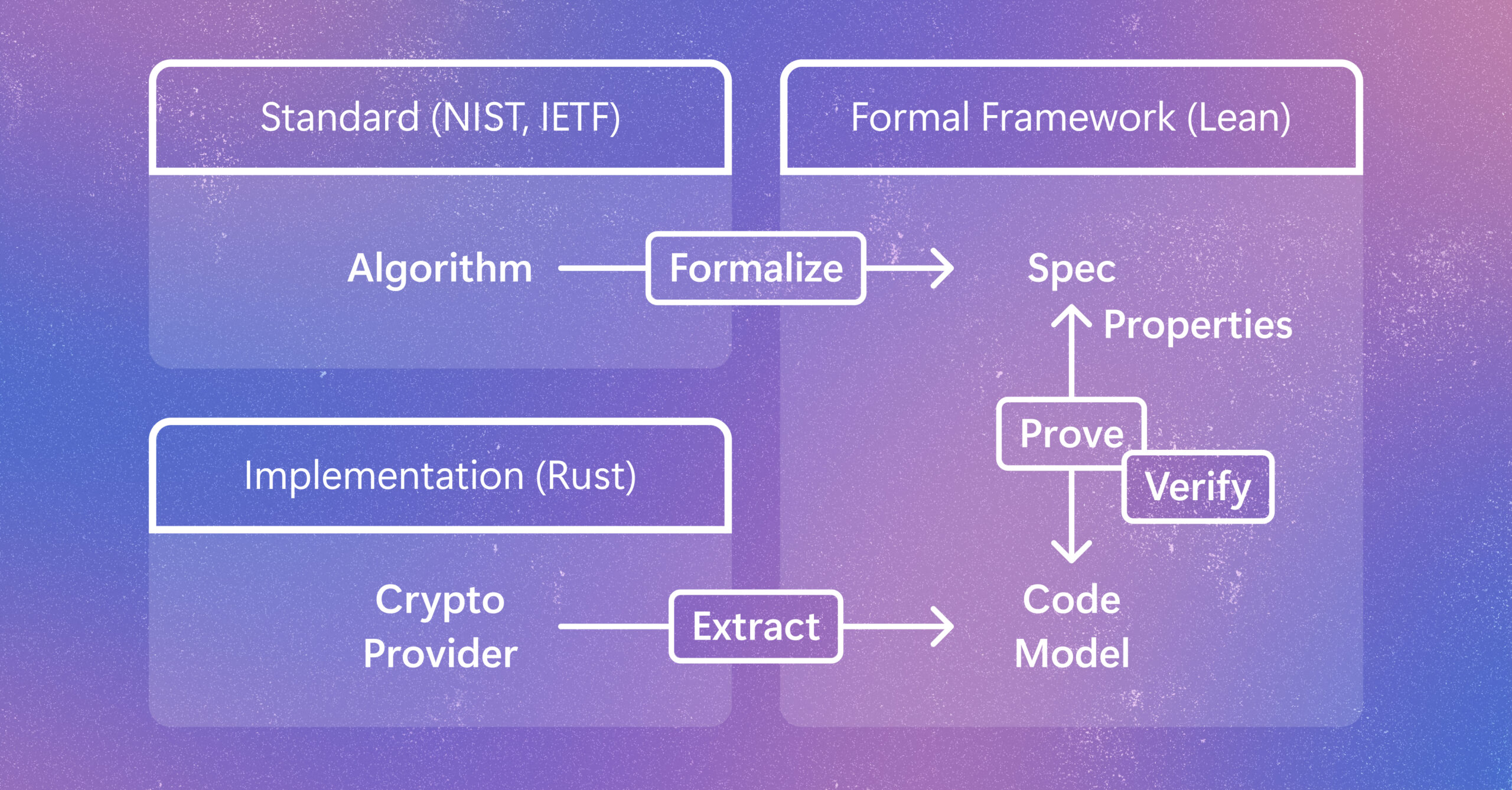
Verifying Rust cryptography in SymCrypt, from standards to code

Cryptographic code supports vital protections in modern computing systems. Learn how a new method helps verify code as developers write it while preserving speed and adaptability as it gets implemented and evolves. The post Verifying Rust cryptography in SymCrypt, from standards to code appeared first on Microsoft Research.

We use cookies to run the site and, with your consent, for analytics and to show ads. See our Cookie Policy.
