Sep 2026· International Conference on Optics, Electronics, and Communication Engineering· Vol 14349, pp. 1434915 - 1434915-9· 0 citations· 15 references
Engineering
TL;DR
A novel hybrid prediction model STKG-DemandNet that integrates spatio-temporal graph neural networks and external knowledge and integrates multi-source external knowledge to achieve fine-grained and highly robust demand forecasting is proposed.
Abstract
To address the issues of insufficient spatio-temporal dependency modeling and insufficient utilization of external semantic information in the demand forecasting task in complex urban systems, this paper proposes a novel hybrid prediction model STKG-DemandNet that integrates spatio-temporal graph neural networks and external knowledge. This model innovatively combines two cutting-edge algorithms, Implicit Causal Graph Learning (ICGL) and Hypergraph Convolutional Memory Network (HCMN), which are less frequently used in demand forecasting, to construct a novel spatio-semantic joint reasoning mechanism. ICGL is used to adaptively infer potential causal driving relationships from observed data to enhance the model's sensitivity to dynamic external factors (such as sudden weather changes and emergencies); HCMN efficiently models high-order interactions among multiple entities through a hypergraph structure and introduces a memory module to capture long-term semantic evolution patterns. On this basis, the model further integrates multi-source external knowledge such as geographic information, POI semantics, and real-time event streams to achieve fine-grained and highly robust demand forecasting. Experiments on two real-world datasets (taxi order and bike-sharing usage) show that STKG-DemandNet outperforms the existing optimal methods by an average of 12.3% in MAE and 10.8% in RMSE, verifying its effectiveness and generalization ability

Experiments indicate that the proposed H-MoE framework can improve forecasting performance under the evaluation setting and support heterogeneous expert specialization as a useful design direction, while the scope of the conclusions remains limited to the tested ICEWS benchmarks and implementation.
Fei Chen, Bing Guo, Yan Shen et al.· Technologies· 0 citations
The rapid growth in traffic volumes has increased the demand for traffic-flow forecasting models with stronger prediction capability. Traditional methods that rely on local feature extraction and static spatial graph construction can no longer fully meet these requirements. To address the short- and long-term fluctuati...
Hai Yan, Rui-Dong Jian, Cheng-Cheng Wang et al.· Algorithms· 0 citations
The results show that combining spatial graph modeling with temporal deep learning provides a robust computational approach for manufacturing industrial land change prediction and supports data-driven industrial land planning decisions.
Yuxuan Hu, Yi-Nan Lin· ICST Transactions on Scalabl...· 0 citations
The robust spatiotemporal graph attention network is put forward, which brings together a road network topological encoding, a disturbance factor mapping, a temporal dependency extraction and a strong loss constraint mechanism.
L.-M. Chen, Z.-H. Jiang, J. Yang· Advanced Electromagnetics· 0 citations
The model incorporates three core components: spatiotemporal embedding module, spatiotemporal fusion module, and LLM backbone, which adopts a differentiated parameter adaptation strategy to balance training efficiency and traffic data adaptability.
Accurate traffic forecasting is challenging because of the difficulty of capturing time-varying propagation and multi-scale spatio-temporal interactions. Most existing deep learning models only learn correlations rather than directional dependencies, which limits interpretability and robustness under dynamic traffic co...
Chen-Xi Wang, Chiara Riccardi, N. Fiorentini et al.· Discover Artificial Intellig...· 0 citations
Related blog posts
MIT News · Artificial Intelligence· news.mit.eduOct 26, 2026
Machine-learning networks can learn without detailed instructions from a designer. Those that do may offer insight into how the brain reorganizes itself during learning.
MIT News · Artificial Intelligence· news.mit.eduJul 15, 2026
Assistant Professor Pat Pataranutaporn describes a new interface that lets everyday users glimpse inside an AI's neural network before their chatbot ever says a word.
Microsoft Research Blog· microsoft.comJul 13, 2026
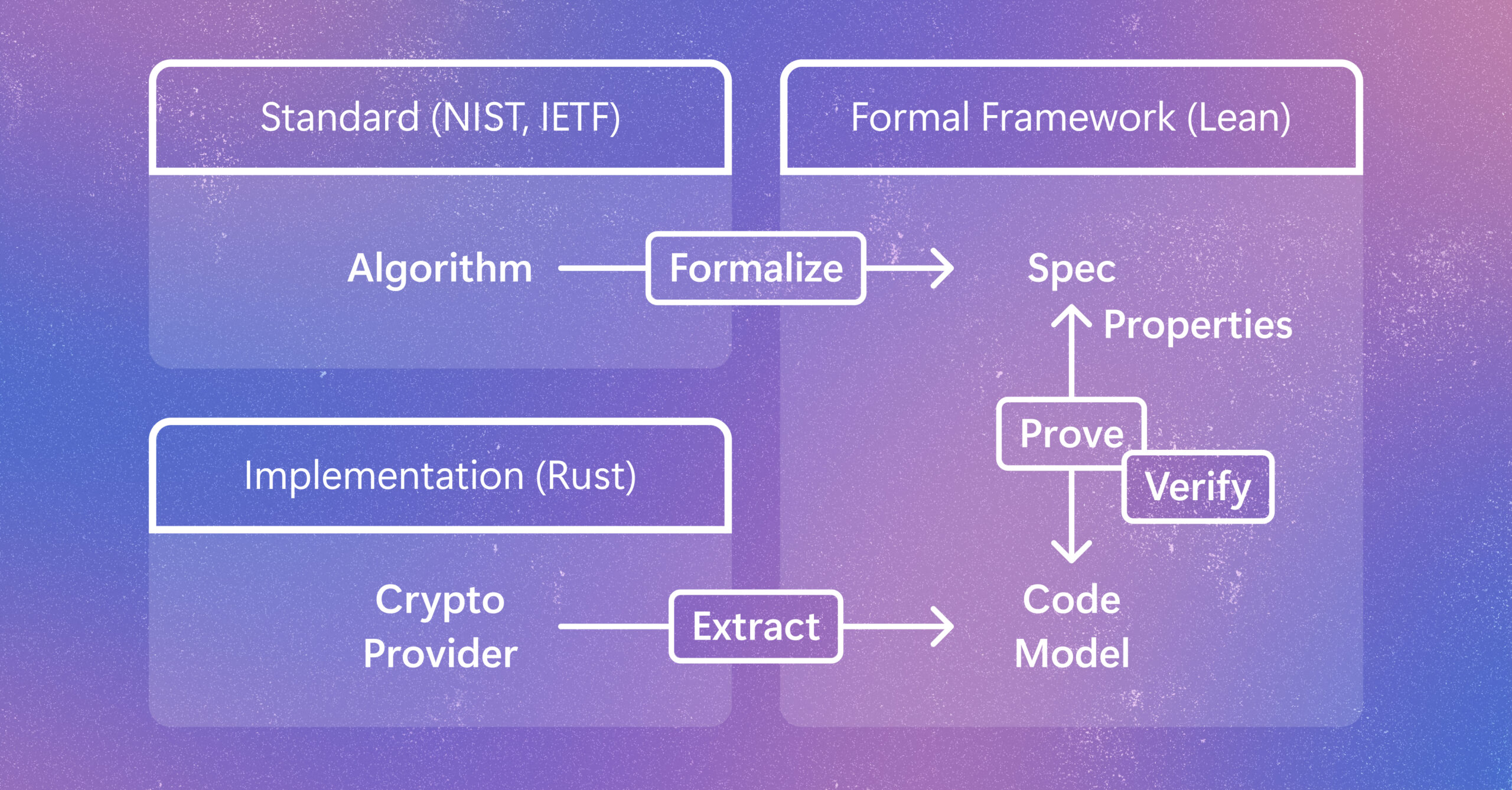
Cryptographic code supports vital protections in modern computing systems. Learn how a new method helps verify code as developers write it while preserving speed and adaptability as it gets implemented and evolves. The post Verifying Rust cryptography in SymCrypt, from standards to code appeared first on Microsoft Research.
We use cookies to run the site and, with your consent, for analytics and to show ads.
See our Cookie Policy.