Skip to content

A Granger causality-guided multi-graph transformer framework for traffic flow forecasting

Sep 2026 · Discover Artificial Intelligence · Vol 6 · 0 citations · 33 references
Traffic Prediction and Management Techniques

Abstract

Accurate traffic forecasting is challenging because of the difficulty of capturing time-varying propagation and multi-scale spatio-temporal interactions. Most existing deep learning models only learn correlations rather than directional dependencies, which limits interpretability and robustness under dynamic traffic conditions. To address these limitations, this study proposes a Granger Causality-Guided Multi-Graph Transformer (GC-MGT) framework that incorporates Granger causality inspired directional predictive dependencies into spatio-temporal modeling. The framework consists of four key modules: (1) a hierarchical dynamic dependency module that combines a Granger predictive dependency prior with nonlinear neural correction to model directional influence; (2) an adaptive multi-graph fusion mechanism that unifies physical topology, semantic similarity, and directional dependency priors through learnable state-dependent weights; (3) a graph-guided multi-scale Transformer that improves both local and global temporal dependency learning; and (4) an intervention assessment conducted using the Simulation of Urban Mobility (SUMO) microscopic traffic simulator, which evaluates whether the learned dependencies are consistent with traffic propagation. Experiments on three real-world datasets demonstrate that GC-MGT consistently reduces MAE and RMSE compared with state-of-the-art baselines, while improving directional dependency structures aligned with simulated propagation. At the 60-min forecasting horizon, relative to PDFormer, the strongest baseline, GC-MGT reduces MAE by 13.3, 21.3, and 12.0%, and RMSE by 3.2, 24.5, and 19.2% on three datasets, respectively. These findings demonstrate that GC-MGT links data-driven forecasting with interpretable directional dependency modeling. This framework could be integrated with digital twins or traffic simulators for proactive traffic management and reinforcement learning control strategies.
Read PDF

Similar papers

#machine learning Review Open access Oct 2014

Software development in startup companies: A systematic mapping study

The results indicate that software engineering work practices are chosen opportunistically, adapted and configured to provide value under the constrains imposed by the startup context.

Nicolò Paternoster, Carmine Giardino, M. Unterkalmsteiner et al. · 394 citations · ⚡54
#machine learning Review Open access Jun 2014

Why Early-Stage Software Startups Fail: A Behavioral Framework

This state-of-practice investigation was performed using a literature review followed by a multiple-case study approach and presents how inconsistency between managerial strategies and execution can lead to failure by means of a behavioral framework.

Carmine Giardino, Xiaofeng Wang, P. Abrahamsson · 175 citations · ⚡19
#machine learning Review Open access Oct 2016

“Failures” to be celebrated: an analysis of major pivots of software startups

This study conducts a case survey study based on the secondary data of the major pivots happened in 49 software startups, and demonstrates that customer need pivot is the most common among all pivot types.

Sohaib Shahid Bajwa, Xiaofeng Wang, Anh Nguyen-Duc et al. · 127 citations · ⚡15
#machine learning Review Open access May 2016

Key Challenges in Software Startups Across Life Cycle Stages

It is found that what perceived as biggest challenges by software startups do vary across different life cycle stages, even though its significance decreases when the learning focuses of the startups move from problem to solution and their products mature.

Xiaofeng Wang, Henry Edison, Sohaib Shahid Bajwa et al. · 62 citations · ⚡6

Related blog posts

Microsoft Research Blog Sep 30, 2026

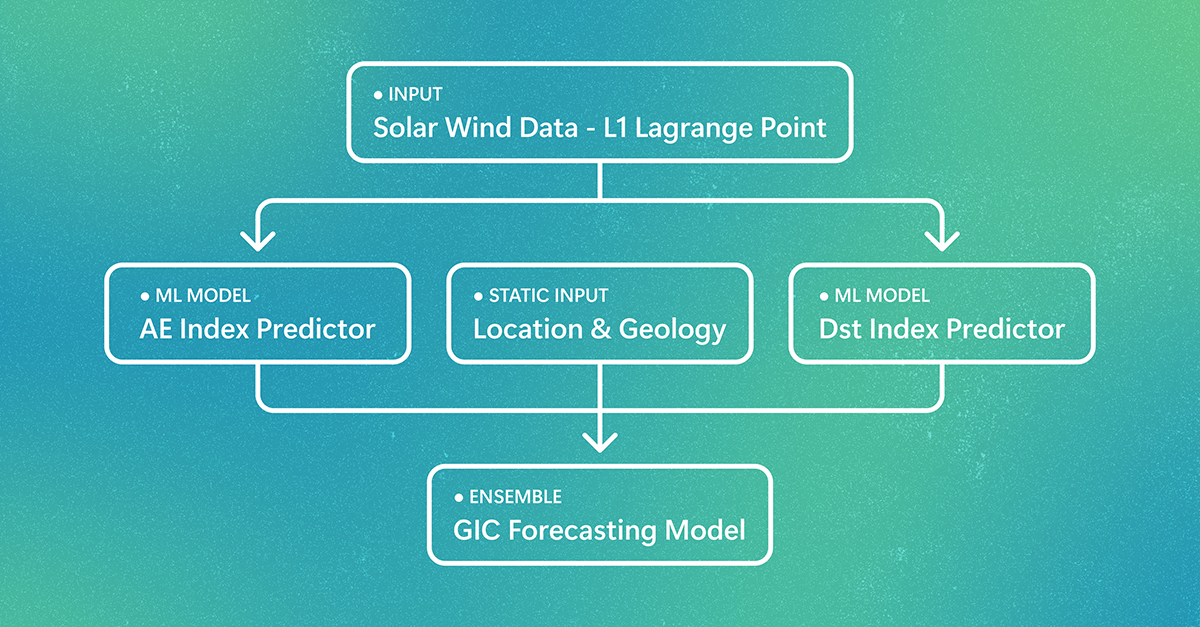
Forecasting space weather risks on power grids

Extreme space-weather events can damage power systems on Earth and degrade GPS accuracy and satellite operations. A new machine learning system can predict where damage is likely to occur 30-60 minutes before a storm arrives. The post Forecasting space weather risks on power grids appeared first on Microsoft Research.

We use cookies to run the site and, with your consent, for analytics and to show ads. See our Cookie Policy.