Skip to content

Graph Transformer Networks for Driving Multiagent Decision-Making via Deep Reinforcement Learning

Jan 2027 · Journal of Transportation Engineering Part A Systems · 0 citations · 18 references

TL;DR

A graph transformer reinforcement learning (GTRL) framework, which aims to make reasonable lane-changing decisions on highways by modeling multiagent interactions, and demonstrates GTRL’s effectiveness in enhancing intelligent driving, leading to safer and more efficient driving outcomes.

Abstract

The decision-making process for autonomous highway driving encounters several significant challenges. First, the complex interactions among traffic participants play a crucial role, yet these interactions are often overlooked during decision-making. Second, while graph neural networks are widely used for graph representation learning, most of them fail to generate metapath graph representations without domain-specific graph preprocessing and can only handle homogeneous graphs. This limits their ability to work with mis-specified or heterogeneous graphs that include diverse types of nodes and edges. To address these issues, this work proposes a graph transformer reinforcement learning (GTRL) framework, which aims to make reasonable lane-changing decisions on highways by modeling multiagent interactions. GTRL has three core components: a highway traffic scene graph representation that covers topology and interaction information; graph transformer networks (GTNs) to create metapath graphs and enhance heterogeneous graph representations; and a deep reinforcement learning method that uses GTRL to extract state information and make driving decisions. Experiments demonstrate GTRL’s effectiveness in enhancing intelligent driving, leading to safer and more efficient driving outcomes.

View source

Similar papers

#machine learning Review Open access Oct 2014

Software development in startup companies: A systematic mapping study

The results indicate that software engineering work practices are chosen opportunistically, adapted and configured to provide value under the constrains imposed by the startup context.

Nicolò Paternoster, Carmine Giardino, M. Unterkalmsteiner et al. · 394 citations · ⚡54
#machine learning Review Open access Jun 2014

Why Early-Stage Software Startups Fail: A Behavioral Framework

This state-of-practice investigation was performed using a literature review followed by a multiple-case study approach and presents how inconsistency between managerial strategies and execution can lead to failure by means of a behavioral framework.

Carmine Giardino, Xiaofeng Wang, P. Abrahamsson · 175 citations · ⚡19
#machine learning Review Open access Oct 2016

“Failures” to be celebrated: an analysis of major pivots of software startups

This study conducts a case survey study based on the secondary data of the major pivots happened in 49 software startups, and demonstrates that customer need pivot is the most common among all pivot types.

Sohaib Shahid Bajwa, Xiaofeng Wang, Anh Nguyen-Duc et al. · 127 citations · ⚡15
#machine learning Review Open access May 2016

Key Challenges in Software Startups Across Life Cycle Stages

It is found that what perceived as biggest challenges by software startups do vary across different life cycle stages, even though its significance decreases when the learning focuses of the startups move from problem to solution and their products mature.

Xiaofeng Wang, Henry Edison, Sohaib Shahid Bajwa et al. · 62 citations · ⚡6
#computer vision Conference Aug 2008

Scrum in a Multiproject Environment: An Ethnographically-Inspired Case Study on the Adoption Challenges

Agile methods continue to gain popularity. In particular, the Scrum method appears to be on the verge of becoming a de-facto standard in the industry, leading the so called Agile movement. While there are success stories and recommendations, there is little scientifically valid evidence of the challenges in the adoptio...

A. Marchenko, P. Abrahamsson · 59 citations · ⚡11

Related blog posts

Microsoft Research Blog Jul 13, 2026

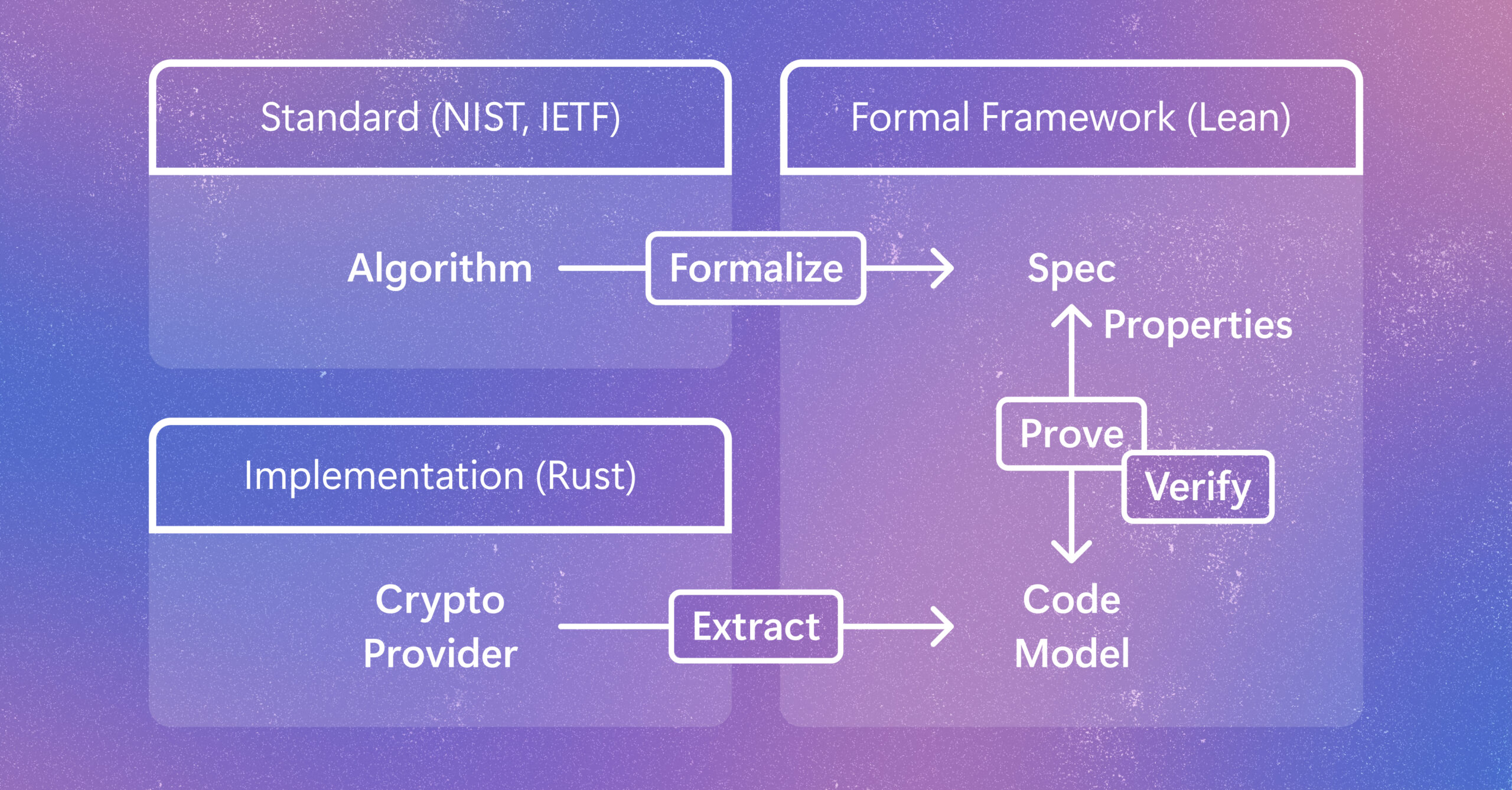
Verifying Rust cryptography in SymCrypt, from standards to code

Cryptographic code supports vital protections in modern computing systems. Learn how a new method helps verify code as developers write it while preserving speed and adaptability as it gets implemented and evolves. The post Verifying Rust cryptography in SymCrypt, from standards to code appeared first on Microsoft Research.

We use cookies to run the site and, with your consent, for analytics and to show ads. See our Cookie Policy.