Skip to content

Toward a Transferable Representation of Protein Dynamics for Functional Prediction and Mechanistic Discovery

Oct 2026 · bioRxiv (Cold Spring Harbor Laboratory)
Protein Structure and Dynamics

Abstract

Protein function is determined not only by the static structure of molecules, but also by coordinated conformational fluctuations that occur across various spatial and temporal scales. Molecular dynamics simulations, elastic network models, principal component analysis, and related approaches offer useful descriptions of protein motion. However, representing heterogeneous trajectories in a compact, informative manner that is applicable to proteins with different sequences, structures, and historical evolution is not trivial. Here we present the Topology Invariant Dynamic Graph Network (TIDGN), a deep representation learning approach that encodes protein conformational dynamics into a shared latent representation, termed the protein motion signature (Zp). TIDGN encodes each trajectory as a time-dependent residue-level graph and builds structural connectivity, dynamic cross-correlation, low-dimensional motion features, sequence context, and temporal aggregation into the design. Instead of learning a protein-specific collective variable, the approach learns a representation that retains functionally informative patterns of coordinated motion applicable to different proteins. We evaluate the framework using 1,250 molecular-dynamics trajectories representing 1,120 distinct proteins that range in size from 50-600 residues, 142 CATH/SCOP families, 88 structural folds, and six broad functional classes. The set of trajectories spans durations of 100 ns to 10 (mu)s, sampled at 100 ps intervals, representing approximately 12.5 million conformational frames in total. In the context of a sequence-disjoint evaluation using a 30% sequence-identity threshold, the approach achieves a mean AUROC of 0.8838 (margin of error:) 0.0107 compared to 0.8174 for a dynamic graph neural-network baseline, 0.7257 for a dynamic descriptor, 0.7227 for a PCA descriptor, 0.6592 for a sequence baseline, and 0.6587 for a static-structure baseline. As the biological distance between training and evaluation proteins increases, transfer performance decreases, with AUROC values of 0.92 for random splitting, 0.85 for sequence-disjoint evaluation, 0.78 for family-disjoint evaluation, and 0.71 for fold-disjoint evaluation. Component ablations suggest that graph structure, dynamic cross-correlation, low-dimensional motion features, sequence information, and the combination of these factors contribute to predictive performance. Residue-level attribution, when applied to adenylate kinase, highlights regions that are associated with known conformational rearrangements that involve the LID and NMP domains, offering a biologically interpretable hypothesis about the dynamic information that is encoded by the model. Taken together, these results suggest that it is possible to learn transferable representations of protein dynamics that retain functionally informative patterns of coordinated motion beyond considerations of sequence identity and static structure. Moreover, although the learned representation is transferable, it is not universally invariant to the biological distance between training and evaluation proteins. The resulting approach offers a computational basis for connecting molecular motion, functional prediction, and mechanistically informative representation learning.


View source

Similar papers

#computer vision Review Open access May 2015

A survey study on major technical barriers affecting the decision to adopt cloud services

The comparison of adopter and non-adopter sample reveals three potential adoption inhibitor, security, data privacy, and portability, which underlines the importance of the technical and security perspectives for research investigating the adoption of technology.

Nattakarn Phaphoom, Xiaofeng Wang, S. Samuel et al. · 111 citations · ⚡8
#computer vision Open access Feb 2018

Lean Internal Startups for Software Product Innovation in Large Companies: Enablers and Inhibitors

This study investigates how Lean internal startup facilitates software product innovation in large companies and identifies its enablers and inhibitors, and shows the potential of the method-in-action framework to investigate the Lean startup approach in non-startup context.

Henry Edison, Nina M. Smørsgård, Xiaofeng Wang et al. · 78 citations · ⚡6
#computer vision Conference Aug 2008

Scrum in a Multiproject Environment: An Ethnographically-Inspired Case Study on the Adoption Challenges

Agile methods continue to gain popularity. In particular, the Scrum method appears to be on the verge of becoming a de-facto standard in the industry, leading the so called Agile movement. While there are success stories and recommendations, there is little scientifically valid evidence of the challenges in the adoptio...

A. Marchenko, P. Abrahamsson · 59 citations · ⚡11
#computer vision Book Open access Jul 2015

Understanding the affect of developers: theoretical background and guidelines for psychoempirical software engineering

This paper highlights the challenges to conduct proper affect-related studies with psychology, provides a comprehensive literature review in affect theory, and proposes guidelines for conducting psychoempirical software engineering.

D. Graziotin, Xiaofeng Wang, P. Abrahamsson · 56 citations · ⚡4
#machine learning Open access May 2017

What Influences the Speed of Prototyping? An Empirical Investigation of Twenty Software Startups

This study conducts a multiple case study on twenty European software startups and proposes a prototype-centric learning model in early stage software startups, and identifies factors that occur as barriers but also facilitators for prototyping in earlystage software startups.

Anh Nguyen-Duc, Xiaofeng Wang, P. Abrahamsson · 44 citations · ⚡5

Related blog posts

Google DeepMind Blog Sep 30, 2026

Introducing SynthID Bio

Proof of concept for watermarking AI-generated proteins while preserving biological function.

MIT News · Artificial Intelligence Aug 27, 2026

Looking beyond natural sequences

A new machine-learning framework aims to improve the success rate of computational protein design while moving away from results that reproduce sequences found in nature.

Microsoft Research Blog Jul 13, 2026

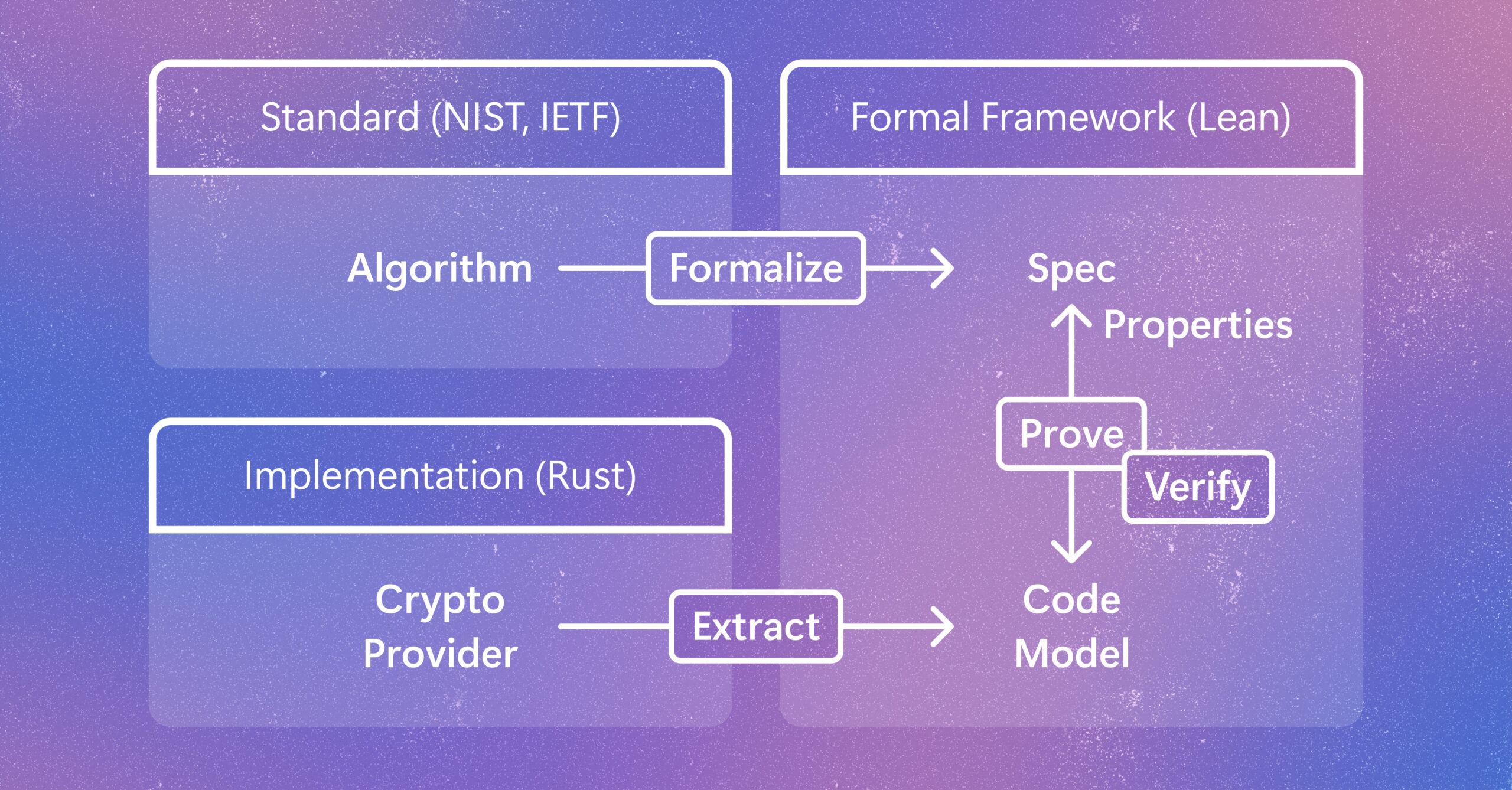
Verifying Rust cryptography in SymCrypt, from standards to code

Cryptographic code supports vital protections in modern computing systems. Learn how a new method helps verify code as developers write it while preserving speed and adaptability as it gets implemented and evolves. The post Verifying Rust cryptography in SymCrypt, from standards to code appeared first on Microsoft Research.

We use cookies to run the site and, with your consent, for analytics and to show ads. See our Cookie Policy.