Goal-oriented chatbots often operate in sparse-reward settings, where meaningful feedback (task success or user satisfaction) arrives only after many dialogue turns. This makes exploration and policy learning challenging. We propose a novel hierarchical reinforcement learning (HRL) framework that performs automated ski...
We report an experimental implementation of deep reinforcement learning (RL) for optimizing the loading stage of a ⁶Li magneto-optical trap (MOT) in a high-dimensional continuous control space. An off-policy actor-critic agent observes in-situ fluorescence images at 111 ms intervals and updates seven experimental param...
This study aims to find out the application of the reinforcement method in giving motivation to learning Arabic among fifth grade students at Al-Munir Islamic Primary School in Pekanbaru, as well as to reveal the supporting and hindering factors in its application. The study was based on a qualitative approach with a d...
The Synergistic Policy network for Edge Resource Control (SPERC) is presented, a novel deep reinforcement learning framework designed to solve this joint problem of ensuring performance through appropriate computational resource allocation and minimizing storage costs through image layer sharing.
Seyed Hossein Ahmadpanah, A. Sahafi, S. Erfani· Journal of Supercomputing· 0 citations
Reach audiences
Advertise in front of researchers, engineers, and readers.
This study was motivated by the importance of developing independence among children aged 4–5 years through habituation and environmental support. It aimed to describe the formation of child independence in the daycare and kindergarten environments of TK IT As-Salam Malang City and the factors influencing it. This rese...
Tourism recommendation systems use artificial intelligence (AI), machine learning (ML), and data analytics to support travel decisions. This systematic literature review examines decision types, disciplinary distribution, themes, and research gaps in AI-based tourism recommendation research. Following the Preferred Rep...
Abstract The computation of electronic excited states and real-time quantum dynamics of many-Fermion systems is among the most promising applications of near-term quantum computing. In this work, we generalize the reinforcement learning contracted quantum eigensolver (RL-CQE), previously developed for ground-state prob...
Jiaji Zhang, Lipeng Chen, Carlos L. Benavides-Riveros· Journal of Chemical Theory a...· 0 citations
The growing demand for multimedia services in Internet of Things (IoT) networks has significantly increased the traffic load on backhaul links, making Mobile Edge Caching (MEC) a key technology for reducing content delivery latency. Unmanned Aerial Vehicles (UAVs) can serve as mobile aerial caching nodes that complemen...
Tao Zhang, Tao Xu, Ze-Kai Liu et al.· Journal of Circuits, Systems...· 0 citations
This study examined a six-month implementation of the Teaching Personal and Social Responsibility (TPSR) model in a Chinese middle school. Two Grade 8 classes were involved in the study, both of which were taught by the researcher. A mixed-methods design was employed to examine both the implementation process and the i...
The global imperative to decarbonise road transport has required the automotive and energy sectors to reconceptualise vehicular powertrain engineering across all scales, from atomic-level electrochemistry to fleet-level grid interaction. This PRISMA-compliant systematic review synthesises 120 peer-reviewed publications...
Appalabathula Venkatesh, Subrahmanyam Tanala· Next Energy· 0 citations
Learn how Google DeepMind and GovTech Singapore uses lightweight on-device Gemma models to intercept conversational scams in private chats with zero cloud data egress.
MIT News · Artificial Intelligence· news.mit.eduOct 13, 2026
Machine-learning networks can learn without detailed instructions from a designer. Those that do may offer insight into how the brain reorganizes itself during learning.
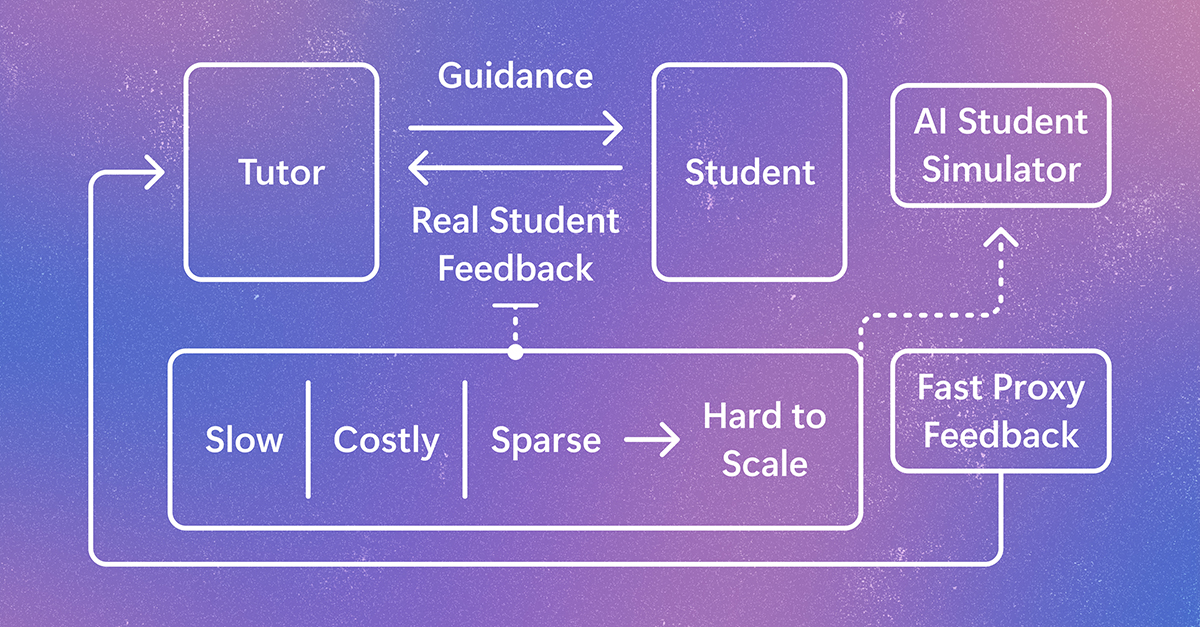
StudentSim is a research system for evaluating and improving AI tutoring tools before they are tested with learners. It models how individuals may engage with tutors, giving feedback to improve tutor performance across subjects like chess, writing, and mathematics. The post Simulating student learning for better AI tutoring appeared first on Microsoft Research.
MIT News · Artificial Intelligence· news.mit.eduOct 7, 2026
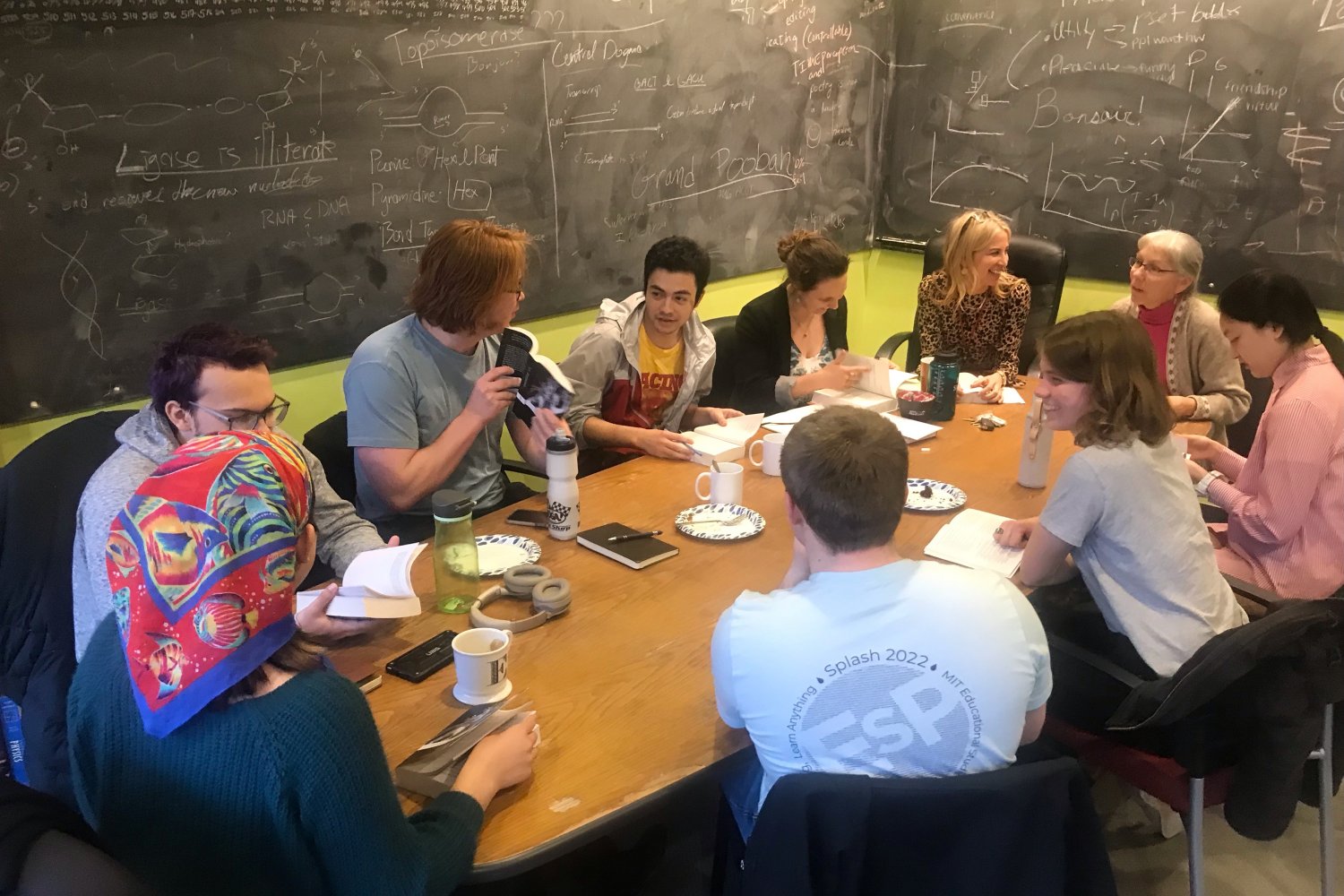
Students in MIT’s Concourse program delve deeply into the human condition, debate challenging questions, and learn to develop judgment about issues that can’t be quantified.
We use cookies to run the site and, with your consent, for analytics and to show ads.
See our Cookie Policy.