This paper presents various feature scopes used in wireless sensor networks (WSNs) and illustrates distinct approaches like relay node placement, efficient communication, machine-learning systems i.e. reinforcement learning, and heuristic techniques.
Ramesh Kumar, D. Sah, R. Bhan· Peer-to-Peer Networking and...· 0 citations
Tool-augmented language agents are vulnerable to indirect prompt injection (IPI). Unlike direct prompt injection, IPI hides adversarial instructions in untrusted tool outputs and can covertly alter the execution of a legitimate task. Defenses trained on fixed attacks may fail as an attacker changes its strategy, inject...
Boyang Zhang, Qingxin Xiao, Lingwei Dang et al.· 0 citations
Temporal-Causal Inference for Reinforcement Learning (TCIRL), a framework that jointly learns a control policy and infers the hidden temporal cause of the phase transition and recovers the correct cause DFA and matches the full-information baseline in both domains.
Jan Corazza, Daniil Kaminskyi, Simon Lutz et al.· 0 citations
OSOL, which designates a focus domain at each iteration, uses the preceding checkpoint footprint to rank token-level rebound risk, and applies a drift-ranked, adaptively scaled correction within the standard GRPO update, is proposed, which suppresses the targeted cross-step output backtracking component.
Zi-Han Lin, Xiao-Han Wang, Jie Cao et al.· 1 citation
Reach audiences
Advertise in front of researchers, engineers, and readers.
A noisy-space action-value (Q-)function that assigns values to diffusion latents through the distribution of executed actions induced by the denoising process is introduced, which admits a precise semantic interpretation and derives a noisy-space policy gradient (NSPG) that optimizes noisy latents using only clean acti...
Mahmoud Selim, Cristina Cipriani, K. H. Johansson· 1 citation
These results establish a Grover-based realization of path-integral slow thinking: the interior target preserves exploratory path diversity, and ensemble-level interference converts it into verified performance.
Xian-Sheng Cai, Xiu-Hao Deng, Kun Chen· 0 citations
Learn how Google DeepMind and GovTech Singapore uses lightweight on-device Gemma models to intercept conversational scams in private chats with zero cloud data egress.
MIT News · Artificial Intelligence· news.mit.eduOct 13, 2026
Machine-learning networks can learn without detailed instructions from a designer. Those that do may offer insight into how the brain reorganizes itself during learning.
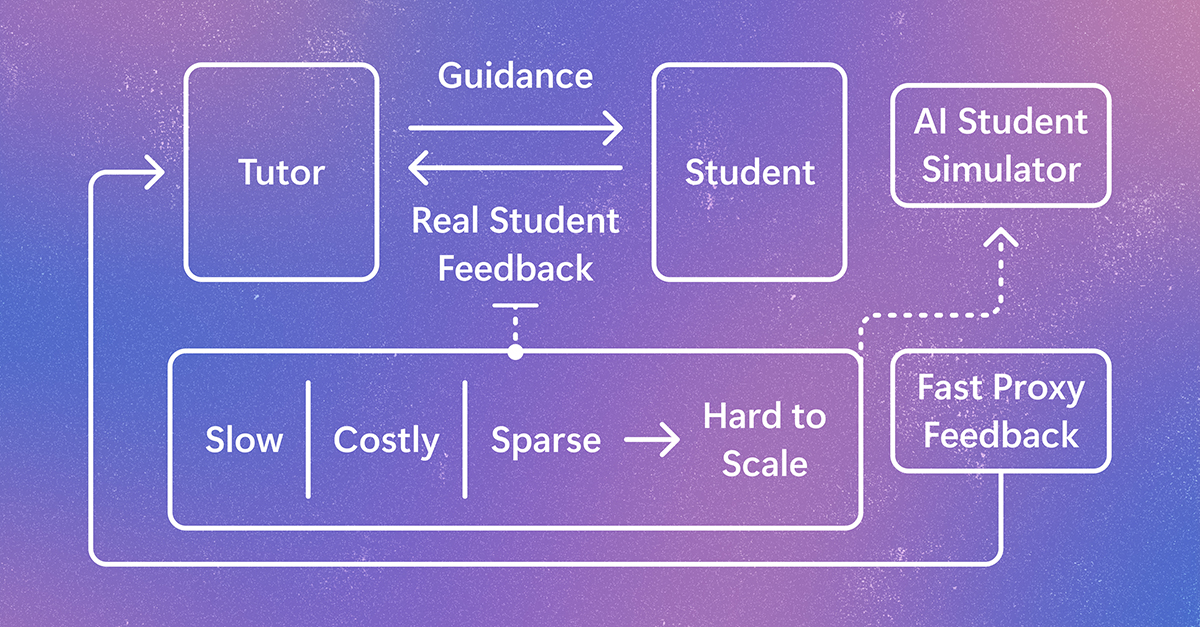
StudentSim is a research system for evaluating and improving AI tutoring tools before they are tested with learners. It models how individuals may engage with tutors, giving feedback to improve tutor performance across subjects like chess, writing, and mathematics. The post Simulating student learning for better AI tutoring appeared first on Microsoft Research.
MIT News · Artificial Intelligence· news.mit.eduOct 7, 2026
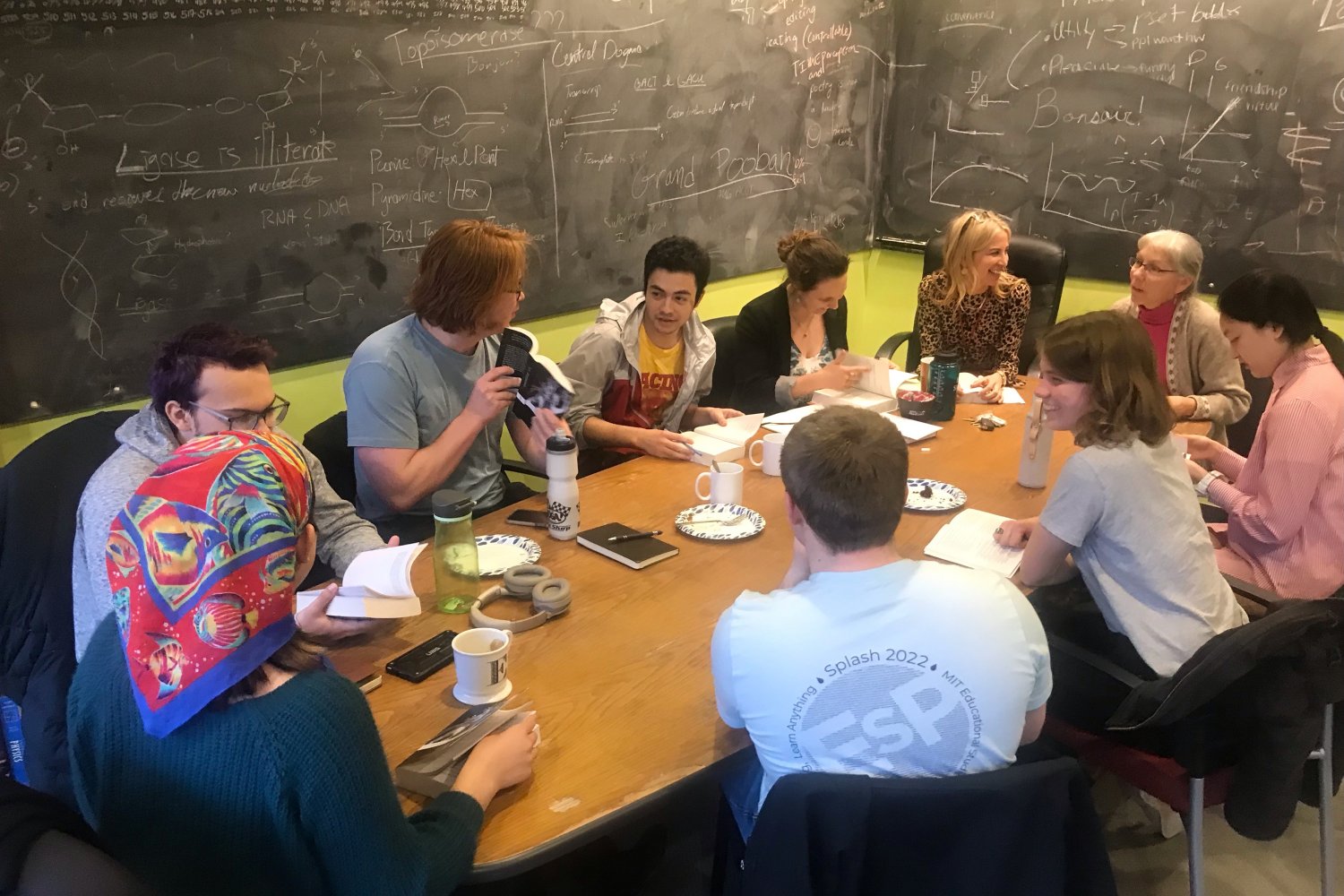
Students in MIT’s Concourse program delve deeply into the human condition, debate challenging questions, and learn to develop judgment about issues that can’t be quantified.
We use cookies to run the site and, with your consent, for analytics and to show ads.
See our Cookie Policy.