A multi-intersection graph topology is constructed and the Graph Convolutional Network (GCN) and Long Short-Term Memory (LSTM) are used to extract features from the graph topology and predict changes in traffic flow and deep reinforcement learning is applied to autonomously control traffic signals.
Wen-Fang Jing, Heng-Li Duan· Journal of Engineering, Proj...· 0 citations
Building facade characteristics have a significant influence on energy consumption for lighting and on occupant visual comfort, yet these two objectives frequently conflict with each other. Increasing the amount of incoming daylight reduces energy demand while simultaneously raising the risk of glare. Most prior studie...
Azam Noroozi, Mohammad Mohammadi· Scientific Reports· 0 citations
A Deep Reinforcement Learning framework for Continuous Control with State Uncertainty Estimation based on the Multi-Agent Policy Collaborative Optimization (MAPCO) mechanism is proposed, enabling robust state representation and stable policy optimization through distributed information exchange.
Yuan-Bo Su, Yu Liu· Advances in Complex Systems· 0 citations
This repository contains the source code accompanying the paper “Noise Scheduling and Out-of-Distribution Generalisation in Deep Reinforcement Learning for 6-DOF Robotic Grasping.” The work evaluates three off-policy deep reinforcement learning configurations for a 6-DOF robotic grasping task using a Universal Robots U...
Stefan Zlatinov, Ilija Mizhimakoski· Figshare· 0 citations
Abstract Data assimilation is a fundamental task in updating forecasting models upon observing new data, with applications ranging from weather prediction to online reinforcement learning. Deep generative forecasting models (DGFMs) have shown excellent performance in these areas, but assimilating data into such models...
S. Roy, Richard G. Everitt, Christian P. Robert et al.· Japanese Journal of Statisti...· 0 citations
A formal verification of the math of modern deep learning, written as a Lean 4 blueprint project and shipped as the code it proves. Mathlib's fderiv is the foundation; every layer's backward is derived as a vector-Jacobian product rather than asserted -- dense, ReLU, softmax cross-entropy, 2D convolution, max-pool, Bat...
Brett Koonce· Zenodo (CERN European Organi...· 0 citations
This study provides an innovative and effective method for mission planning of heterogeneous multi-UAV systems in partially observable adversarial environments and outperforms the best-performing baseline algorithm by more than 20% across all operational performance metrics.
Hao-Lun Sun, Xiang-Ke Guo, Xiangwei Bu et al.· Drones· 0 citations
Reproduction material for the survey "Study-Area Boundaries in Reinforcement Learning-Based Route Guidance: A Survey of Evaluation Design and ReportingRequirements" by Donghoun Lee. The archive contains the grid, benchmark and SUMO environments, the planner, the training code, the screened corpus withthe recorded field...
Donghoun Lee· Zenodo (CERN European Organi...· 0 citations
This review offers a practical selection matrix and implementation governance model that assists educators in designing scalable and equitable SBE, supports administrators in resource planning and quality assurance, and guides accreditors in aligning evidence with entrustment and standards.
Jia-Li Xu, Xiao-Qi Yu, Zhen-Pei-Fang-Zhen-Pei Fang et al.· Frontiers in Medicine· 0 citations
This record contains supplemental materials associated with the manuscript entitled “Uncertainty-aware Construction Task Scheduling for Human-robot Collaboration via Fuzzy-time Model and Deep Reinforcement Learning.” The supplemental materials provide extended figures and experimental results supporting the analyses pr...
Yilin Wang, Zhoupeng Wang, Chao MAO et al.· Zenodo (CERN European Organi...· 0 citations
Learn how Google DeepMind and GovTech Singapore uses lightweight on-device Gemma models to intercept conversational scams in private chats with zero cloud data egress.
MIT News · Artificial Intelligence· news.mit.eduOct 13, 2026
Machine-learning networks can learn without detailed instructions from a designer. Those that do may offer insight into how the brain reorganizes itself during learning.
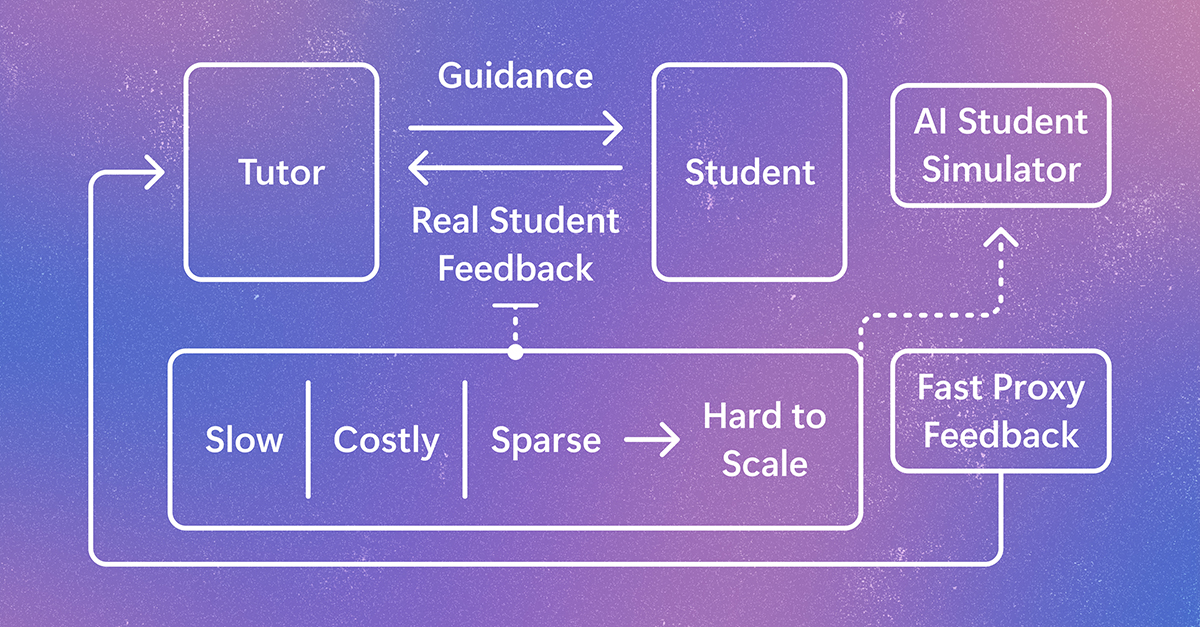
StudentSim is a research system for evaluating and improving AI tutoring tools before they are tested with learners. It models how individuals may engage with tutors, giving feedback to improve tutor performance across subjects like chess, writing, and mathematics. The post Simulating student learning for better AI tutoring appeared first on Microsoft Research.
MIT News · Artificial Intelligence· news.mit.eduOct 7, 2026
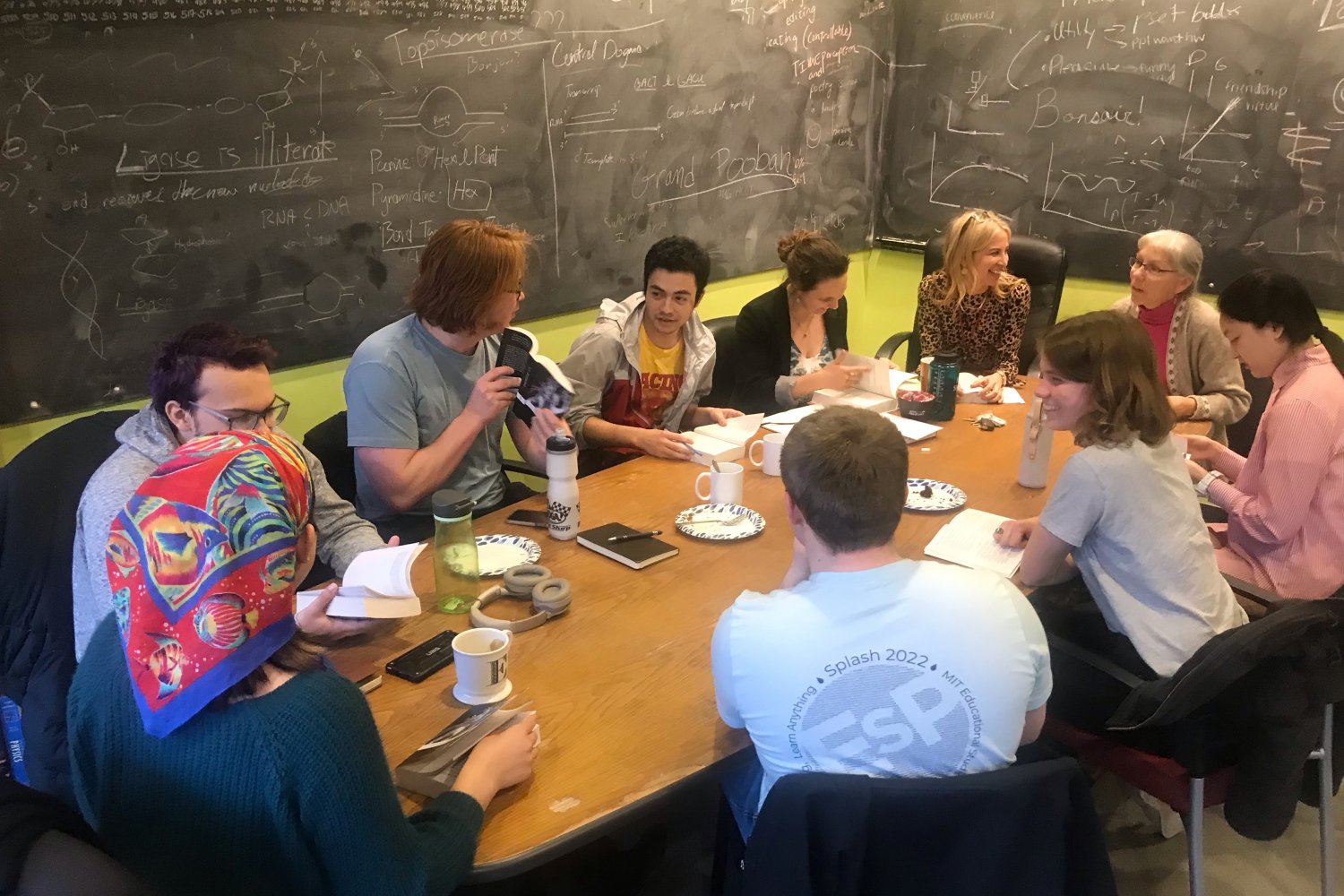
Students in MIT’s Concourse program delve deeply into the human condition, debate challenging questions, and learn to develop judgment about issues that can’t be quantified.
We use cookies to run the site and, with your consent, for analytics and to show ads.
See our Cookie Policy.