Abstract. To address the difficulty in coordinating component-degradation regulation strategies with opportunistic maintenance timings over the full lifecycle of wind turbines, this study proposes a reinforcement-learning–based collaborative optimization method for wind-turbine load regulation and opportunistic mainten...
Jie Lin, Jing Shi, Jianghao Zhu et al.· Wind Energy Science Discussi...· 0 citations
Category learning is an adaptive skill that enables organisms to efficiently interpret and respond to their environment. Evidence supports the existence of a declarative learning system that applies explicit rules and test hypotheses, and a procedural learning system that gradually forms stimulus-response associations...
Virginia Fleming· Macquarie University· 0 citations
KODEX — KDRIVE (RL-control). reinforcement-learning controller — a feedback policy learned by the cross-entropy method in the twin plant loop; clamped by KGATE Benchmark: RL policy (cross-entropy): tracking **0.0551** vs naive 0.1225, twin-in-the-loop Part of KODEX, the Kronos Family of Codes — a benchmarked AI/ML fusi...
Priyanca Ford· Zenodo (CERN European Organi...· 0 citations
Reach audiences
Advertise in front of researchers, engineers, and readers.
KODEX — KDRIVE (RL-control). reinforcement-learning controller — a feedback policy learned by the cross-entropy method in the twin plant loop; clamped by KGATEBenchmark: RL policy (cross-entropy): tracking **0.0551** vs naive 0.1225, twin-in-the-loopPart of KODEX, the Kronos Family of Codes — a benchmarked AI/ML fusion...
Joint replenishment and transportation decisions couple service, inventory, vehicle utilization, and carbon emissions over time. Offline reinforcement learning (RL) is attractive when operational logs exist but online exploration is unsafe; however, distribution shift and cumulative carbon constraints make direct offli...
Pan Li, Meng-Lin Bian, Yi-Zheng Lin· Highlights in Business, Econ...· 0 citations
This repository contains the source code accompanying the paper “Noise Scheduling and Out-of-Distribution Generalisation in Deep Reinforcement Learning for 6-DOF Robotic Grasping.” The work evaluates three off-policy deep reinforcement learning configurations for a 6-DOF robotic grasping task using a Universal Robots U...
Stefan Zlatinov, Ilija Mizhimakoski· Figshare· 0 citations
NOTE: Metadata and Authors will be updated upon de-anonymization by conference. Title: Autonomous Weighted Schema Direct Preference Optimization for Materials Discovery (dataset)Authors: REDACTED Files for post-training of Pharmacological discovery models using supervised fine-tuning (SFT) and reinforcement learning (R...
Anonymous Authors· Zenodo (CERN European Organi...· 0 citations
Results show that domain adaptation, task-aligned optimization, and evidence-guided verification can improve both coding accuracy and the auditability of model outputs.
Jian-Hua Qiu, Zhen Qin, Kai-Li Ma et al.· PeerJ Computer Science· 0 citations
Current paradigms in artificial superintelligence (ASI) alignment rely heavily on fluid statistical methods like Reinforcement Learning from Human Feedback (RLHF). However, these architectures remain systemically vulnerable to runtime "alignment faking," semantic exploitation, and adversarial jailbreaking. Drawing from...
Umair Adil· Zenodo (CERN European Organi...· 0 citations
Elastic clouds must continuously decide how much compute, memory and storage capacity to grant to workloads whose intensity and mix change from minute to minute, and classical threshold, queueing and forecasting controllers struggle to hold that balance without either over-provisioning or violating service level agreem...
Learn how Google DeepMind and GovTech Singapore uses lightweight on-device Gemma models to intercept conversational scams in private chats with zero cloud data egress.
MIT News · Artificial Intelligence· news.mit.eduOct 13, 2026
Machine-learning networks can learn without detailed instructions from a designer. Those that do may offer insight into how the brain reorganizes itself during learning.
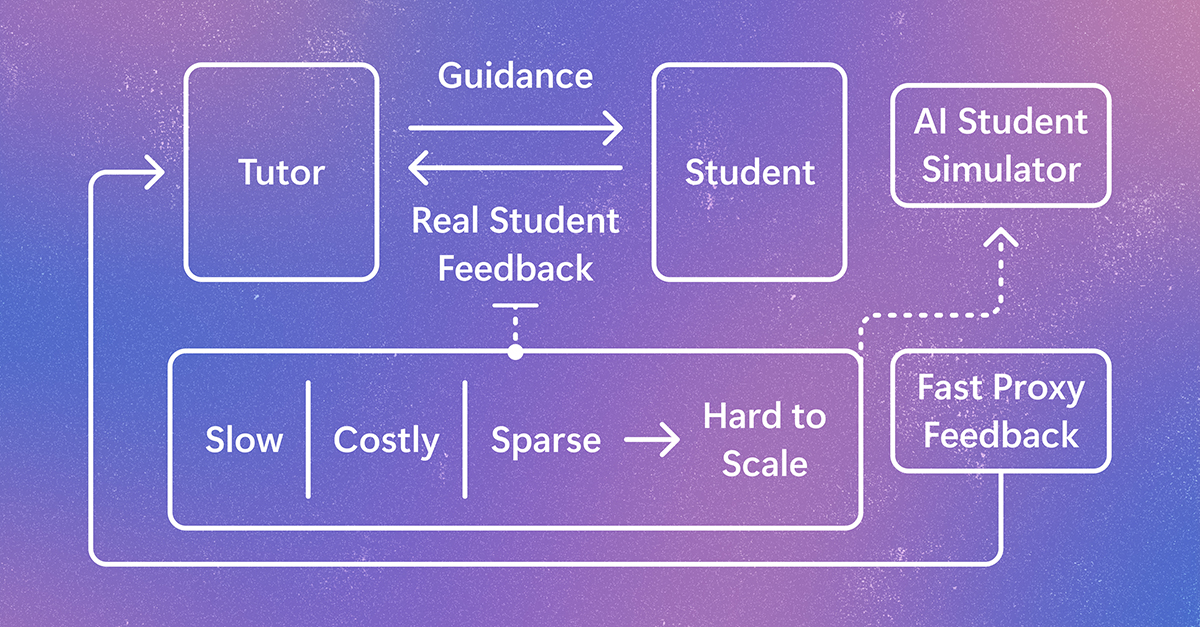
StudentSim is a research system for evaluating and improving AI tutoring tools before they are tested with learners. It models how individuals may engage with tutors, giving feedback to improve tutor performance across subjects like chess, writing, and mathematics. The post Simulating student learning for better AI tutoring appeared first on Microsoft Research.
MIT News · Artificial Intelligence· news.mit.eduOct 7, 2026
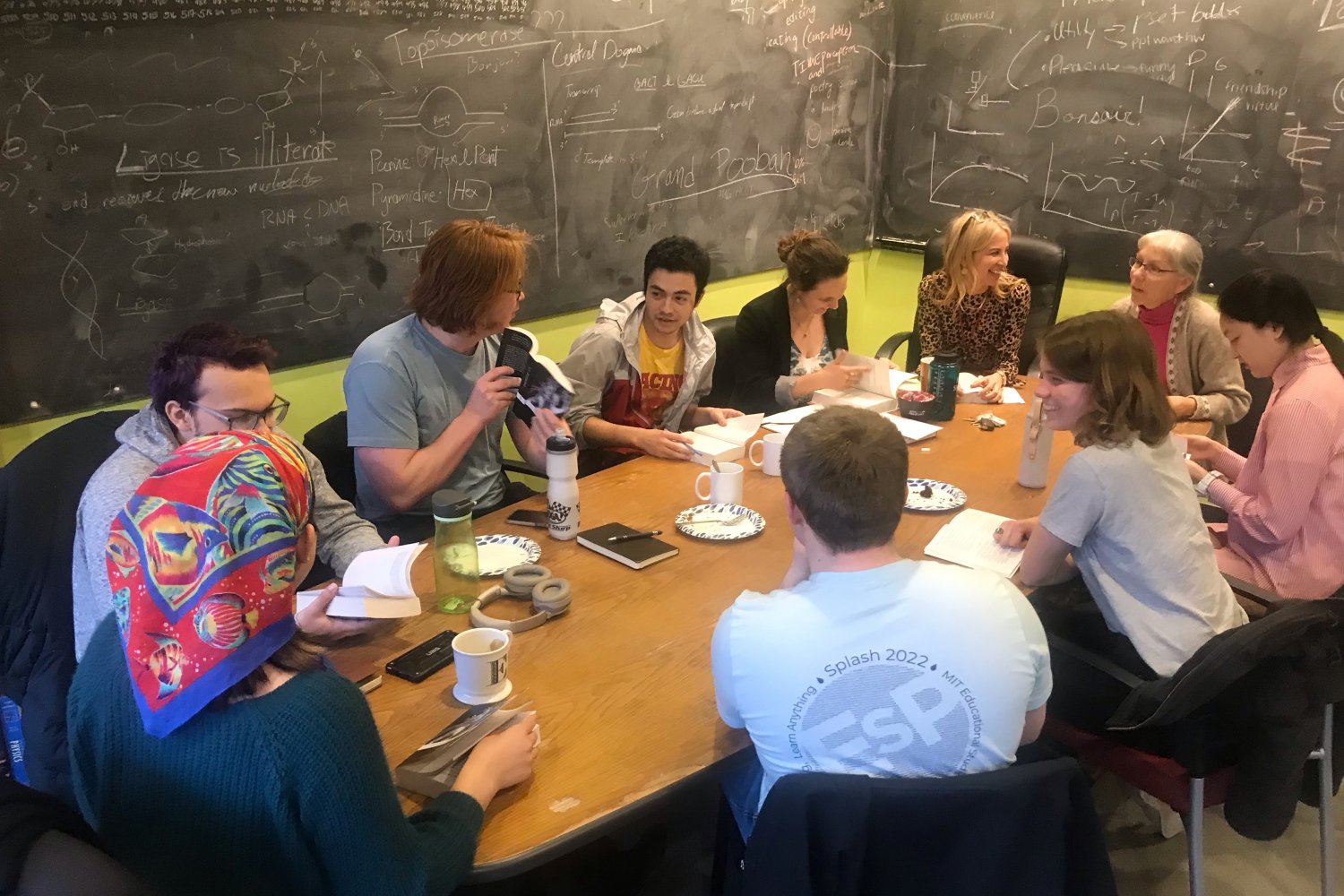
Students in MIT’s Concourse program delve deeply into the human condition, debate challenging questions, and learn to develop judgment about issues that can’t be quantified.
We use cookies to run the site and, with your consent, for analytics and to show ads.
See our Cookie Policy.