Machine learning (ML) models for electronic structure typically rely on large datasets generated by computationally expensive Kohn-Sham density functional theory calculations, as it is not known a priori which portions of the data are essential for accurate learning. Here, we reveal significant redundancies in electron...
Sazzad Hossain, Ponkrshnan Thiagarajan, Shashank Pathrudkar et al.· 0 citations
Predicting future observations plays a central role in machine learning, biology, economics, and many other fields. It lies at the heart of organizational principles such as the variational free energy principle and, based on the second law of thermodynamics, has even been shown to be necessary for reaching the fundame...
Lukas J. Fiderer, Paul C. Barth, Isaac D. Smith et al.· 0 citations
Fingerprint recognition is a widely deployed biometric, but supervised training requires large labeled enrollment sets. Self-supervised learning (SSL) removes this requirement, and hybrid quantum-classical models have been proposed to enrich the learned representations. Prior quantum SSL studies consider a single contr...
Maria S. Edwards, Kidwell Dlamini, Pin-An Lin et al.· 0 citations
Optimistic matrix mirror-prox (OMMP) computes $\epsilon$-approximate Nash equilibria in quantum zero-sum games with an $O(1/\varepsilon)$ average-iterate guarantee [arXiv:2311.10859]. We investigate whether this dependence on accuracy is tight and whether geometric last-iterate convergence can be guaranteed. We study t...
Yiheng Su, Emmanouil-Vasileios Vlatakis-Gkaragkounis, Pucheng Xiong· 0 citations
Reach audiences
Advertise in front of researchers, engineers, and readers.
Whether quantum computation can reduce the amount of data sampled from an unknown probability distribution required to learn a prediction rule is a fundamental question in quantum machine learning. Quantum PAC learning studies this question using quantum data as a quantum state whose squared amplitudes encode the unkno...
Natsuto Isogai, Satoshi Yoshida, M. Murao· 0 citations
Topological data analysis (TDA) is a machine learning technique that uses topology to extract patterns from data and has shown the potential to exhibit quantum advantage. A key concept in TDA is persistent homology, which measures the robustness of topological information at different lengthscales. In this paper, we in...
Dominic Lowe, M. S. Kim, Roberto Bondesan et al.· 0 citations
We demonstrate how Quantum Cognition Machine Learning (QCML) encodes data as quantum geometry. In QCML, features of the data are represented by learned Hermitian matrices, and data points are mapped to states in Hilbert space. The quantum geometry description endows the dataset with rich geometric and topological struc...
Alexander G. Abanov, Luca Candelori, Harold C. Steinacker et al.· 0 citations
We study exact learning with membership queries for concept classes $\mathcal C\subseteq\{0,1\}^N$, focusing on the relationships among their deterministic, randomized, and quantum query complexities, denoted $\mathsf{D}(\mathcal C)$, $\mathsf{R}(\mathcal C)$, and $\mathsf{Q}(\mathcal C)$, respectively. The two canonic...
Srinivasan Arunachalam, Amin Shiraz Gilani, Nikhil S. Mande· 0 citations
Second-quantized neural-network quantum states have achieved accurate molecular energies, but extending them across molecular geometries requires a shared representation of the geometry-dependent wavefunction coefficients. We introduce geometry-conditioned foundation neural-network quantum states for molecular electron...
Li-Zhong Fu, Jia-Nan Wei, Wen-Guan Wang et al.· 0 citations
Object detection, a task, in the field of computer vision faces obstacles when dealing with weather conditions such as fog, rain, snow, and low light situations. This paper provides an overview of advancements in the realm of object detection under challenging weather conditions. It delves into groundbreaking research...
Cloud robotics is an innovative field that leverages cloud technologies-including cloud computing (CC), cloud storage, deep learning, big data, and the Internet of Things to augment the capabilities of robotics. This integration facilitates the execution of robotic functions through a converged infrastructure and share...
Shahnawaz Ahmad, Shahadat Hussain, Khalid Anwar et al.· International Conference on...· 2 citations
There's no denying that Artificial Intelligence (AI), Machine Learning (ML), and Big Data technologies are profoundly changing the face of software engineering and organizational leadership. As these technologies keep evolving, the design, deployment, and management of software systems are undergoing unprecedented chan...
Harsh Verma· International Journal of Eng...· 1 citation
Jennifer Neville did not want to go into computer science—but that’s exactly where she landed. Neville discusses the starts and stops that led to her professional sweet spot and her work identifying “surprising failures” making it hard for AI to handle complexity. The post What AI gets wrong and what failure teaches us appeared first on Microsoft Research.
MIT News · Artificial Intelligence· news.mit.eduOct 2, 2026
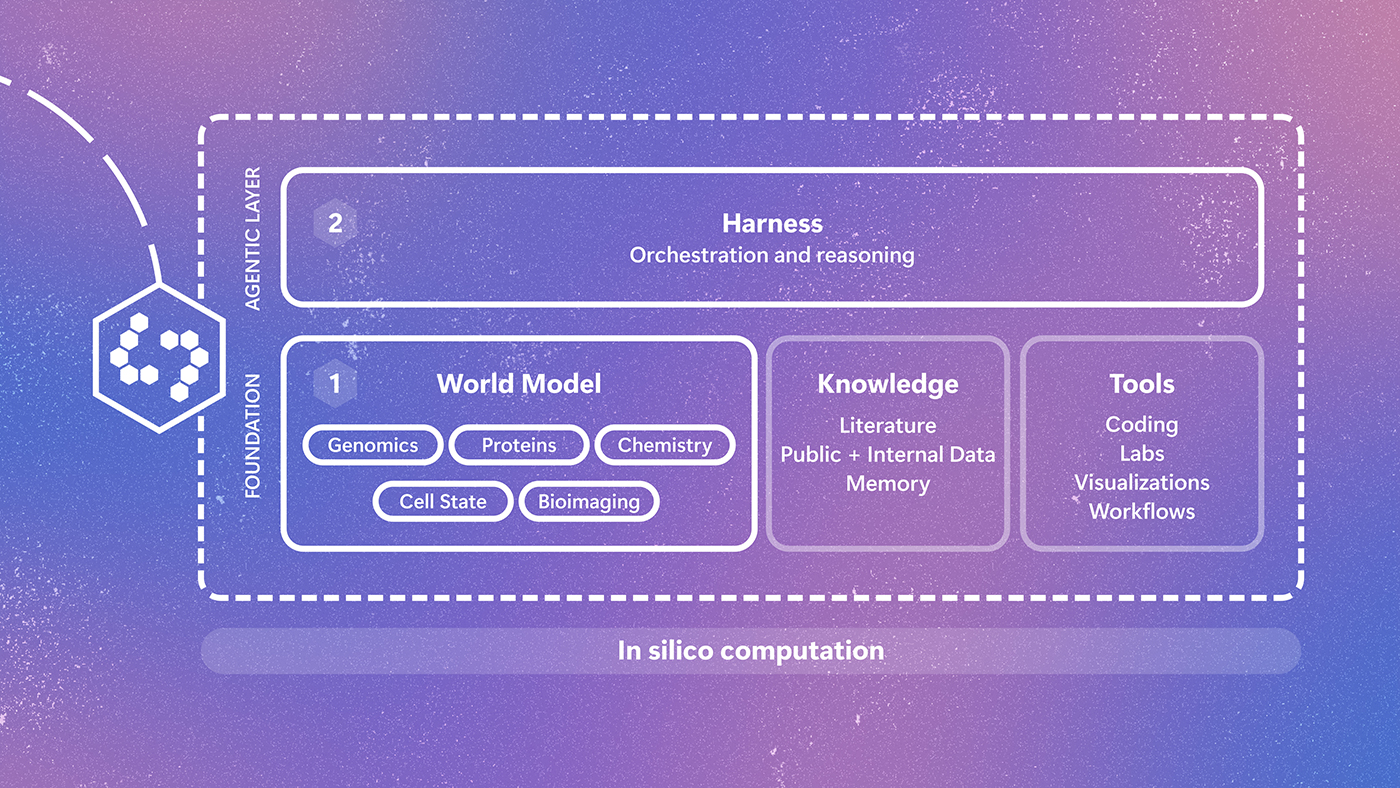
Biology doesn't operate in silos, and neither should the AI representation of it. Quine is an early-stage research effort to create a multimodal world model of biology. By connecting insights across biological scales and modalities, Quine helps scientists computationally search a space far larger than intuition allows and prioritize hypotheses before they reach the lab. Experimental results provide important feedback, helping researchers sharpen future research directions. The post Introducing Q…