Skip to content
#machine learning #quantum computing Preprint Open access

Average-and Last-Iterate Lower Bounds for Optimistic Matrix Mirror-Prox in Quantum Zero-Sum Games

Yiheng Su Emmanouil-Vasileios Vlatakis-Gkaragkounis Pucheng Xiong
Oct 2026
Machine Learning Quantum Computing

Abstract

Optimistic matrix mirror-prox (OMMP) computes $\epsilon$-approximate Nash equilibria in quantum zero-sum games with an $O(1/\varepsilon)$ average-iterate guarantee [arXiv:2311.10859]. We investigate whether this dependence on accuracy is tight and whether geometric last-iterate convergence can be guaranteed. We study these questions through explicit games with one qubit per player. First, we prove an $\Omega(1/\varepsilon)$ lower bound for the uniform-average output that includes the maximally mixed initial state, independently of the regularizer and step size. Second, we construct a fixed game on which optimistic gradient descent-ascent (OGDA), initialized at the maximally mixed state, has last-iterate Frobenius distance to equilibrium $\Theta(1/t)$ and duality gap $\Theta(1/t^3)$ for every sufficiently small fixed step size. A separate fixed game exhibits arbitrarily long delays in reducing the initial error by a constant factor across a family of initial states. Finally, we give a fixed game with a unique, strictly complementary equilibrium on which optimistic matrix multiplicative weights updates (OMMWU) converge only polynomially from the maximally mixed state for every fixed positive step size. The last-iterate Frobenius distance and quantum relative entropy from the equilibrium to the iterates decay as $\Theta(1/t)$, while the duality gap decays as $\Theta(1/t^2)$.


View source

Similar papers

#computer vision Review Sep 2017

Agile Software Development Methods: Review and Analysis

This publication proposes a definition and a classification of agile software development approaches and analyses ten software development methods that can be characterized as being "agile" against the defined criterion.

P. Abrahamsson, O. Salo, Jussi Ronkainen et al. · 727 citations · ⚡54
#computer vision Jun 2008

The impact of agile practices on communication in software development

The study shows that agile practices improve both informal and formal communication, but indicates that, in larger development situations involving multiple external stakeholders, a mismatch of adequate communication mechanisms can sometimes even hinder the communication.

M. Pikkarainen, Jukka Haikara, O. Salo et al. · 401 citations · ⚡48
#machine learning Review Open access Oct 2014

Software development in startup companies: A systematic mapping study

The results indicate that software engineering work practices are chosen opportunistically, adapted and configured to provide value under the constrains imposed by the startup context.

Nicolò Paternoster, Carmine Giardino, M. Unterkalmsteiner et al. · 394 citations · ⚡54

Diffusion models as plug-and-play priors

The possibility of inferring high-dimensional data inference in a model that consists of a prior and an auxiliary differentiable constraint given some additional information is considered, thereby allowing a range of potential applications in adapting models to new domains and tasks.

Alexandros Graikos, Esmeralda S. Whitammer, N. Jojic et al. · 316 citations · ⚡15

Trajectory Balance: Improved Credit Assignment in GFlowNets

It is proved that any global minimizer of the trajectory balance objective can define a policy that samples exactly from the target distribution, and empirically demonstrate the benefits of the trajectories balance objective for GFlowNet convergence, diversity of generated samples, and robustness to long action sequenc...

Esmeralda S. Whitammer, Moksh Jain, Emmanuel Bengio et al. · 302 citations · ⚡60

Related blog posts

MIT News · Artificial Intelligence Aug 27, 2026

Looking beyond natural sequences

A new machine-learning framework aims to improve the success rate of computational protein design while moving away from results that reproduce sequences found in nature.

Microsoft Research Blog Aug 20, 2026

Broadening access to Skala creates a faster path to predictive DFT 

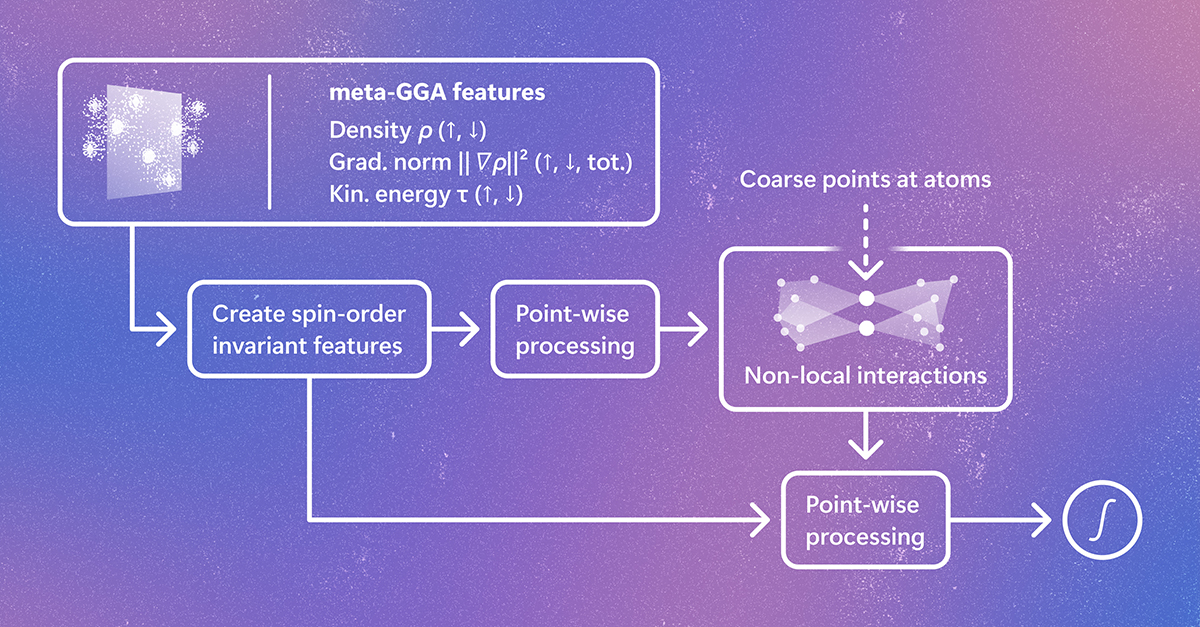
Skala 1.1, the updated deep-learning exchange-correlation functional from Microsoft Research, provides greater accuracy, expanded accessibility across the computational chemistry ecosystem, and a living benchmark to track computational performance. The post Broadening access to Skala creates a faster path to predictive DFT  appeared first on Microsoft Research.

We use cookies to run the site and, with your consent, for analytics and to show ads. See our Cookie Policy.