Removing an input-scaling module changes both a classifier and the perturbations reaching its encoder. A robustness difference can therefore reflect the comparison rule as well as the module. We demonstrate this problem in a four-qubit quantum-attention detector on generated power-grid trajectories. A learned scaling m...
Owen Friedewald, Srikar Alla, Ali Shiri Sichani et al.· 0 citations
Quantum Fourier sampling may help audit the spectral learnability of delay-based physical unclonable functions (PUFs). We ask whether that promise survives access matching, a strong classical comparator, and oracle synthesis. Three gates structure the evaluation. Structure: low degree is not small support at reachable...
Owen Friedewald, Ali Shiri Sichani, Chi-Ren Shyu· 0 citations
World models provide digital simulacra of the true world, allowing agents to be trained and tested before costly real-world deployment. At each time step, they receive an action and generate an observation and reward matching the statistics of the true world. In complex environments where present outcomes depend on eve...
Josep Lumbreras, Hailan Ma, Jayne Thompson et al.· 0 citations
Reach audiences
Advertise in front of researchers, engineers, and readers.
Hybrid quantum classical neural networks integrate parameterized quantum circuits (PQCs) with established deep learning architectures, but their performance depends strongly on the choice of quantum circuit architecture, a choice that remains largely manual. Most existing approaches rely on hand-designed or fixed circu...
Devroop Kar, Daniel Krutz, Travis Desell· 0 citations
How complex can the responses of a quantum device become as it runs longer with a fixed internal memory? We quantify this complexity through sequential response capacity: how many adaptive testing stages, each using a fresh run, can continue to separate possible processes by a prescribed gap in response probabilities....
Quantum key distribution (QKD) links are provisioned from security analyses of stationary channels, whereas the devices that determine the channel drift between recalibrations. Whether an eavesdropper who cannot alter the channel's own noise gains by following that drift has not been quantified. Adaptive eavesdropping...
Marcel Mordarski, Benjamin I. Gräs, A. Shehata et al.· 0 citations
Morohoshi, Nakayama, Manabe, and Mitarai proposed a physically motivated quantum machine learning problem in which the goal is to predict quantities of the form $\operatorname{Tr}[f(H)\rho]$ from classical descriptions of a Hamiltonian $H$ and a quantum state $\rho$, where $f$ is an unknown function. We call this probl...
For quantum machine learning, the exact boundary between classical and quantum advantage is still poorly understood. Direct comparison between quantum neural networks (QNNs) and existing classical models, which encompass fundamentally different function classes, often fails to provide broader insight into the differenc...
Oliver Knitter, Jonathan Mei, Sang Hyub Kim et al.· 0 citations
Symmetry reduces the capacity of a quantum learning model, but the imposed group must match both the measured information and the label transformation. We establish a finite-measurement theory for inferring this group from candidate transformations. The central structural result identifies observable-invisible transfor...
Quantum Reinforcement Learning (QRL) integrates reinforcement learning with parameterized quantum circuits and is a promising approach to combinatorial optimization. On Noisy Intermediate-Scale Quantum (NISQ) devices, however, decoherence, gate imperfections, and measurement errors reduce policy quality and make learni...
Bisma Majid, Shabir Ahmed Sofi, Mir Mohammad Yousuf· 0 citations
Broadly applicable quantum advantage, particularly in classical data processing and machine learning, has been a fundamental open problem. In this work, we prove that a small quantum computer of polylogarithmic size can perform large-scale classification and dimension reduction on massive classical data by processing s...
Haimeng Zhao, Alexander Zlokapa, Hartmut Neven et al.· 0 citations
Jennifer Neville did not want to go into computer science—but that’s exactly where she landed. Neville discusses the starts and stops that led to her professional sweet spot and her work identifying “surprising failures” making it hard for AI to handle complexity. The post What AI gets wrong and what failure teaches us appeared first on Microsoft Research.
MIT News · Artificial Intelligence· news.mit.eduOct 2, 2026
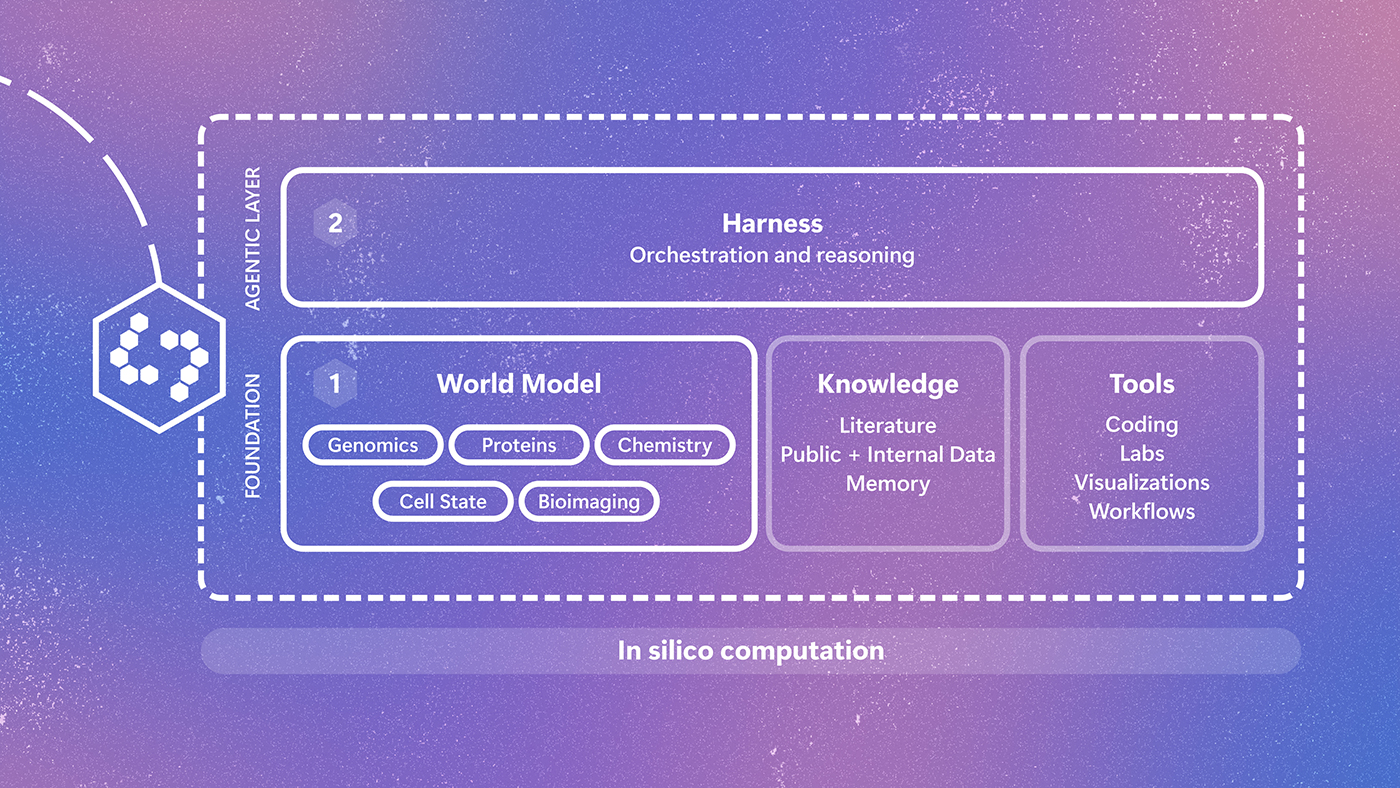
Biology doesn't operate in silos, and neither should the AI representation of it. Quine is an early-stage research effort to create a multimodal world model of biology. By connecting insights across biological scales and modalities, Quine helps scientists computationally search a space far larger than intuition allows and prioritize hypotheses before they reach the lab. Experimental results provide important feedback, helping researchers sharpen future research directions. The post Introducing Q…